Pages

Showing posts with label movies. Show all posts

Saturday, 7 September 2013

What I Watched This Summer

The sun was out, I might not have spent a reasonable amount of time in it but I sure looked at it just fine from behind a glass window; which doubles back to the busy summer I've had, which in itself is my excuse for not writing about all the movies I've been watching. It's a whole lot of movies too; I felt guilty doing re-watches which lead to a mad dash to find new material, which is why I can report back from as many bad films as great ones; and from everything in-between. So here's a small selection of the movies I blew my summer on, and in my aspiring movie maker addled mind all the weird tangents they sent my mind on.

Slacker (1991)


So I really love 90s. I'd cut that down to just the movies but hell, I love the whole decade. The clothes. The hipsters. The angst. And the whole slacker thing too; all those great elements of the 90s and a whole sub-culture created out of it. Most time periods, even the most cherished of past times: the hippy 60s, can only be viewed in fragments, usually framed by a single authors viewpoint, no matter how much we think we're seeing the whole picture. Yet Slacker gives you a very unbiased look through the key whole into an early 90s Los Angeles. It has no plot; we follow some characters and when we are done with them the camera floats out onto someone new. No connections or backtracking. 

The first thing I thought about was the films of Andy Warhol; for a man so obsessed with death Warhol tried his hardest to film real life, to remove the mechanizations of films of the time and show reality, or at least as much of it as the camera could catch. His films don't amuse me; actually I care more for the concepts of most Warhol films, the simple knowledge they have been created, than the films themselves. At the end of Slackers (don't worry, spoilers don't work on this film) the camera is finally acknowledged as a group of teens run around filming anything they can; there's no set-up for this scenario, just the images on screen. The camera gets swirled around and pointed at the other teens and then it's chucked into the ocean. It's gone, along with the images on it. Only it's not, because we're sitting here watching it. And that single image of the camera twirling around into abyss gives the full justification for this movie; to capture life. It was all to take a time and a place that was everyday for some and stretch it out using cameras so that it still exists here today in 2013. 

Every film does this but they capture the themes and story the filmmakers want to show; I get the impression Richard Linklater set out with the idea to film lots of LA youngsters and the script came after. And it's in that script where Linklater manages to surpass Warhol in delivering an enjoyable experience, a one you want to sit through for more than the concept. The characters are semi-realistic but in no way boring (maybe that's what adds the "semi") and from conversations about art to flirting to long monologues about conspiracy theories, I never stopped being interested in the characters. Linklater's dialogue is very similar to Tarantino's: long monologues that don't seem to reveal anything about the speaker on face value but through the very subject of the conversation and the way it's said we start to piece together the character; more closely resembling life than most film dialogues. 

In the end Slacker is in many ways just a modernized version of the Warhol legacy, albeit enhanced for greater enjoyment; which ends up making a film as unique as this so watchable. 9/10

Who's Afraid of Virginia Woolf? (1966) 
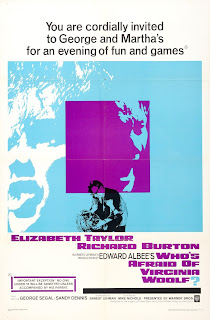


Does it make sense to be a film fan and dislike black and white? Or old films? If my love of films stems from naturalistic films (or very fantastical films that I don't mind believing are real) then what am I to make of older pictures which go out of their way to feel staged and remind the audience of their fantasy, or of black and white which seems to strip away control from the filmmaker; most modern black and white films, ala Control or Schindler's List, tend to work because their directors have decided that a lack of colour will go with the story.

So it should be clear that going into Virginia Woolf didn't look too positive from the outside. Although my biggest problem was that this was a "stage film"; adapted from the play of the same, Virginia Woolf falls into a category of film I dislike: films from plays that don't attempt to do anything unique with the medium of film and simply film the play.

We pick up the story as an older couple returns home late one night. They seem content if argumentative. They are soon joined by a much younger couple; very much in love and carefree. From their the arguments begin; boosted heavily by the excessive use of alcohol throughout. These are the only four actors who appear in the film, and aside from a location change in the middle of the film we spend the majority of the film trapped in the house. To people interested in making their own films it's films like Virginia Woolf that stand as big beacons of hope; it has no real structure as all events of the story stem from the characters, and there is a big focus on dialogue and ambiguity. The only problem is most of it doesn't work. The twist left me empty; I didn't see any way to relate it to everyday couples, while the stakes of the story never felt explicit (or even visible) enough to keep me interested.

Others might call this an "acting film" or if it was released today "oscar bait" yet one of the best features of the film is it doesn't shoehorn attention onto characters when their not needed; most of the weight of the story rests on the older couple: Elizabeth Taylor and Richard Burton. The two play a twisted game with each-other throughout. Burton is the highlight of the film; his character at once feels despicable but relatable at the times when the troubles of his marriage come to the forefront.

In the end I took little from Virginia Woolf. It has set the template for all stage films since; which to my mind is party what has made them so un-exciting. 6/10

Hobo with a Shotgun (2011)


I spent a small part of my summer reading up on this new found thing called "vulgar auteurism": think Michael Mann and Michael Bay. It's a good idea, maybe un-needed, but it throws out any ideas of what a good film should be; no looking for extra-long single takes and restrained cut aways from violence. It makes rating a film like Hobo With A Shotgun a lot easier; it doesn't have to be compared to Lawrence of Arabia or even Die Hard, the merits of a film like this exist in a far off place on their own.

Thinking of this side of "vulgar" cinema, Hobo reminded me heavily of Jason Statham action vehicle Crank, another fantastic movie that cares very little about critical success or even good taste. That movie creates a decent excuse for all it's mayhem to happen in it's real world setting, while the entire world of hobo is an excuse for such carnage. The city's in a mess, the police are corrupt, and apocalyptic gangs search the streets for targets. More worrying is that most of the inhabitants are part of the problem; only a small few people get on with their normal lives.

In walks the hobo. He's no Eastwood type like you might be expecting, he's just as helpless as everyone else in the city; although he eventually reaches his limit, and upon realizing the police aren't going to help him decides to deal with things his own. And out comes the shotgun.

The excessive violence and one-note world that's lost all humanity is what makes the film so good; it doesn't second guess it's limitations, instead it give us exploding heads and twisted characters with no apologies. The film saturates most scenes so that each one is dominated by a single colour. In the beginning we see this tortured suburbia through the veil of a bright blue sky. The sky owns the camera in these scenes. When we see the bad guys discussing plans in their hell-drenched lair we see nothing but red. It adds to the all-out nature of the film. Seeing such violence filmed in pure blood red across the screen just pushes everything to it's furthest point. If vulgar auteurism is all about throwing out good taste and constructing a taste that celebrates the extremities then I guess that makes Hobo With A Shotgun the Godfather of vulgar cinema. 9/10

4 months, 3 weeks, 2 days (2007) 


Listening to Jim Emerson and his "opening shots" series would leave you to believe it's where a film starts that is most important but I'd vogue for the opposite; plough through a bad opening and their can be a hidden goldmine waiting for you on the other side, but a ending can effect (destroy or enhance) all that has gone before. Which is why it's so easy for me to call this movie great despite spending the first three quarters wondering whether I should just turn it off and get on with my life; because that last section of the movie really delivered.

The film is set in late 80s Romania; the communist regime of the time made abortions illegal, with the film revolving around Otilia who is attempting to get an abortion for pregnant friend Gabriela. The two go for help from a man who makes his money through illegal abortions; he's professional about the deal and getting everything right first time, although as Gabriela continues to do things wrong it is revealed what a more shady character he is.

As Gabriela is lying in a hotel room waiting for the abortion to complete we get our first sign of tension., although it leads to very little. The film is slow paced, and for a film that has a clear objective from the start we spend an awful lot of time learning about the characters, especially Otilia who's struggles with her boyfriend make up part of the film.

I was bored out of my mind until things started to... happen. There's no big explosion or car chase, but not only does the ending of the film actually make the viewing an enjoyable experience, it makes the rest of the film worth it. Boring boyfriend subplots might not seem important in a film about abortion but in the end when you can see all of the pieces on the board it's finally clear this film isn't really about anything; it raises some points and the unorthodox situation of the country their in opens up some arguments between characters that are very rarely said.

As for the camera, as is frequent with the majority of modern foreign films I've seen the camera is stationary and very rarely moves. It's the complete opposite of my normal cinematic sensibilities, but in the end it shows that behind what you see on screen, it's the films that leave you with something that stick with you the longest. 8/10

Monday, 22 July 2013

Summer Reviews: The Conformist/Almost Famous/Heathers

I've noticed something recently: I watch a whole lot of movies. I mean fuck, not just a lot or loads, I mean it's summertime and I'm surprised Netflix hasn't crashed yet. Most people will imagine summer as a childhood recall of sun and beach and ice-cream, but for me it's lots of nights filled with movie magic, the days are what's inbetween; and the sunlight hours are there so I can try and make up for being such a nerd; which is a fantastic thing to be by the way. I'm usually watching as many as rewatching but this summer I feel so spoiled for choice that I'm trying to make every watch a first-time viewing, which is probably the reason I feel so behind on my movie reviewing; so here is my first collection of summer reviews, no connection other than timing between them: 

The Conformist 
There was a posting online the other day of a David Lynch interview where the man talked about how he hates neatly tied films; mysteries ruined by explanation. The exact words aren't important, just that between the lines Lynch was saying people shouldn't have to have everything explained to them; a thinly cloaked defense of his own films without ever mentioning one. My mind instantly jumped to a previous night when I was watching Bertolucci's The Conformist.

The film throws you straight into the confusion, your never so much given an explanation as your given a thread at which to unravel everything yourself. The opening jumps around from one set piece to another, and even once it's stabilized onto a straight line the image of our main character Marcello and his associate Manganiello driving through a snowy land is returned to throughout the film, with the story finally catching up to them near the end. They drive without giving us any explanation of where they're going, and the world outside is foggy and hard to make out. It's a good metaphor for Marcello's journey, shrouded in confusion and constantly changing direction.

That journey is to Paris where Marcello must assassinate an old teacher of his. A newly-wed, Marcello brings his wife on the trip, although this only starts to confuse matters even further, especially when the teachers wife Anna turns out to be as bored with marriage as he is. He's got an assassin's mission but there's little explosive nature here; Bertolucci focuses a dialogue heavy film around a world trying to escape the boring of fascism and Marcello's opposing wish to conform into the everyman. It's the reason the film's set in 1930s, and why an anti-fascist is the target. In one sequence Marcello's wife and Anna lead a conga line of everyone in a restaurant, Marcello declines to play along and ends up in the middle of everyone in the room; all of them circling around him until they blur into each other, all faceless, all becoming one single entity. It's only Marcello who stands out in the middle, unable to conform with any of the people around him.

Being this is the 30s there's lots of extravagant art-deco, the bright colours and careful framing brought to mind a twisted Wes Anderson, and the weighty loft of the characters, along with ending that jumps ahead years to show us the effect of all of our character's choices echoed the recent output of P.T. Anderson. Yet Bertolucci doesn't follow the path of either of those men; this film (logically) lacks the quirk or endearing message of Wes or the false grandeur of Paul; despite the weight of the world on it's main character's shoulders The Conformist feels fantastically light on it's feet; serious in tone throughout yet set in a world filled with dancers and party's and characters who seem to have only one major aim in life and focus all of their energy on that.

That blindsided focus on the objective is most apparent in Marcello; he's got his mission yet his life doesn't resolve around it; it flows in any direction the tide takes him. That the movie came out in 1970 means Marcello preceded other anti-hero's of the 70s such as Michael Corleone and Travis Bickle, yet in a sense both of those men had redemption floating around their heads; Corleone was a war hero and he starts off on the right side of the law, while Bickle tries to find redemption by saving Jodie Foster's prostitute; no such redemption follows Marcello. His wish to conform with the rest of society almost seems to suck the life out of him. A flashback to Marcello's early life when he comes close to being sexually abused might add somewhat to his motives but it still doesn't humanize him, not that he would wish to be humanized; even when confessing his sins to a priest he doesn't seem in anyway sorry, he just sits and talks out of obligation as he describes the crimes he has committed and the one he will commit next.

It's this blankness of character in the face of such a colourful world that gives the film it's core. Overall I enjoyed The Conformist; it dragged in places but in the end all pieces, even the ending which felt un-needed as it was unfolding, make a meaningful whole. I must say I dislike most modern foreign films, not because of subtitles but because they lack style or personal touch. Watching A Prophet the other night I couldn't help but be uninterested in the lack of any auteur putting his stamp over the top; the French invented the damn word so why are they so fast to forget it. A good story is needed of course, and The Conformist has that too, but what most modern foreign films lack is that added stylization, that confirmation that it's a movie your watching, because remember kids: the style is the content. The Conformist has that, and a lot more too. 9/10


Almost Famous 
This site might only be-able to sum me up with the broad stroke of being a writer, or even a blogger, but go read some of the music reviews and you'll see being a music journalist is a big goal for me. I'm past 15 so I can't quite fulfill the fantasy presented in Cameron Crowe's Almost Famous; of William, a young music fan who gets the chance to write for Rolling Stone by following up-and-coming band Stillwater, but it's still a source of fascination.

It could be said that some of Almost Famous was born from truth, Crowe did work as a Rolling Stone writer from a young age, but there's no pretense here for this being a true story, even the band Stillwater is fictional. Almost Famous is a piece of pure fantasy; one of the most wonderful wish fulfillments ever put to celluloid. The wish fulfillment comes from a young William, who during the film's opening witnesses his sister run away to the free world of the hippie 60s. She does leave him one thing behind though; her record collection. In a note she leaves she tells William to listen to Tommy by The Who with a candle lit as it will show him his future; cut to 1973 and that future is here.

William meets Lester Bangs, the Creem writer who many believe to be the greatest rock critic ever; you can see from my last post that I'm one of them. It's another part of the fantasy; I'm sure most aspiring music critics would love to sit in a cafe talking shop with Lester Bangs, and seeing Phillip Seymour Hoffman play the man was one of the main reasons for my viewing. Not that he's in the movie for long, but his scenes make him out to be the typical mentor figure; I kept thinking Crowe would reveal it all, that Bangs had duped him, that his whole dark opinion of rockstars and Rolling Stone was just wrong and William had outgrow the master and entered into a new age of rock n roll. One of the first things Bangs tells William is that rock is dead, this isn't the 60s anymore and the game has changed. I was waiting for him to proved wrong, not really because I cared too much about the state of rock, I will with sadness and all admit that rock is dead, or at least it's been dying more and more since the 60s. But Bangs never gets proven wrong, not that you can't be friends with a rockstar, but Bangs points still stick, and in the end I'm glad they did; Lester Bangs wasn't like the rockstars he reported, not even his lifestyle brought him up to speed with them, but he was himself, no-one broke him down and changed him, and that's rock n roll. Near the end Bangs picks up the phone, William on the other end, and after an unheard question says without any sarcasm or anger "I'm always at home, I'm uncool"; that's beautiful, and real words of a very very cool man, at least to uncool people.

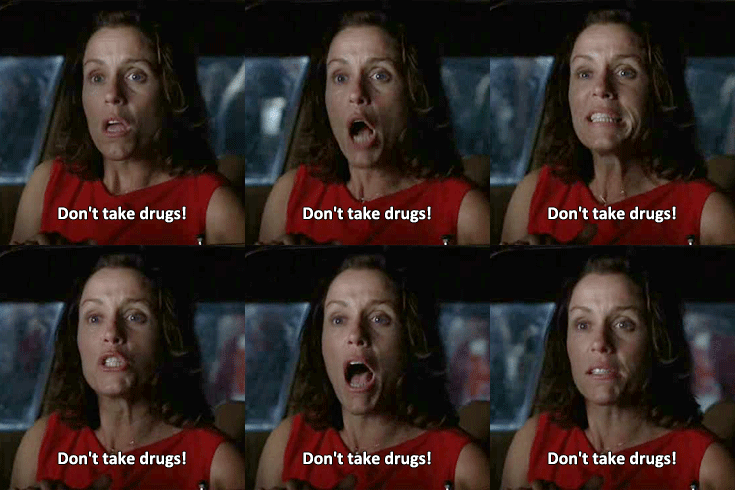
And things just get better when you get to Stillwater; each member of the fictional band feels fleshed out without any of them following the expected rock band stereotypes. Thankfully this is no serious Spinal Tap. You can't link these characters to real rock figures, at least not completely. William follows the band, his time with the band growing and growing as he tries desperately to pry an interview out of front-man Russel. All the while he's introduced to a world of swimming pool bashes and threesomes that his mother, played by the surprise performance of the lot Frances McDormand, definitely wouldn't approve of. She's the grounding of the whole film, always at the back of the film (and William's mind) trying to push her way to the front with endless phone-calls nagging William of the school he's missing and his upcoming graduation. Mainly because up to that point she's given William a very sheltered life; she's a college teacher who teaches her kids in her own unique way and from the outside, and even when up-close to be honest, seems over-controlling and a little self-deluded.

To top it all off William falls in love with a Stillwater groupie named Penny Lane. Played by Kate Hudson in her only notable performance that springs to mind, she plays Penny as an alien; her movements and speech unique to her. Although she's a 70s groupie which obviously means she's depressed and too doped to know what's really going on. She's William's ultimate escape from his tedious life, which isn't all too bad with the Rolling Stone deal and music tour and all, but it still all seems dull in the flashing lights of Penny's offer for the both of them to go to Morocco and find a new life.

In the end William is a little blank. An interesting protagonist and a well-intentioned kid, but a soul in need of someone to guide him. And that's all the characters in Almost Famous try to do. His mother trying to turn him off all of this rebellion and put him on track; the track she clearly set him on long ago. Penny in her self-induced fantasy, stuck in the awe of the stars around her, just like so many other people, living in the hope of a fantasy world that becomes so real to her that she even invites others into it. Lester Bangs with his me-against-the-world pose, trying to build William up by telling him that it's ok to be down. Stillwater, who still debate in privacy if talking to a journalist is really the right thing to do, yet who also try to live the high life and be free even if it means bottling everything up inside until it eventually explodes. All of these different ways of life, all colliding in on William. And that's why I loved this film, because each side is given equal time to make it's case. And in the end? They're all right, and all wrong too. In the end William's mother just wants whats best for her son, and she finally notices how that's done, his sister finally makes her peace and excepts her wrongs, the band finally open up and Bangs is who he is, unapologetically; all of these characters are. It's nice to know that in a world of opposing forces all can get along without anyone having to budge; unless of course they actually needed to.

The most beautiful scene of the movie though is when the Stillwater plane gets caught in some form of electronic field. I'd say they were hit by lightning but I know for a fact that would have no effect on the plain; so either I wasn't listening carefully enough or Crowe didn't do enough non-musical research; one of us is wrong at least. All members think they're about to die, so even in front our young journo/hero they spill the beans on everything. They each get their shot at shouting out the secrets they wouldn't want to die never telling, and to be honest it gets a little dark; the band-mates go a little hard on each other. And it was in this moment I noticed the big difference that separates Cameron Crowe's movies from almost all others. I'll confess to being no Crowe fan; I liked Jerry Mcguire but after that it was all just films about zoo's and Orlando Bloom and I couldn't really find my motivation, but they all have this factor that pulls them in another direction from most; there's good in the bottom of all Crowe's characters. They inhabit optimist worlds, but it's the characters themselves. They might say bad things now and again, and as they all think that plane's gonna crash they might not be the nicest of people, but there's good in all of them. Cameron Crowe simply hasn't been knocked down. And that's as perfect a way one could present the time and place presented in Almost Famous as one could ask for. 9/10


Heathers
Winona Ryder is fantastic isn't she. Lets just imagine this review is transmitted to us from 1988 for that to be true. No, I couldn't give a crap if she did some shoplifting some lifetimes ago, it's just not a crime that would bother me. No, the reason is simply that even now, in 2013, during Winona's big career resurgence, she's still that same person. Still weird and quirky and all too real for most celebrities. I, in my teenage dome, have no real connection. I'm sure she'd be a big catch if I was 40 and didn't want a trophy wife, I wanted someone nice instead. Instead it's 1988, I'm 16, and I don't want an A-grade girlfriend, I want someone nice instead. And it's weird to tell who Ryder's actually playing in all her old movies, she's no outcast, not really; far too cool for that. But she's always the relatable one, always gothic and self-assured. A contradiction which a fool could predict Tim Burton getting attached to, and his twisted visions did serve her well, but it's in Heathers where Winona Ryder's weird enigma of a teenage persona reached it's peak.

Ryder plays Veronica who's recently got herself into the hottest clique in the school; the Heathers, which has only three members, all girls, all named Heather. Veronica doesn't seem to hate her new label, she has sold out a little to be where she is, but these are her best friends. It's not until new kid JD, played by Christian Slater, shows up that her world flips. The boys got a bit of a murderous streak and without revealing those all destroying spoilers I'll say that Veronica gets involved in his plans, which have which have to do with the Heathers.

The level of satire here was surprising at first; this is real satire, where every conversation Veronica has with her parents being exactly the same other than the name of the place she is going. It's hammering home the point of these passive parents; fulfilling their obligation without really participating at all. Everything in Heathers is like this; why build up love between Veronica and JD when you could show them talking for the first time then cut to them naked in the middle of the garden. None of it would work unless the whole world of Heathers worked in this way, and luckily it does. The whole school, all the Heathers, all the parents, everyone, they all sizzle to this extreme. Take the two jocks for instance: Kurt and Ram, both typical bully types who always wear those matching red sports coats, who go on double dates and end up shit faced in the middle of fields trying to screw over the cows. Everything in Heathers goes so far out to make it's point it makes everything in the film seem normal. It's only once the credits start to roll when you notice what a weird world you've been let into.

And what is the point this films trying so hard to make? I'll be honest and say most of it gets lost in the translation. It's a fun movie, well done, and staring at it once it's done you can tell there's some sort of point been made somewhere, you just can't tell where exactly. It's popular kids being killed, everyone staying blind to everything, all of the outcasts been given a bigger voice; some of the message could even been swept aside as expected teen angst, but there is something; especially in the society in the background of Heathers who accept all the weird happenings of these teens. Society is happy to accept those two jocks were gay lovers who committed suicide because, well, those adults just don't understand us youngsters. I related to that point, this feeling that people who aren't certified "adults" yet aren't real people, that they're simple 2 dimensions as easy to read as a statistics sheet. Which is a point still relevant now, maybe more-so now, which the film gets right by portraying the adults as being just as oblivious of everything as the kids.

So in the end it could be said I enjoyed the sarcastic exterior of Heathers more than I enjoyed the darkness it was trying to let out from beneath. Winona Ryder, only 16 at the time of filming, got the role she played in every movie back then as right as anyone ever has. Christian Slater overacted and generally tried to be the big mysterious movie star he wanted to be, although for once it fits. The rest of the cast and the colorful production do the vision well. It's a very fun movie, although it's probably a lot easier to root for Veronica if your of the younger crowd. 9/10


So that was my first batch of summer reviews, sorry for all the positivity it must be the sun's rays, and remember...

Monday, 1 July 2013

James Gandolfini: 1961-2013

I'm no expert on James Gandolfini, I'll be the first to confess. My biggest point of reference for the man has always been catching him on screen while my dad watches The Sopranos. I've seen him in a few movies before; True Romance (although I was too young to remember) Killing Them Softly and in the Coen's The Man Who Knew Too Much, the two performances of his I can openly remember. I always knew of him as a great actor, the same way most youngsters will know Robert DeNiro as a great actor without ever having seen him in action, but I had never seen enough of Gandolfini to tell you why.

Not that he ever asked for any sort of over exposure; Gandolfini, despite having Emmy's and Golden Globes on the mantle piece usually stood back and enjoyed his time in supporting roles, quite frequently playing gangsters or detectives. Not that he ever became typecast (his comedic performance in In The Loop should go towards debunking that) but Gandolfini did fashion a career around playing tough men; confident in their old fashioned ways. He frequently played links back to an older world (his role as a father disapproving of his son's part in the 60s counter-culture in Not Fade Away). It takes a real talent to become a big success in film, TV and stage (which was where Gandolfini started out) yet that's what Gandolfini did.

Anyways, I decided to spend a night finally getting into The Sopranos; a depressing truth that I've been meaning to do so for a long time but only after the news of the actors death did I get around to it. I got through 3 episodes that night; I would have gotten through more but I feared it was getting so late the sun might appear any second and warden me off. I did like them though; the family unit at the center reminded me of The Godfather; lucky there was a lot of (admittedly good taste) violence and gangsters acting as cool as they've been made out to be. In other words; The Godfather without all the boring.

I instantly liked Gandolfini's performance; confidence is the best feature any performance can have. People have been tricked into thinking over-acting is what real acting is, simply because it is "the most acting". It happens when actors start flailing their arms around a lot and doing a lot of yelling. Gandolfini didn't need to do any of that, he didn't need to strain with his whole body to tell you what was going on with his character, he simply presented his emotions to you; everything his character's are feeling is spelled out in the way he hangs himself, the way he moves. Just looking at him you could tell what his character is thinking. Now that's great acting.


It was while watching that first episode of The Sopranos that a point was raised that's been in my head for while, and really thinking about it there's no-one better to represent it than James Gandolfini. Tony Soprano sits in a therapist's office; he needs one after collapsing in his garden seemingly out of the blue. The first episode is structured so that we are welcomed into this family through flashbacks of the events leading up to Tony's collapse, all from the comfort of various therapy sessions. Tony clearly doesn't want to be there; at first this might just seem like typical I-ain't-crazy-why-am-I-here therapy angst, but the more I watched the more I saw it was because the character on the screen was a man turned into the product of the modern world, trying as hard as he can to be an old fashioned type. First broadcast in 1999, the show's place at the turn of the century nicely represents this paradox of a character grappling between the past he wants and the present he's trapped in, all the while worrying for his family's future.

The best part of the episode (I'm enjoying the show by the way; might be the first show I really sink my teeth into since Lost) is a monologue Tony gives to his therapist; the first time this therapist manages to claw past that cold, hard exterior:

"Let me tell ya something. Nowadays, everybody's gotta go to shrinks, and counselors, and go on "Sally Jessy Raphael" and talk about their problems. What happened to Gary Cooper? The strong, silent type. That was an American. He wasn't in touch with his feelings. He just did what he had to do. See, what they didn't know was once they got Gary Cooper in touch with his feelings that they wouldn't be able to shut him up! And then it's dysfunction this, and dysfunction that, and dysfunction vaffancul!"

I'm still not sure if "that was America" is right or not; as a young Brit I can't tell if that was Britain too or if that's just some wish fulfillment on my part. I guess my ancestors were all too formal; Britain is a nation of people all as one, that's why all school kids wear matching uniforms, while America is nation of individuals (or people trying to be); the place where the Gary Cooper myth was born and where it has now lay down to die.

Don't get me wrong; I'm no crank hoping for the days of misogyny to return. People might look up to a figure like Axl Rose, see the "cool" branding he has been given and think following suit would be the right idea, but those people would be terribly wrong. Rose is a good a representative as any for a type of guy (and world) which is thankfully now past us. He clearly treats women like shit, which doesn't qualify him as the Gary Cooper type, it simply means he's a prick who thinks his money and (faded) fame are enough that the world won't mind his ways. He also acts the jock, as if the bully figure outta' be a power figure. It shouldn't. What I'm talking about here has nothing to do with types like him. James Gandolfini, as he appeared in real life although most clearly with his characters on screen, represented this tough guy figure who did things his way, protected his family and, even when his faith was wavering, stuck with the path he set out on.

I'm not crying or anything, but I do miss this figure. Ok, "miss" isn't the right word because I was never around to see a world made up of bottled up emotions, and hell, maybe it was never real anyway, just a generation all trying to live up to John Wayne, caught on the silver screen and used to fight a war. But whatever it was it's something this world could really use, despite the numbers depleting all the time.

Enough about the strong, silent type though, mainly because I'm not very good at being one and because I doubt such a person could even exist in todays world. The post-modern era is in full swing (will it ever stop?) and it's much better to play the knowing fool. I once believed in that figure that people strive for today; someone who represents the weird failures of the world. But now only I see that these strong, silent types could do their own thing, could be weird and unique and smart and happy, but they really believe in it. All the people today don't believe what they say, they don't understand who they are they just accept it. These old figures, these James Stewarts and Charlton Hestons knew exactly who they were, and as far as I know problems or not they didn't need prozac to do it.


That idea that prozac is what people nowadays need to withstand the world around them is the thought that's been rattling through my brain for a while. A bit weird to find it immortalized in pop culture in a show over a decade old, a point being brought up by a TV character when I was just 3 years old, but it's still as crazy to me now as it seemed to Tony Soprano a decade ago. How could people let this happen? Run the world into such a dire place that people can't even physically handle it without pharmaceuticals. I'm not denying depression didn't exist in the world before this, what I am saying is that they appeared to face up to it full on, very different from what people do today.

So why put all this in with Gandolfini, who knows? I guess I just saw Gandolfini as the last of those strong, silent types. People like Brad Pitt and Johnny Depp aren't those kind of men, they're all about the feelings. Not to mention they're personal lives have became as much a point of interest as their films. Everyone's always second guessing themselves and making sure everyone else is ok with what they're doing. Maybe it's true that these kind of people don't exist anymore because it's hard to draw the line between the tough guy figure and the egocentric dick, but those that did manage to draw that line (Gandolfini included) were people to look up to. 

The thing is that nobody wanted to be these people. People look at the celebrities today and they imagine themselves as those people. It's a bling ring culture. Remember that old James Bond slogan? The men want to be him and the ladies want to be with him. That's right, people simply looked at Connery with the cool tux and the beautiful women and they thought "I wish I could be that guy" but that's it. Maybe they strived to be like these people, but that could only be a good thing, right? Today when people look at celebrities they just imagine their own face on a celebrities body, they just want what these people are on the outside. They look at musicians and just wish they had that life, but few will be inspired to pick up an instrument and play. But who was wanting to be Jimi Hendrix in the day? Nobody. You could be inspired by him, admire him, but how could you possibly insert your face over his own. I'm not just talking about the unique talent he possessed, although that is part of it, I'm talking about how pent up the man was. He was a man stuck in his own body, yet that meant he belonged to himself and no one else. Not like today, when celebrities are split up and owned by everybody who sees them.

And that goes for James Gandolfini too. Since his death many have named his performance as Tony Soprano the best TV has ever produced. I don't watch enough TV to be able to properly rate that one, but from what I have seen I'd be fine with giving Gandolfini my vote too. It shouldn't be the only thing Gandolfini is remember by, but if you have to have a singular role used to represent your career then you could do a helluva lot worse than having played Tony Soprano. Gandolfini had the bonus of being part of the first wave of a different style of television, so obviously he'll always be treated as something special in that respect, but it was his demeanor and great performances that made him unique; I can imagine a lot of people looking up to Gandolfini both as an actor and even in the straight-edges of his characters, but try and put your face over his and you'll find you just can't. My heart goes out to his family who have lost the most, but in the showbiz world something else, something very special has been lost, possibly to never return. 


Thursday, 20 June 2013

Duking It Out With Coppola's Dracula

The TV was giving me two options; it was either this or Girl with the Dragon Tattoo, and unfortunately I've already seen Fincher's overly-calculated women empowerment ad. Not that it's a bad film, just long and downbeat, not what the alternative offered: a "romanticized" version of the Dracula story. A book I admit I've never read; and after seeing the main story beats I doubt I ever will. Not that the word romanticized meant much to me at the time; I went in expecting a slow paced period drama told with the use of some British stage actors and a lot of boringly detailed olden day sets. How wrong I was.

So what did I think of it? Well it's films like this that make me agree with all those naggers and film-elite that putting a point-based rating on a film is worthless. Because in the end while not a great film, Dracula is such a damn interesting watch. Not to any casual viewers; who would probably find it even more boring than I did, but if you happened to have been nerded out by the filmmaking gods like moi then I couldn't recommend Dracula more highly.

I do understand that the comments above may seem a little strange but I'll try my best to justify them with the most eccentric glee possible; after all a film this batshit crazy over the top deserves nothing less. Where to begin? I'll start with Francis Ford Coppola; it was already well know by that point that the man was a hack. The man who had arguably the best decade any director has ever had in the 70s lost it all to the flashing lights and excess of the 80s, and as the 90s dawned not even a third Godfather could save him. After that the man descended into a mediocre hell towards the end of the 90s (bringing Robin Williams down with him) which is probably why everyone forgets about his Dracula; a decent enough film that isn't quite Apocalypse Now, but is something very special in it's own little way.


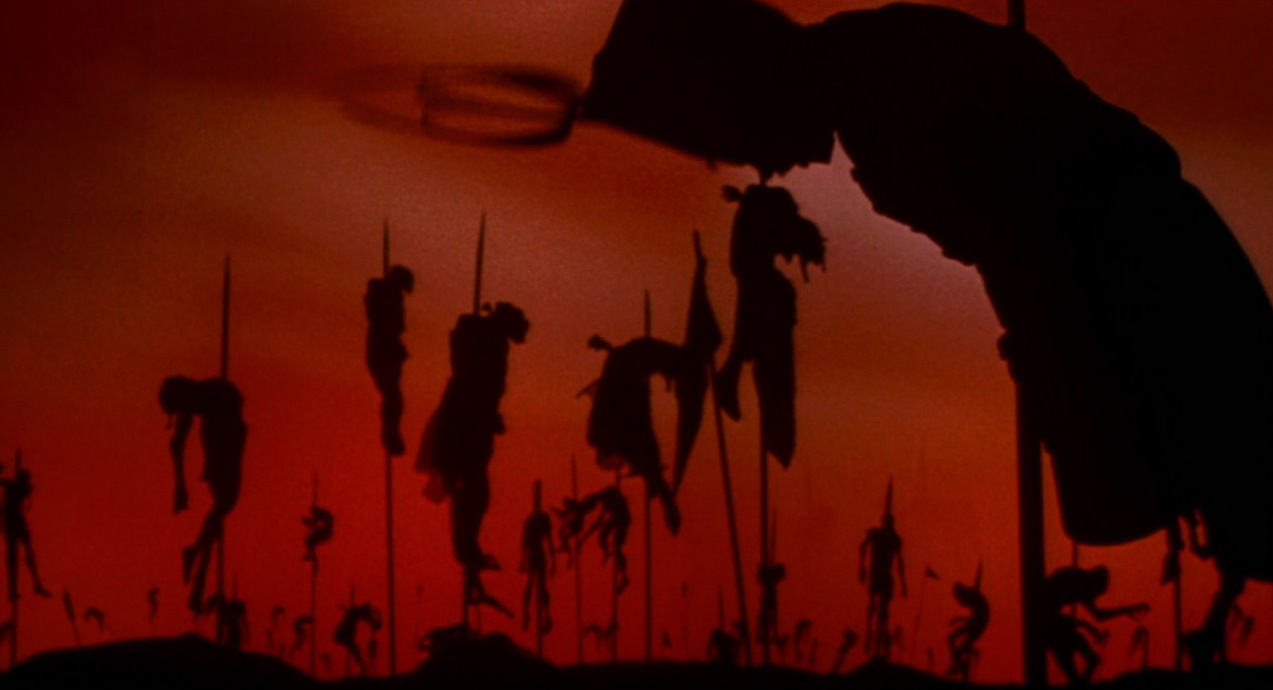
In terms of direction I don't think any film has ever used the "go for broke" mantra to the same level of insanity. Every area of the film pushes itself to the peak, but it's Coppola who pulls out all the stops. Every directional technique you can think of is used here. He uses a swooshing camera (at one point it literally flies in and out of a piece of railing for no apparent reason other than to confirm the madness of the plot) he uses weird staging (around set's as extravagant as they come) which have characters swooping in and out in front of the camera, usually in a very arch way like that of a stage play (reminding me a lot of Terry Gilliam's Brazil). Coppola's camera tilts and tracks, and all manner of effects (including fantastically cheesy CGI) cause shadows to come alive and move around in almost every scene while the sets light up and wind blows through each stage so much that eventually you just have to except what a tongue-in-cheek comic book you've gotten yourself into. I suppose some will complain that just like the new Gatsby this is taking classic texts into the stratosphere, but the imagery here; all of it very impressively put together and chucked at you at an irrational speed, cares more about honoring the books descriptions than actually answering to logic and reason.

But this endless barrage of over-the-top imagery is what makes the film so watchable. The story drags towards the end, mainly because we don't care about any of the characters, and the vampire is so overdone nowadays that the simple fact it's Dracula means very little; but at least the production team never give up. It all hits a peak about halfway through the film; I won't go into the unneeded details of the plot; just know that there is three story threads going on at the same time already when Coppola seemingly decided the audience would definitely be bored if he didn't rev things up. That's why we get sped up first person sequences of a werewolf-looking Gary Oldman stalking our main characters, only for the film to skip to unrelated images of Dracula traveling by boat (all filmed in Terry Malick-esque soul searching beauty) while one of the films many narrations guides us through. The film is littered with sequences like this where the contents of the story and the characters take second billing to Coppola's style frenzy.

And don't think thats it. From the opening of the film Coppola re-uses the same actors to play different characters from a different time period Cloud Atlas-style. And just incase the ending of the film with it's mess of characters and set pieces was boring you, the man throws in a full on old-fashioned cowboy shoot out-chase sequence out of nowhere; and if that wasn't enough for you he films it during a fucking snow storm just to make sure the camera crew and editing team can go as crazy as they want with that shit. In other words what I'm saying is: why would you want to watch one of those critically acclaimed Michael Haneke dramas that take minimalism to the max when you could be spending your time watching a film were every scene transition has some sort of special effect or visual transformation, because god forbid could one scene just change to the next.


Not that any of that makes the film that great, just as I say, interesting. I say Coppola does all that crazy stuff near the end incase your bored, but in truth I was bored. It all gets too much, and the story is too long and spiraling to allow for anything this over the top to be sustained all the way through, not to mention hold our interest. Maybe I would find the same problems with the book. Or maybe it was Coppola. Although I doubt it; my interest wouldn't have held if this was filmed like a stale period piece (which I assume many imagine the book as) my attention would have probably wavered a lot sooner.

So what? It was a waste of such insanity? It had potential before Coppola did three lines of coke before arriving on the set each morning? I guess all I can say on the matter of quality is that all of the things that should be terrible (and if you slow down to think for a minute; are terrible) work in a way here, possibly because it's impossible to truly hate something trying that hard for your love.

Take the acting for instance; I don't think I've ever seen a film before where every actor was working on a completely different playing field. Gary Oldman is method-ing it up, Winona Ryder is doing her whole innocent-sexy thing while not getting involved in much of the drama, Keanu Reeves is fucking everything up with one of the worst accents ever attempted (Keanu is actually trying to be on that half of the actors with Oldman who are just blending into the background, but he ends up sticking out more obviously than anyone else), Anthony Hopkins appears as Van Helsing, giving a solidly committed performance to a very comic-book adaptation of the character, and even Richard E. Grant, who was in his element at the time as one of many actors in a long line of stage-trained Brits who get tons of supporting roles with big American directors after one big British breakout (he's basically the early 90s version of Benedict Cumberbatch) adds a decent amount of sleazy charm (because doesn't he always?) to proceedings. A huge mess of a cast all operating on different frequencies, but all so determined and most looking like they're having so much fun that in the end they make it work as a sort-of disfigured family ploughing through the mess.

Then again I think it was Richard T Jameson (good critic; look him up) who said that the problem with Coppola's images were that they lacked any deeper meaning or purpose. He was talking about Apocalypse Now but his words make as much sense here. Not that I'm saying he's especially bad at his job; if your gonna fuck up a load of trees and wildlife you might as well have a film as good as Apocalypse Now to show for it, what I am saying though is that I agree Coppola's shots have little extra meaning. They're great broad strokes, usually packed to the brim with beautiful sights and quite a lot of them swiftly moving across huge set pieces, but the framing of them means nothing. And that's true in Dracula; there's hugely impressive shots here, but that falls to the bombast of set designers and costume guys who have clearly been instructed that subtlety is off the menu. The only instance of framing here that I thought brought any greater meaning was in a scene where Oldman's Dracula tries to vampirize (?) Ryder's Mina by making her drink his blood through a newly opened cut through his chest. Coppola frames it like a shy porn director would frame a blow-job. We know what she's doing, but I find it hard someone would not think of it the sexual way. It adds an element of romance to the relationship between these two; and as far as I could tell was the only frame in the movie where Coppola told me more than he was showing me.


But I'm not trying to knock the man's directional style, I mean he's probably had enough of that already (and if Pacino can get a hall pass then I don't see why Coppola can't). But I found something special in his Dracula movie; it was strange to see a director go all out. To see a whole cast and crew all individually decide that this was the only way to adapt a revered classic. It's pretty common knowledge that making a movie is a pretty hard business; with all the time and money it consumes, so I understand why movies like this aren't flung out of studios like hotcakes. Hell, maybe it's because I'm an "aspiring filmmaker" and if I ever managed to kiss enough ass to get a film crew and a budget together, then I would never dare piss it all away like this. So I see Dracula not as an entertainment product, or even the cash-grab or oscar bait a modern Dracula would be, but Coppola's weird experiment; most likely one he didn't know he was making. You may even debate this yourself, but as you soon as you see Gary Oldman's hair, this giant blonde monstrosity that looks so big it might eat poor Keanu whole any minute, then you'll know this movie can't be anything else.

And what a beautiful experiment. Maybe good ol' Francis had been waiting to do a film like this for a while. Maybe after dropping all that fire on the natural world while listening to Jim Morrison sing there was only one way up, and that was this. Some won't understand this; but eventually things that are good only give you so much worth. Go, watch the classics, learn some shit, but after that you'll be left dried up on land. That's when you start watching some real crap. You'll make mistakes, don't worry that's all part of it. You'll even go through a phase where you watch an Adam Sandler film, say Jack and Jill, thinking you'll gain something from the experience, only to find out what a mistake you've made. But don't worry, you'll find your way, and when you do the wealth hidden behind a film like Dracula will become clear. Only then could a film that's been pumped full of steroids and sledgehammered into submission like this be of any worth. I'm sure every film fan has their breaking point when they realise that crap that tries to do something is better than boring quality; mine came when I watched Francis Ford Coppola's Dracula.

Thursday, 6 June 2013

Django Unchained: Tarantino's Flawed Masterpiece

The thing that excited me most from the clusterfuck of pre-release hype that surrounded Tarantino's "Southern" (apart from a new film by Quentin Tarantino of course!) was a comparison made by one journalist between Francis Ford-Coppella's mess of a production Apocalypse Now and the 300 days Tarantino and his star-heavy Django crew spent in the corn fields of the south, battling off on-set disasters and drop-outs from some it's biggest stars. There is of course different types of good movies; plain old well made one's (Tarantino's usual bread and butter), and messy ones; the sort of films that go a bit overboard, that just manage to skim the mediocre barrel and end up a lot better because of it; the category Django Unchained most easily falls into.

These messy films will always be damned to a lot more hate than the usual classics; but where would the medium of film be without them? Not that Tarantino ever set out to make such a film as this; the original script, which was leaked before the film even graced our screens, was a very different affair. The problem here isn't what could have been, it's that the changes are glaringly obvious. There's an interlude towards the end that interrupts the whole flow of the film. Not that it ruins it, but a film this big and ambitious (you've got to find an extra three hours for this baby) starts to feel even messier than it already is when the writer-director starts to make last minute re-writes and combine characters together.

Tarantino might be an eccentric when it comes to personality, but the man's always had a great level of restraint. His apparent blood fetish hasn't actually materialized for real in any of his films until this one; where his previous exercises in cutting the camera away from the violence and focusing more on the build up than the climax are nowhere to be found, here he can't get enough of the red stuff. Not exactly a bad thing in the majority of places, it's not like the western is the genre of subtlety, but at times the cowboys getting blasted away just become faceless goons, only there to be killed, and of course any action scenes where the people fighting are pointless means the action scene itself is pointless. Nevertheless Tarantino adds enough flare to proceedings that you rarely care; even if you might sometimes wish he lived up to that apparent Sergeo Leone influence a bit more.

But it's that expression of "Tarantino does it well enough that it doesn't matter..." that I'm getting at. Nobody cares about that abrupt tonal shift near the end of Apocalypse because when you get there all of the jungle's beauty surrounds you and brings you to a larger-than-life Marlon Brando; an offer you just can't refuse. It's the same here. I didn't mind that Tarantino turns the movie; a serious one (even if it does continually flirt with twisted humor) into a pure exploitation flick at the end, because hell, this is one good exploitation flick. I didn't mind that the ordering of some events felt out of place (or some just felt rushed in) because the positives of my experience far outweighed the negatives. Even many of the side characters, which would have each gotten their own spot in the sun in any of Tarantino's previous features, are given nothing to do but stand around and look menacing (looking at you Goggins) but the core characters are all so well written and developed that I didn't much care. Surely that is the very definition of a "flawed masterpiece".

But where the hell are my manors? I should probably have explained the premise by now. Oh yeah that's where I left them, in the fucking rental store where you can watch this, or atleast bite the bullet and watch the damn trailer. It's a tale of this guy called Django trying to find his dearly beloved; Broomhilda (Kerry Washington), who haunts Django (a never-better Jamie Foxx) throughout the film, but is little more than the damsel in the distress once she is found. Although once again not really a problem, people wanting a real romance have (very obviously from the outset) came to the wrong place. It's the story of Django and the German dentist-tunred-bountyhunter Dr. Schultz (Christoph Waltz) who frees him. There are of course detours throughout their adventure, but the story is simple really, rescuing Django's wife from plantation owner Calvin Candie (Leonardo DiCaprio; finally embracing a darker side that seems to trump his tortured-hero persona) by going to his slave plantation of slave plantations: Candieland.

So firstly what's good; Tarantino's dialogue starts in a bit of a funk (sounding stilted and self-aware) but quickly gets better and better, building up to the film's centerpiece; all of the key players around a friendly diner table that slowly falls into oblivion. The dialogue here is just as smooth and quotable as anything else the man's ever written. The whole film just looks good too; Tarantino continues to baffle some with his choice of Robert Richardson as cinematographer, who's pristine shine doesn't seem to fit with Tarantino's grundgy 70s tendencies, yet I think it fits. Tarantino's always been great at framing shots and showing off a knowledge of the craft, he's thankfully never took that to boring extremes (ala Paul Thomas Anderson) and usually seems more focused on the writing and story anyway. Here his directional skills, here meaning his framing and staging, feel a little more on the fly, but they're still solid enough to keep a nerdy film fan like me impressed; and it's that attention to detail that makes Richardson the right person to capture these gruesome tales on celluloid. On top of that you have a great action film, with another very memorable soundtrack (I was straight on the internet finding out what that ending track was) and lots of the cute Tarantino-isms that fans will be expecting (just look for all the character names and ironic references)


And what about the bad? I did bill this as a "flawed" masterpiece didn't I? Well there are some problems. The film would have probably felt a lot less rough around the edges if all the things Tarantino had planned to put in actually saw the light of day. No, I'm not making a criticism based on a comparison with the script, it's simply that the things the movie misses out illuminates the finished films biggest flaws. A big action set piece, the one with all of the faceless bad guys, leads into the plot detour that makes you feel like Tarantino is just back-tracking, just stalling for time until his big finale. Not to mention that both Kerry Washington and Walton Goggins originally had more to chew on than the simplistic archetypes they have here. Sacha Baron-Cohen was originally cast as a deranged slaver who sets Broomhilda's story in motion. And her character and the film itself would have probably played itself out more naturally if this, as well as some other disappearances, had been included. Then again, on second viewing my brain had just accepted the film for what it ends up being. It becomes less about being better or worse than the movie Tarantino originally planned and more that it's just different; definitely more comical than what was originally planned, but no less watchable.

And with all the hype that's went into them then I suppose I should mention the cast. Foxx is as cool and controlled as Leone's Man With No Name, just with the act of being a freed slave adding a bit of an extra dynamic (and some nice clothes too). Samuel L Jackson playing Candie's house slave Stephen also gives us one of the films best performances. It's the first performance I can remember Jackson doing in years that doesn't have him playing himself; I had forgot how nice it was to be reminded every few years that this guy could act. As I mentioned before many actors here are underused, and you can add another one of Tarantino's career-revivals in the form of Don Johnson to that list. Not bad, just no standout.
Fun Fact: Thats a real cut open hand right there
The real attraction here though is just seeing DiCaprio being an massive prick. It's ten years since Catch Me If You Can, a film where he showed he had a sort of old-fashioned movie star charm. It was why he and Tom Hanks were such a top pairing in that movie. Unfortunately since then the man has dropped any aspirations of Carey Grant he likely never had, and started gunning for the role of being the next DeNiro. The results haven't been abysmal, just very shout-y and not much else. In Inception he had the charisma of a wooden plank. Not at all the cheeky grin of doing wrong he had in Catch Me If You Can; in that film he was a sort-of family friendly Alex from A Clockwork Orange, and it's only ten years on working with Tarantino that he's managed to follow on from that. It's his first non-lead in a while, and he doesn't even appear until nearly half way through. But his performance, while not the deepest (Jackson's character has a lot of complexities if you slow down and think about it), or even the smoothest (Waltz earned his oscar), he is brilliantly wicked, and made even more so by DiCaprio's penchant for playing the hero.

So where does that leave Django standing in Tarantino's filmography? I'd actually vouch for it being one of his best. It doesn't have the immaculate plotting of Inglorious Basterds, but Tarantino did spend roughly 10 years writing his self proclaimed "masterpiece", and while that film did feel like it was made by a super-human who could see all situations from all angles, it also left the film feeling a bit stilted. In Basterds everything played out because that was how it's writer-director had pre-determined it through endless re-writes and long-planned-out changes. Django in comparison feels like a breath of fresh air; a piece of pure spontaneity. Tarantino clearly didn't see from all angles this time, but it doesn't matter because this is an enjoyable journey, filled with dark humor, interesting characters and hilariously over the top gun battles.  9/10

Sunday, 26 May 2013

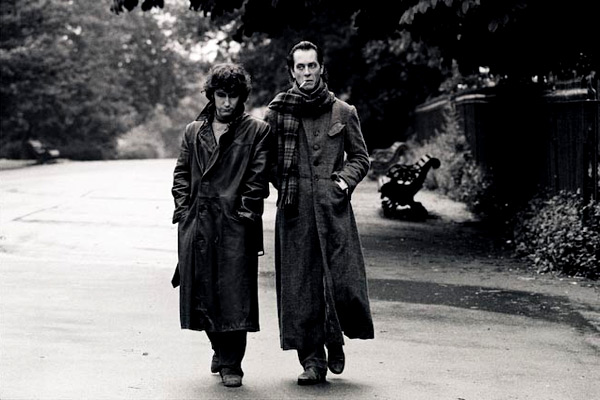
Withnail and I or: Searching for the "British Dream"

I was re-watching 80s binge drinker movie Withnail and I the other night, and either because I was in the middle of reading Hunter S. Thompson's classic gonzo adventure or because both works really are that similar, I was reminded a lot of Fear and Loathing in Las Vegas.

Actually, replace Las Vegas for English country green, and replace copious amounts of drugs for copious amounts of alcohol (and some drugs), and both are really one in the same. Fear and Loathing, the movie at least, was adapted from a book that summed up the trippy 60s and it's rough morning after: the 70s. Withnail, which itself received a similar case of moderate success followed by a cult following, seems like it wants to be a book. The narration and world always feel like they're missing out details the book explained to us. Like the characters are only adaptations of already memorable ink, and the story is - like the Fear and Loathing adaptation - simply picking out the best bits and re-arranging them to create an understandable film language out of the drug-induced ramblings on paper. Yet it isn't an adaptation, it's written by the same boozy guy who directed the movie, and the same boozy guy who just so happened to take 20 years off before returning to direct a Hunter S. Thompson adaptation in the form of The Rum Diary, an only decent movie that has still managed to become much underrated under the barrage of derision it received on release.

But back to where I originally was; traveling along a highway, headed away from the people and the noise and into the sparsely populated heart of Britain. Like Raoul Duke and Dr Gonzo headed to Vegas with the clear-cut purpose of covering the Mint 400 race, Withnail and our main character; not even getting the name "I" until the end credits, set out for the Countryside to relax and get away from their dead-end acting jobs, and to escape their run-down, debt ridden apartment. But like Hunter Thompson's alter ego, our two heroes find they really have no idea why they are their, and ultimately find that the country is more dangerous than they had originally thought.

The story itself matters very little, this is a character piece, which of course only works if the characters are damn interesting. Luckily Richard E. Grant's Withnail is one of cinema's great creations. Like all things in this film it took me until that second viewing but a few nights ago to really appreciate the character; he's a total prick. As an audience we set ourselves to believe in our main characters and their supposed good intentions, and when they don't have any good intentions we believe in them because whatever they are doing they are doing with style, and passion. Withnail is such a solid character because he lacks any sort of redeeming feature or reason for any of the other characters to like him, but like all of the other characters who are so happy to spend their time with him, we enjoy to watch him to simply see what he will do next. His only real intention is to have a nice weekend in the country; at night he wants a nice place to sleep and during the day he just wants to get smashed and soak up the culture in the most hap-hazard way. Not really good intentions, but he does it with the wicked style and demonic passion that keeps you watching.


And we see all this through the eyes of I, or Paul McGann for short. He's a normal blue-collar man, or at least he hopes to be one day; billed as an out of work actor hoping to land a big role, that has unfortunately been dragged down by Withnail into the drug culture of a failing 60s Britain. They get the country home their staying at off of Withnail's uncle Monty (the recently passed Richard Griffiths) a jolly man who just so happens to be a raging homosexual.

So what am I actually trying to say about all Withnail and Loathing and Britain and dreams and whatever else anyway? Is this a review or a rambling essay on Britain and journeys? Well unfortunately it's the latter, but I might as well get all that reviewing shit out the way first. As I mentioned before I hated this absurdist monstrosity on my first go-around, but once I watched it again I've actually come to rebrand it. Maybe it was the hype of watching a cult classic, or any one of the many other nice things I had heard of this from what was most likely all British critics. Whatever it was, it made this movie look very mundane the first time I watched it. But the other night, as a (excitedly) gave this one another chance I truthfully knew deep down I was going to find it a lot better than I did long ago. It's a frequent occurrence for me. A film for whatever reason doesn't live up to the hype I had for it (and I mean long-winding cinephile hype, not that crappy studio-imposed hype that comes with every new superhero release) but it broods in my brain long enough, swirling around and connecting the dots my hype filled eyes were too blind to see, until by the time I watch the film again I am then able to enjoy it for what it is.

And believe me, there is riches to be found here. I wouldn't exactly brand this as a comedy as most do, but there is a dark cheek to watching Withnail get himself into all sorts of trouble, you keep watching for the same reason you would keep watching a nature program where a zebra attacks a lion (and if your not the type of person who would watch that, then I doubt your the kind who would watch this). Maybe it's not funny, buy then again it sort of is. But the comedy isn't why you would watch this, it's not the weird spectacle you expect from a cult film, it's actually a brilliantly written mini-masterpiece, the story itself revealing it's real brilliance only in retrospective (and in it's ending, one that meant nothing to me on first viewing, but on second viewing I noticed that it was the key to unlocking Withnail's character) and the direction is filled with a sort of ferocious energy that should feel out of place with the mundanity of the lives these characters, but it only adds to the bizarre world that is created here.

In review terms: I liked this movie a lot. It still feels like it's expanding in my mind. But for what it is now, it's a well acted and well made movie that really didn't need to do anything well in the first place, it's an alcohol soaked journey of one of the most brilliant characters ever put to screen, with all of this made possible by Paul McGann's I, who cements this whole world of weirdness, and is our constant lifeline back to reality. If you haven't seen this film already then I highly recommend it. 9/10 


But reviewing it wasn't what I set out to do here. I started this post about Hunter S. Thompson and now I can finally get back to that. Hell, just look at the Withnail and I artwork at the top of the page; the same sort of crude counter-art that Ralph Steadman filled the pages of Fear and Loathing with. But it's more than just some front cover scribbles which draw me to connect both works. Both Thompson and Robinson seem to have found the perfect formula for the boozy road movie; their set-ups in which one normal (well, more normal, at least) character cements the story from a more deranged lunatic who manages to charm his way into being the voice of reason at times. And what are these people trying to find? Well Duke and Gonzo's assignment states they are to find the American Dream (as well as cover the mint 400). To think about it the Nevada desert is as good a place as any for the American Dream to be hiding, or at least it was back in the 70s. All of the tripped out hippies of the psychedelic movement just a few years were closer than anyone else to catching this dream, and it's a damn shame they were too drugged up to notice; the reason they let it slip away without even so much as a fight.

And on the other side of the ocean Withnail and I are looking for something just as un-findable. It has no name, the fact that the "american dream" was given a name goes a long way to showing the commerciality of such a country; it's just a big advertisement for the country. It's only Duke and Gonzo, operating in a world most people read about because they would rather not experience, that have any chance of walking in on the dream, probably with it's pants down. But their english counter-parts are looking for something similar. The acting job they keep up isn't the dream. That's a goal and a career. A dream, as long as it isn't a foolishly over-elaborate one, should require no work at all; it should be as easy as closing your eyes at night. I don't have a name for what they're looking for, but as it's already in the title I guess I'm forced to brand their conquest the search for the "British Dream". Being a British man myself I know that-that title is a double negative; Britain isn't the land of the dreamers. The American Dream exists for people in Britain, not for people in America, or at least for those of us in Britain who can't see the colour in our own country, we see only the grey colour of it's personality.

The search for such a thing itself is reason enough to brand this a comedy. Because such a dream involves only going to the country where the characters can in part self destruct, and where the people they insult are not big burly men at the bar but old people addressing a tea party. They have no reason to run away from them, they can be as vile as they want, they are above that world.

And the ending of both films perfectly sums up each country. Or at least they sum up my personal experience of Britain and my mind warped image of America. The ending of Fear and Loathing (spoilers for both in the next two paragraphs) is different between the film and the book. On papar Duke ends his odyssey by taking some amyls (prescription drugs that he doesn't have a prescription for) and laughing at two marines; ending the 60s myth of revolution leading to peace once and for all, and in such glowing fashion: high on drugs and not giving a fuck. The movie ends with a different scene, but the same note. Duke just manages to get Gonzo to the airport, and after a decently uplifting sentiment from such a deranged man, Duke rides off, leaving the troubles of Vegas behind as we watch his red convertible disappear into the distance to the sound of The Stones' Jumpin Jack Flash. There's no uplifting sentiment at heart here, but because of the aesthetics put in place the heart felt feeling of a journey fulfilled and an era ended is still in place.

But we now transport across the pond, the sun-kissed desert has been replaced with water lashing from the sky and green on the floor. "I" manages to escape, he lands an acting job which allows him to escape. He goes to board the train; Withnail being left behind with the junkies and crack whores who we suddenly realize he doesn't want to be with. But in Thompson's vision we watch Dr. Gonzo leave on a plane, his horrific character protected by the country he lives in, while Withnail is left there, no plane or train to take him away. It's in the end (the same one I found so out of place on first viewing) where Withnail recites a paragraph of Shakespeare. And he's good at it. I didn't get this ending at first, but looking back I realize that Withnail's inability to find a job and escape this now failing decade has nothing at all to do with his acting skill or talents. It's with him as a person, he doesn't want to succeed. He is a swirling abyss of self destruction. It's this moment that turns Withnail into such a great character, and it's what in retrospective seeps tragedy over the rest of the film.

And such self destruction, such will to not succeed is what is so uniformly British about this film. As a man of English origin I don't see that as a flaw in the people of this country, or even as something new that no one but me has the balls to write. British people know better than anyone else that they don't aim to be the next president and don't believe their country is the best country in the world. If not through their own feelings then from such negative opinions when American people do such things. If Fear and Loathing takes you into the dark heart of America, and that's exactly what Thompson promises to do when you first enter on this journey with him, then Withnail and I is a look at the un-said truth about Britain and it's aspirations, the "British Dream" if you will.


Both works are fantastic. I'll probably feel the need to ramble on about Fear and Loathing in a separate post, but in case I'm killed before then - my final write up on both the film and book is that each represents some of the best stuff their respective mediums have to offer. They're actually a lot more witty than withnail is and the drug-induced imagery and hollywood escapades are things a British production of a story set in Britain couldn't keep up with. But there's a dark heart to Withnail that even Thompson (or Terry Gilliam for that matter) don't offer. Withnail is a fun movie, and also a perfect one in it's understanding of character and structure (a no bullshit approach to both). It's a tragic tale filled with it's fair share of exciting, memorable sequences that has a very tragic ending, but it neither feels tragic or exciting, and I mean that as a compliment. These characters simply exist, and while the 80s-made film is set in the 60s, it captures a time and place that is lost forever in perfect detail.

Ok, one last paragraph, filled with a sort of philosophical element that goes partly unexplained to end this drama in style. Near the end of Withnail, the two title characters sit back in their apartment, sitting back with Danny, their drug dealer, who along with the apartment itself bookends their journey. He is there with another drug taker: Presuming Ed. Here we are, at the end of the 60s, although we and the filmmakers are looking back at it. It's in Fear and Loathing which came out in the early 70s that looked back in horror at how such a brilliant decade had ended. Now sitting back in their apartment, Danny says "They're selling hippie wigs in Woolworths, man. The greatest decade in the history of mankind is over. And as Presuming Ed here has so consistently pointed out, we have failed to paint it black". Withnail's tragic walk into the distance, which presents a visual opposite of Depp's car vanishing into the desert, doesn't just end a friendship; it ends the decade. Both works wave goodbye to the 60s, both are one in the same really, but both are from opposite sides of the pond, which is what paints them so differently.


Monday, 6 May 2013

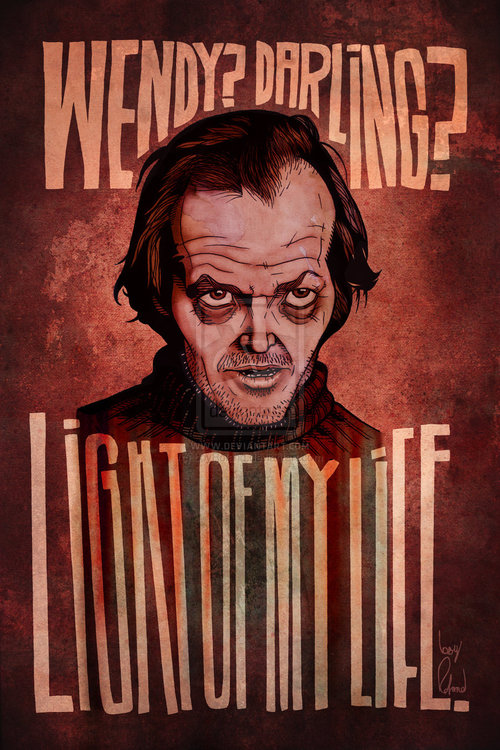
The Shining: Book vs Film


I feel its worthy of note that Stephen King's The Shining was one of the first books I ever read, and as Kubrick's movie adaptation was already one of my all time favorites, it was to me not just a comparison of which of these acclaimed artists could do the most with the same story, but actually which medium was better. I must warn you that on my long trek through the halls of the Overlook I did not manage to find a definitive answer (as if you expected one) but I do feel that both the film and book, which both transcend the age-old haunted house horror genre to become something more, are excellent examples of what is good and bad in each medium. I suppose what I like about each medium is subjective, and I'm sure there are those who happily disagree with me and pick one over the other.

But then again, it is my opinion, so you might as well take it as fact.

So where to begin with such a comparison? The plot of both works is usually given, yet I have long since found much reason to describe the premise of whatever I am reviewing, both because if your on this blog then I'm going to say you've got an internet connection and that you can find that info out for yourself, and because no-one's paying me, which makes any complaints over my lack of explanation paper thin. Lets just say that Jack Nicholson, or Jack Torrance depending on your medium, has got a great new job as a caretaker in a haunted house secluded enough to let all of the horror you will find here possible.

Reviewing the Movie 
The hedge-made labyrinth which is only a fleeting bit of background information in the book is not only a key location for the movie, but a symbol of exactly what Kubrick was going for. The whole movie is a giant labyrinth, giving you enough to play with that you understand the big picture, yet withholding a lot of the important details. I won't list the many unexplained anomalies of the Overlook, and the cabin fever vs the supernatural argument leads nowhere when the whole point of the movie is clearly open to anyone's interpretation, but Kubrick does plant images for the audience that almost feel like there leading you somewhere if you follow them long enough. The most glaringly obvious one being that picture at the end of the movie; Was Jack absorbed into the house? Is he simply reliving an endless cycle that has happened before? Did Kubrick even know himself what he was going for here?


If you don't believe me that this story - presented, and even marketed to us, as a traditional haunted house movie that moves into slasher territory when the shit starts to hit the fan - is actually a multi-dimensional mindfuck, leading us down as many possible explanations as there are never-ending corridors in the hotel it's set in, then just look up recently released documentary "Room 237". Whether you believe the theorists in that film are wackos or intelligible fans who have managed to pick away at the movie long enough to find things no-one else has spotted before, it's undeniable the film was made with the idea that the audience can believe what they want to believe, intended by the filmmakers or not.

As for the film itself, I've already said it's one of my favorites. It's that perfect mix of a brilliant art film from a master filmmaker (Kubrick, who was great because of how easily do-able he made being a genius look) that's managed to camouflage itself as a piece of genre entertainment. It also helps it was derided on release and only picked up its adoring fans years later (the greatest movie ever to be nominated for a razzie?).

Kubrick of course made the bold claim on release that this was the scariest film ever made. Some might mistake this as a moronic claim, a simple piece of shock excess with the obvious intention of getting asses into cinema seats (aided of course by the fact that he was in the golden era of horror: Halloween and Alien already out, Freddie Kruger just around the corner) yet I will give Kubrick the benefit of the doubt in knowing what he was doing. He was subverting the mainstream masses expectations. He did this again and again throughout his career. Just look at his final laugh at the mainstream; his supposed "erotic thriller" Eyes Wide Shut, starring at the time-hollywoods favorite couple, which was really a complex psychological drama that was all about how something big and sexy turned out to be completely different to how Mr. Respectable Everyman thought it would be (sounding familiar?)

Yet the real reason Kubrick's claim that The Shining was the pinacle of multiplex terror never sat well with me was because this isn't really a traditional horror movie at all; more a gory fairy tale. Don't get me wrong, there is a long list of horrifying images sprung throughout this film (and I'm guessing the Grady-twins would rank top of most people's lists) and there's a feeling of growing dread throughout the film. Yet there's something so mystical about this movie to me. It's not set in a run-down camp lodge, or in a city framed in total darkness; it's set in a really nice looking hotel, with beautiful views on the outside, and an inside that's filled with lots of wide open space that is filmed amazingly with Kubrick's steadicam, which captures the feeling of being a small kid in a big place perfectly. And it's not an un-killable monster coming to kill the lead characters in their dreams, it's just some guy who goes crazy while care-taking a hotel. Most filmakers cover their movies in a sheet of blood, yet Kubrick's film is covered in the childlike glow of christmas time snow.


Then there was another reason why the movie was so great: Jack Nicholson. The man is an acting powerhouse, at least in the 70s and early 80s, after which he simply became a cool guy with a great reputation. Nicholson is hilarious here. I've heard people complain over the fact that Nicholson plays the character like a psycho, not the loving family man who slowly declines into madness like described in the book. Yet that's part of the fun of this movie, Jack is a character destined for what he will become in the Overlook. It's not until he starts swinging that axe that we see that trademark-Nicholson grin creep onto his face.

The over the top-ness of Nicholson, contrasted with the endless shrieking of Shelley Duvall, and the cliche scary movie kid portrayed by Danny Lloyd (an archetype which audiences would never accept in the same way today) create the high points of the movie. One sequence, where Nicholson backs Duvall all of the way up the stairs after she has discovered his "novel", was famously shot a record 102 times. You could argue that to be excessive (and damn funny when you find out Kubrick used the second take) yet it nevertheless is one of the most intense scenes ever filmed.

Yet the highpoints of the movie are the sequences set in the ballroom, where Jack's alcoholism gets the better of him in either his own self-serving psyche, or as part of the Overlook's manipulation. It's great just to watch Nicholson act here. To see him finally accept the madness going on around him and implant himself into the song and dance thats being orchestrated for him. Kubrick, to the dismay of many fans (and King himself) altered the book heavily when adapting it to screen, but this sequence is taken almost directly from the book. Yet in the book we are fully aware of why all of this is happening (the benefit of the house) and we are simply witnessing Jack Torrance be turned into a monster. Conversely, Kubrick's ballroom is filled with light, energy and music. This Jack Torrance is already in on the joke. He is already a monster, no need to be tricked into anything. King played for the ironic horror, Kubrick played for the twisted laughs.

Reviewing the Book
As I've said, this was one of my first books, and my first Stephen King. The man, with his long going reputation as the master of horror, and the distinction of being the only writer on this side of J.K.Rowling to still be a household name, had a big reputation to live up to in my mind. Which was why I was so surprised when I found the book so funny, at least early on. Not to say it's a secret comedy that's still fooling people, simply that King sprinkles enough humour here and there to lift the book up from what could have been a drab pit of depression into something more relatable.

What's so funny? Mostly just the internal thoughts of Jack Torrance, starting off with his hatred of the hotel's owner Mr. Ullman, an arse-hole who's sleazy personality is glossed over completely in the movie.


The book itself is a strong one. King himself is no Thomas Pynchon; he feels more a well trained author who knows the ins-and-outs of writing than someone who is experimenting and bending the rules of writing, but his writing is more than just competent, and he makes The Shining a very easy, if at times very slow read.

And by god is it slow. King throws enough weird happenings and paranormal outbursts to keep the reader interested in the horror side of things, yet it's clear King was much more interested in the characters, most specifically Jack, who's own alcoholism and past abuse of his family were partly auto-biographical for King. The idea Jack is an alcoholic is a main theme throughout the book, and the supernatural elements in the book seem to be a metaphor for an abused family that (like many families imprisoned by abuse) simply ignores the problems. King makes the point that for a family like this, all of the cracks would come to the surface if they were trapped together in a big empty house for a winter.

In truth, while I wouldn't argue against the books reputation as a horror classic, it seems to me King - at least for this book - was more a great ideas-man, less a brilliant storyteller. The best bits of the book are the ones clearly more personal to king; the ones not at all involving axe murderers and ghosts. Which means that when the book does plough head first into these things the book does suffer, and the slow build up stops allowing for more character development and instead stands in the way of the action, which apart from the finale which is a real highlight, is the low point of the book.

Then again, when King does get going-he really gets going. He's damn good at creating well rounded characters. If you thought Jack's transformation into a madman in the movie was simply too sudden a change then you'll find the book has a lot more to offer you, showing the man's slow decline from loving but flawed family man to killer. Other characters are also given a bigger spotlight in the book, most notably Dick Hollaran the Overlook's chef. It would be fair to say Kubrick turns all of his characters into much simpler stick figures, not a bad thing when it allows for the story and action to speed up a lot more, yet King gives his characters space to breath, and the extra backstory to all of the characters should be the main selling point for any fans of the film who haven't read the book yet.

It's an enjoyable if overlong horror book which celebrates it's own sick darkness and gory imagery in the same way that the film celebrates it's more fantastical imagery and outlook of childhood.


Differences/Comparison
(Spoilers incoming) 
It should be clear to you by now that it's the movie that I prefer. Both are enjoyable experiences, but Kubrick takes the haunted house template in King's novel and makes it about something completely different. That's why he cut so much from the book. I'm guessing when Kubrick read the book he wasn't that bothered about the story of Jack, Wendy and Danny, instead he saw an opportunity to make a film about the medium's infinite opportunities, and create a heavily calculated mystery of a film filled with hidden symbols and symmetrical frames.

So What's different about the two works? Well the backstory of the book mainly concerns Jack's years of being a struggling alcoholic schoolteacher, a stint ending with him crashing into a bike while drink driving. He doesn't kill anybody, but the moment when he think's he did put's him off the bad stuff for a while.

Another big difference is in the character of Hollaran. In the film he is a martyr, his sole purpose being to bring the slow plough to the hotel so Wendy and Danny can escape. In the book, not only are his backstory back at his home and his journey to the hotel both filled in, but he doesn't die at all. He doesn't save the day in total heroic fashion and gets them out of the hotel alright.

The most glaring change is the way Jack dies. In the film he freezes to death in the hedge-maze. In the book a plot-point is set up early on that Jack must attend to the boiler everyday or the hotel will blow sky high, and yes you guessed it? In the middle of all the carnage he forgets to check it and is killed in the explosion. The reason for the change? Maybe Kubrick just wanted to keep the evil at the hotel still alive for his audience even after his characters escaped. Or maybe he was making the ultimate contrast between the book by turning fire into ice.


I won't go into all of the differences. They're unimportant really. i did get two things from the comparison:
1) Books are for the detail. Yes, they can tell you more than films and can tell you what characters are thinking. But all of that is really in service of giving more backstory/detail to the plot, and raising more points to the reader that they may not already be thinking about.
2) Movies are for the experience. Filmmakers can experiment with what their medium is a lot more than authors can. I see here that Kubrick didn't go for the backstory, he went for the overarching horror experience, he wanted to put in all of the great elements of the book and let his audience figure the rest out.

Other Readings of The Shining 
The Shining has meshed into the pop-culture stratosphere over the years, a film that everyone knows even if they haven't seen it, so it makes sense that a lot of people would have things to say about it. Here are just some of the best I've found:
  • Scanner, one of my favorite film blogs which is run by Jim Emerson, wrote an article about the theories surrounding the film and doc Room 237. Read it here. 
  • Critic Richard T. James, someone you should definitely check out if you haven't already, was an early supporter of the film. His review was eye-opening to me. 
  • There are a number of analysis' of the film on the internet. This one explores the hidden meanings and ideas of duality in the film. This one talks about the films many complexities. 
  • Oh yeah, and there's this too: 

And here's some cool pictures I found while looking for some artwork for this post: