Pages

Showing posts with label books. Show all posts

Thursday, 15 August 2013

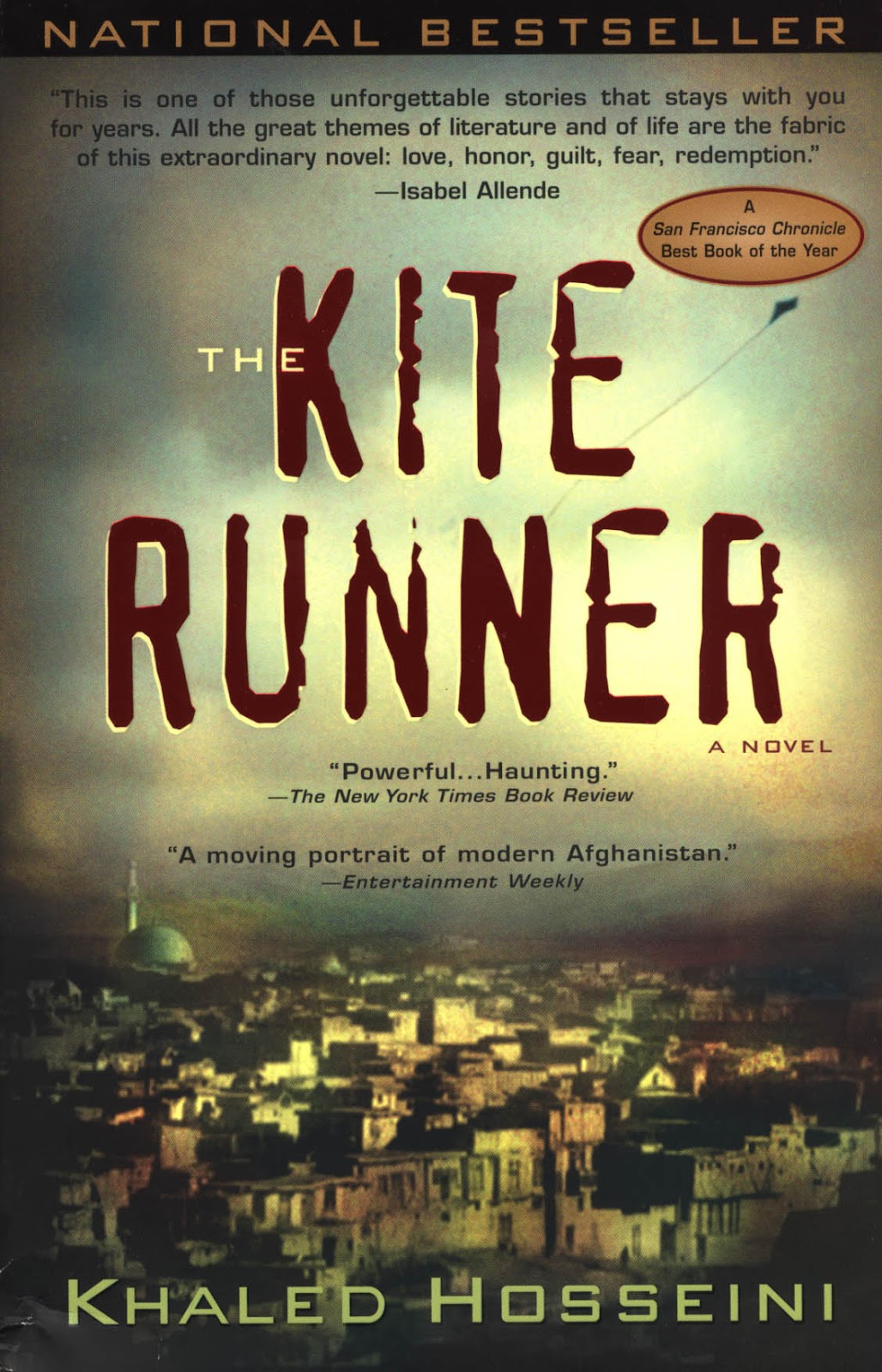
FORCED TO READ: Reviewing Khaled Hosseini's The Kite Runner

Around two years ago my English GCSE required me to read that cherished slice of southern-fried childhood frequently referred to as To Kill A Mocking Bird; of course the hoodie wearing hoodlum in me forbid such boredoms and I never got around to reading more than what was read to us in class. Luckily, contrary to the popular beliefs of education it's possible to grab yourself an A without even reading the source material. I don't brag; I'm seemingly good at English in complete expense of a number of other subjects; not that I would want it any other way, it's simply a wonderful thought that a site that provides quick summaries of each chapter of every book you never bothered to read was enough to score me a qualification.

Unfortunately GCSEs don't mean shit. And believe me I am sorry to that small few who still picture that NASA job interview when you hand Mr. Smart Suit your Food Tech grades and receive a straight-faced reply like "Well that's just great, those astronauts do get damn hungry". So I bit the bullet with the hope NASA might except A-Levels instead. How could they not when I'm having to study The Kite Runner to get one? Which was when my just-flunk-it-off-and-don't-read plan hit jeopardy. And how could I refuse when I was handed a whole summer, an extended one at that, to read through a book which was a critically acclaimed bestseller; one that had been recommended by the master of all creation herself Oprah, no less.

My other forced reading was The Great Gatsby. You can find my not so enthusiastic mood coming out of that one in an earlier post, although the blandness I found in that story never reached any boiling point because the book's so short there really isn't any time to complain. And for that I applaud Scott Fitzgerald. Actually, the guy deserves more oscars than a vintage Jack Nicholson.

But on to the novel itself: I refrain from calling Khaled Hosseini's The Kite Runner a bad book because it's less a book and more a general atrocity. A bland, repetitive, horrifically bleak mess that has the same effect as those corridors drawn as optical illusions: it never seems to end. If that all seems a bit un-critical it's because my opinion since first picking up the book has changed from opened minded caution to a giant swirling mass of hate. I admit that my negative opinion of the book was implanted into my mind early on, but as far as I can tell Khaled Hosseini did nothing to swerve me off this crash course which lead me straight through the bushes, right past the stop sign and straight to the bottom of the fucking ravine.

No, no, no, my mother (or maybe it was Jim Emerson) taught me better than that; as much as I would like to just turn, walk away and leave this one for the dogs I feel some obligation to write down why The Kite Runner boiled my blood to such a degree; if for nothing else than as a warning to any future travelers who, for some god-be-known reason wish to take this path. So what follows is quite possibly every element that makes up The Kite Runner and why it sucks.
First, the plot: it's all told from the perspective of Amir who in his childhood in Afghanistan loved to do a multitude of things such as torture his servant friend, try and win kite running contests to please his arsehole father and witness rapes and decide for no apparent reason to not report them. I do understand it's all in service of letting the plot fall into place yet it became apparent to me early on that Amir makes more bad decisions than a Charlie Sheen level bi-polar. Then the Russians invade and Amir and his arsehole father move to America; highlighting the book's most beautiful message: that talking and winning kite running contests does shit for father-son relationships but unexpected moving to the land of opportunity practically makes you into a picture perfect image of the atomic family, or in this case the male side of said family. Then Amir gets a cryptic phone call and must go back to Afghan to go on a quest which will apparently make everything alright again.

So where should I start my nitpicking, the prose? Yes, those damn prose. Before the school started stuffing unwanted lettering down my throat I was coming down from a back-to-back hit of Hunter S Thompson and Lester Bangs, which was probably why there was still quite a heavy dose benzedrine in my system. If The Great Gatsby with it's squeaky clean style - Fitzgerald doesn't add a letter that doesn't have some major importance to the plot - was my come-down, then The Kite Runner was me hitting rock bottom; locked in a room with some screaming baby crawling across the ceiling to try and kill me. Maybe it's unfair because this author came from the same childhood move from Afghanistan to the western world that Amir does and English isn't his native tongue, but I'm only reviewing the end product and what you have here is prose that feel overly simple, and in moments of Spielbergian sentimentality only add unneeded hyperbole to the mix. And believe me it's a weird sort of sentimentality, with the story filled with hollywood-ready stereotypes and star-crossed coincidences all for maximum impact, yet where all the drama feels underdone, as if to show these set-ups in a "realistic" fashion. Hosseini's writing does do one thing that impressed me though, and that's the man's unique ability to turn even the simplest actions and story beats into the longest, most horrifically drawn out paragraphs you'll ever read without actually adding anything. The second I finished The Kite Runner I put the book down (I was tempted to set it alight) then went over to my book shelf and picked up Inherent Vice. I flicked to a random page and read the first paragraph of a random chapter, for the exact same reason a man lost in the desert for a week will run straight to the pool and start lashing the water into his mouth: to take the dry taste away. This was just a random paragraph but Pynchon added so much to it, most of it unimportant but it was great anyway; and that's because I don't mind long-winded writing or writing that takes it's time getting to the point, but Pynchon and Bangs and all those writers who tried so hard to put the freedom of the 60s that they stemmed from into their writing made the words just flow out of them. No matter how many times they sat there and wrote the smallest of paragraphs their writing felt unstructured and messy; the ultimate realization of a person literally spilling themselves and there soul into the writing. They, to me, are the real word-smiths, and on the complete other end of the spectrum sits Khaled Hosseini, who's every sentence feels like a strain. His explanations of funny happenings, that "that's just what happens in Afghanistan" like an added jab at his readers, made all the worse because he remains totally unaware of what he's doing.

So in the end it's a lack of personality that kills The Kite Runner. I always imagine troubled people, one's who have been through some great hardship at some point, as sarcastic or twisted in their sense of humor. It's a stupid cliche to follow, more stupid in real life, but in books and films it serves a purpose of standing opposite the horrors of the story. I'm not asking Amir possess the same off-kilter charm as Alex from A Clockwork Orange but Amir is an unlikeable main character. The first half of the book is there simply to enforce this point, yet I disliked Amir for the whole story. His guilt which appears later in life appears only so it can be quelled away. And in the end he remains as statically one-dimensional as all of the characters here. His childhood friend Hassan, the rape victim, is a symbol of untainted goodness; an incorruptible Atticus Finch in child form. His place in the story only to bring guilt to our hero. Amir's wife is just as simple, she has a troubled past yet that hangs over the story like the excuse it is; and excuse to why their marriage has so little turbulence, to why even when she finds out she can't have kids there is little drama created. She's the story's "solid rock", which in other words means she's the Seth Rogen of this story; only without all the funny. And our villain, oh god the villain. He loves Hitler because how else is one to show he's evil? and anytime a character needs screwing up or something traumatic needs to happen he rapes someone because how else is one to show he's evil? I'll give this villain, of which I've already forgot the name, his dues; he creates the one dramatic moment in the whole story. Not worth a read just for that, but this situation, bonkers in how it comes together, ditches the (fake) real world drama and gives us an old fashioned final fight. Which is how pitiful my praise for this novel is: that it's highpoint is a end-game boss battle.
Although even worse than Hosseini's writing style is the way he uses that said style to repeat information to use over and over and over again. Since the story is basically split in two: Amir fucking things up in Afghan and then America and then Amir trying to redeem himself by returning to Afghan, prepare to get a lot of reminders in the second half. Not a few pages go by without Hosseini describing, in painfully vivid detail, things that already happened. Smart writers would find a way to hide such reminders in their writing (or just trust their readers to put two-and-two together themselves), average writers will write of these reminders, albeit as quick remarks here and there, and then there's writers like Hosseini who will remind you of a man's hat blowing off in the wind, a pointless act the first time around, and describe it in as much vivid detail as the first time. Maybe it was all just the stigma of reading a book for school but I was sure The Kite Runner was structured more like a challenge; endlessly throwing things at me as if only to make my reading even harder.

And what more can I really say about The Kite Runner? It's a cliche told badly. Fuck you Oprah. Fuck you Khaled Hosseini and fuck you to all the idiot robots who wrote this one off as a winner on the idea it was about Afghanistan; Hosseini talks about his home country only in broad strokes, never making it feel like home. It's why later on the book when Amir returns to his childhood home, where I had spent more than 100 pages, I could sense there was a dramatic moment in there somewhere, it just wasn't here. My parents watch the soap opera Eastenders and my Dad once made the case for it with "But it deals with real issues" and I replied "Eastenders: showing real issues in a really unrealistic way" which is The Kite Runner. Some, not all, of the issues here are realistic, yet in trying to take the major dramatic moments out and be more like real life Hosseini has stripped all reality out of this story. Some will say that after all the heartbreak and "Tear-Jerking" moments that the ending is uplifting. But once again Hosseini has to cut ahead and show his story isn't some muddled fiction but a real piece of drama that could have really happened, and even on this page denies the reader a true payoff to all the stories troubles. Which is the least uplifting thing I could imagine from this story, because it shows a lack of faith in people; and I will never praise a book that shows such a low opinion of Humanity that even it's ending moment, to point us to the happiness of our characters, is bleak and unsatisfying.

Although I don't hate Khaled Hosseini. Well, ok, I really really really do, but I hate the fact this book wasn't shat out straight into the bargain bin more than I could ever hate the man himself. With American Psycho Bret Easton Ellis was, and not even satirically, trying to show that in a material world like ours, or specifically the world of 80s coke-fiend business suits, that a killer as sick as Patrick Bateman could not only exist but that our twisted society could let him get away with it; because after all he's got the fancy car and the expensive suit.. In all of The Kite Runners pages there is not, satirical or otherwise, any sort of meaningful sentiment or message, yet the book itself is a message. The message is a PG-rated version of the one found in American Psycho. That this book, released in 2003 by a first time writer, didn't need a unique (or half interesting) writing style, memorable characters, unexpected twists or any inkling of enjoyment or purpose, to become a major bestseller all around the world. All it needed was a story about a country we were all scared of, lots of symbols and characters we could easily understand and lots of sentimentality and big drama created for no other reasons than tears and quick shocks. 1/10

(So I managed to escape the kite runner, although not really since they'll have me studying this shit for the next 12 months. I actually felt my own writing getting worse as I read Hosseini. Hopefully Joseph Conrad's Heart of darkness will help set things right) 

Tuesday, 30 July 2013

Debunking The Great Gatsby (A School Reading)

I planned on uploading an ungraded essay I did on Lord of the Flies for school until I read it and realized what a soulless document it was; the information ripped straight from the book with no interpretation and the prose as blank as a Wikipedia page. I've realized that I associate school so much with boredom and lack of creativity that any voice my writing might have slips out the backdoor when I enter a classroom. 

My "summer reading" from school of which I was given both Gatsby and The Kite Runner which I'm still yet to read was a little different. I had already bought Gatsby, figuring it would be more logical to read before watching the new film; so as far as I know I've tricked the system and read Gatsby out of the enjoyment of reading a well known classic and not out of graded obligation.

Not that it mattered; my first thought on the way out was how the hell did this ever become a classic? The "introduction" at the beginning of my copy which your not supposed to read until after finishing the book did try and justify the book's classic status. It's a good record of the Jazz Age, apparently, although between the main character's house and the main point of action right next door I didn't really feel like I got a good tour of the decade of parties and excess. The book's only real Jazz Age memento is the character of Gatsby himself. The book was also released as the technology of the world was changing; written in the young Gatsby's diary is a slot made-up for "studying electricity". I was reminded of The Social Network and David Fincher's subtle showing of a world transforming from analog to digital; although Scott Fitzgerald's changing never becomes more than a background distraction. The most obvious of reasons for the book's success, which wasn't immediate by the way, is just the writing and story; it's look at the American dream and the love story at it's center. Not that either add up to much in the end.

Although I did notice something reading Gatsby that none of the other classic books I've read, namely Blood Meridian or counter-culture works like Fear and Loathing, made me think of. I noticed how romanticized these classics become; the image of Gatsby in American culture, of excess and mystery, yet also of inner tragedy and failed love, is a much better image than that of the lifeless and easily explained man you find in the book. There's no meat on the bones of any of these characters, which itself is a plot-point at times; telling of these characters sucked into the material world, seeing someone's worth only in money and stock market value, yet for all of the main characters, the one's who apparently had good (which should mean personality right?) in them, I kept wondering when Fitzgerald would pull me in closer and show me who these characters were. No such reveal ever comes. The blankness of the characters and the world they inhabit seem so white a canvas it's no mystery people decided to add the paint themselves; Jay Gatsby is no real mystery, although the fact Fitzgerald never tells us much about him has made it easier for decades of writers and fans to romanticize the character into a myth that lives more in talk of the book than in any of Fitzgerald's actual descriptions. As goes with the rest of the book too.
For those who have managed to dodge at the very least the outline of the Gatsby story thus far: Nick buys a house at long island, next door to some sort of party-animal who has people stumbling out of his house every night, he attends to find out no-one at these parties knows a damn thing about this Jay Gatsby guy who owns the house, until he meets the man himself to find out Gatsby once loved Nick's cousin Daisy, who is unfortunately now married to smart suited 20s gent Tom, and from there all sorts of heart-warming shenanigans ensue. Tom is the books villain, and the most interesting of all these characters, if only because he is the only one who is fully explained to us. He's a real mustache twirler of a villain; we find him cheating on daisy from the start, and his very presence seems to evoke dread from the other characters. If your like me and your mind implants actors over your imagining of the book (Unimaginative, I know) then you won't have to look far to find some stock-character bad guys to fill in Tom's place; I pictured Billy Zane from Titanic, probably because both characters have no explained reason to do bad, they, both of which from a similar time period and story, are simply villainous because these stories need a villain. Although the book's biggest crime against character is that it never made me car who Nick, the main character, is. Fitzgerald never goes past a quick job description, although luckily Nick, like all other characters, is here to represent only one single dimension, in the same way we have Tom the villain and Daisy our love interest, Nick is our narrator, and it's telling that his complete lack of intervention in the story or any inner conflict still doesn't manage to insight any curiosity into his character. Maybe that's why Gatsby has found such mystique where the other characters haven't; he's the only character who isn't an easily identifiable archetype, instead Gatsby's the sun in the middle of the galaxy, all the other characters revolving around him, the only problem is there's really nothing to Gatsby but his want for Daisy. It feels like there should be a great weight on his shoulders yet he's as light in depth as all of the other characters.

There are themes and big ideas at play here; Gatsby's mysterious past and his fortune which he uses to almost buy the image of a wholesome man, from the outlook surrounded by friends every-night and the striking image of wealth excluding from his suits, yet inside he is damaged, wanting only to rekindle an earlier love. The words American Dream could easily be stamped all over this; because what do people love more in art than showing such a dream gone wrong? Yet Fitzgerald never lets his story settle; Gatsby's story is no rise and fall, instead the exaggerated stories of Gatsby from the people who attend his parties are the closest thing we get to Gatsby being an example of this American Dream fulfilled. Upon meeting Gatsby we are given little time to take in the enigma of his character before his vulnerabilities are chucked in our faces. This is not a big book; 115 pages run by quick, which was of course delight to me so I could move quickly on to books my school wasn't making me read, although this story did feel like it needed to be longer; Fitzgerald neither lets us live in this American dream long enough to be in awe, or takes us into any of the characters headspace's to show us it all fall apart. The paper-thin material and short length leave The Great Gatsby feeling like a slightly extended short story.
In the end I didn't much enjoy Gatsby, as you can most likely tell already, but the simplistic story was serviceable and the symbolism, which if it is to be believed was stuffed into every nook and cranny of 1920s America is so blatantly obvious it's easy to feel like you've been let into the deeper happenings of Gatsby's world. I'll finish on subject of the green light, one of the book's most well known happenings; in which Gatsby looks out over the peer at night and sees a green light in the distance. A beautiful sight, but out of reach (I did tell ya this symbolism was obvious) representing his love for Daisy which even though is now in clear sight has by that point come to be a piece of total fantasy for Gatsby. It's in Roger Ebert's review of Citizen Kane where Ebert writes about said green light. His point is meant to encompass his love of Kane yet it just as easily shows the flaws I found in Gatsby:

"Rosebud is the emblem of the security, hope and innocence of childhood, which a man can spend his life seeking to regain. It is the green light at the end of Gatsby's pier; the leopard atop Kilimanjaro, seeking nobody knows what; the bone tossed into the air in “2001.” It is that yearning after transience that adults learn to suppress. “Maybe Rosebud was something he couldn't get, or something he lost,” says Thompson, the reporter assigned to the puzzle of Kane's dying word. “Anyway, it wouldn't have explained anything.” True, it explains nothing, but it is remarkably satisfactory as a demonstration that nothing can be explained"

Ebert draws a connection between Rosebud and the green light like they are one in the same, just to two different characters. But as the reporter in Kane explains: Rosebud was just another asset of Kane, finding it wouldn't have explained anything to these reporters. Yet if Gatsby was to reach the green light his character would be complete; he would be no enigma or mystery, he would simply be the American dream the people around him think he is. To me the green light symbolized what a fickle character Gatsby is, and in turn the book itself. 6/10

Sunday, 14 July 2013

The Psychotic Reactions of Lester Bangs

It's good Lester Bangs was such a good writer because the opinion's he had on the music of his time never quite gel'd with the mainstream. He championed The Velvet Underground in the late 60s, and said himself he was one of the few who did; it took so long for the band's reputation to grow in the mainstream to where Bangs had always held them that he didn't witness most of it due to his death at 33 in 1982 from an accidental drug overdose, not from the cough syrups he had used to get high for most of his life but from valium tablets of all things; treating a flu.

That shouldn't get ya down tho, bangs story, at least the one I salvaged from Psychotic Reactions, a collection of his writing selected by fellow famous music journo Greil Marcus released back in '87, is inspiring, at least in a music writing sense. The most obvious of this inspiration is Bangs' MC5 review which landed him a full time job at Rolling Stone and still stands as a beacon of hope to all aspiring rock critics; although the review itself, like all of Bangs' Rolling Stone material, is only mentioned in passing during the books introduction. The book mainly focuses on his time at Creem, a defunct music mag during the mid-70s and later as a freelancer. It's all good stuff, and mostly done in chronological order which allows you to see Bangs' writing style change and evolve over time, and also allows for that rarest of journalism; a writer referencing an older piece he's done and telling you why it's rubbish.

While reading I was infected with the wannabe journalist tendencies, trying my hand at music reviews and checking online vacancies all over town, a lot easier to catch while reading Psychotic Reactions than reading most modern journalism. Bangs' reviews tended to focus on the music in question a little less than one would expect; the sub-heading of the book says it perfectly "Rock 'n' Roll as Literature and Literature as Rock 'n' Roll" Bangs used his place as a music critic to talk about anything; politics, women, celebrity, and lots and lots of Lou Reed among others; it was a Gonzo style for sure, but it explained the music better than any stuffing of music stereotypes and recycled tropes could.

And Lester Bangs did have a lot to say. His reputation isn't for his writing, which was a fantastically sleazier version of Hunter S. Thompson, but for his ability to understand music and what made it work, which extended a lot further than his foresight of the Velvet Underground. Bangs is usually credited with inventing punk, not the musical style of course but the term at least. Mostly stemming from The Stooges, another one of Bangs' beloved that spent years in the red before the mainstream eventually apologized for their mangling. He talks here about punk, and in one specific case of Stooges' Fun House, and manages to bring a genre at the time accused of being lower art and show why it stands next to any other music of the time. He doesn't make the case for it as high art, but it does show how low-art and the raw, amateurish style therein were important in their own way.
Despite this cover Lester Bangs didn't look like a 70s pornstar in real life
Highlights include Bangs' famous interview with Lou Reed; a late night grudge match between two people who were happy to say exactly what they think of each other, and a tour log with The Clash where the punks are painted as saviours to all rock n roll. If there is a flaw to the book it's the final quater, specifically the section titled "Unpublishable" where the chronology is ditched to show a collection of unfinished works or diary scribbles. They make sense in the editing; showing you all of the different sides of the Bangs' writing, but I was half way through short story Maggie May, inspired but not about the Rod Stewart song, when I noticed there was a severe lack of music talk going into my brain. In the end we are returned to a final piece Bangs' wrote not long before his death that finally gets us back to the music and ties the whole thing, including what we know of his life, up into one neat package. Although I did struggle to find a bigger incentive to read when the subject wasn't music; not that all of these pieces are bad, a short excerpt from All My Friends Are Hermits, Bangs' first planned non-fiction, is interesting to say the least.

As for Bangs' take on music, he had a hard time with the music of the seventies, at least til punk arrived. He resented big bands of the time like Pink Floyd and Led Zeppelin, not because they were big but because to him they represented going in the complete opposite direction of the raw emotion and rebellious spirit of the rock that was introduced in the 60s. The endless jam session guitar solos of Zeppelin and the self-imposed importance of the Floyd albums were symbols of all that was wrong with modern rock to Bangs. He got Zeppelin wrong, not who they were, they were the self entitled pricks he thought they were and not as good as anyone was willing to admit at the time, although this self-indulgence did sometimes bring home good results. Surely only a band that thought of themselves as highly as Zeppelin did could feel a song as long and unadvertising as Stairway To Heaven was what the world needed. I'm sure others will make a similar defense to Pink Floyd, although while reading it's hard to disagree with Bangs; he doesn't get bogged down with technical jargon and he lacked any offside agenda, he made a good case for what he thought, be it the popular opinion or not. He managed to separate the music and the politics behind it, but he was big on both; a band with good music could only be so good if they didn't treat their fans right or have some sort of personality behind the bravado.

It's this focus on the other aspects floating around the music that made Psychotic Reactions such a fun read. Don't go in for best music guides and "Lester Bangs' Top 10 Albums" type articles because they're not here, and the format is more focused on the articles he wrote than the reviews; the online rolling stone archives will serve you better if that's what your after. One article was research into racism found in the whole new wave scene. I'd never connected the two previously; not that it's the kind of thing you'd expect people to be remembering, which is probably what makes the whole thing such an interesting read. Another one of the best in the book is an obituary written for Elvis, it's both a good example of Bangs' Gonzo style in his story of the only Elvis show he ever saw live, and a showcase of one of Bangs biggest writerly obsessions; solipsism. The word is repeated over and over through the book, especially in the late 70s articles. Bangs said many things that took fruition long after his death; his hilarious quips in the late 70s that The Stones should just pack it in and avoid the embarrassment cracked a smile, but it's his assertion that solipsism was the future, that the age of agreement was over and from now on everyone would have their own taste of music, oddities and all differentiating from everyone else, that rings the most true.
You could make the case that we're in another 70s, a music industry who holds the cards, all of them with big dollar signs right across them, and we're desperately in need of another punk invasion, or whatever the 21st century equivalent of that would be. I wouldn't argue, although having tastes that oppose the mainstream isn't cool anymore; hipsters are so much the norm now they no longer exist. You could look at the past of music as a collection of smaller eras; the birth of rock 'n'n roll with Elvis and Berry and the likes in the 50s leading to early 60s bands like the Beatles and Stones which they inspired, who gave birth to the Psychedelic era which itself was were heavy metal was born, first with guitar bands like Cream and The Yardbirds and later the real thing with Zeppelin and Sabbath. It seemed like a never-ending evolution; new wave and post-punk and grundge and everything else. Somewhere along the line, before the turn of the century, it all got muddled and blurred together. Now everyone has their weird tastes and oddities, nothing new here. So in the same way a person might claim the exaggerated satire of a 70s film like Network makes it look so much like the modern world it's still relevant, so too is Psychotic Reactions more approachable today than lots of ramblings on older music that people have already made up their minds on.

As for the writing itself Bangs was a good prose artist. He clearly heralded from the 60s counter-culture side of things with William Burroughs and Jack Kerouac. I read Fear and Loathing right before and the conversational style of both authors stuck out most; both were journalists who had bigger ambitions than a lifetime of weekly reviews, and both brought a sense that all of what they were saying was exactly how they felt, no over-familiar phrases and writing cliches to trick readers into think what they were reading had anything more than surface value. Bangs isn't the best writer in a technical sense, but he's my personal favorite; much easier to look up to a writer who let the creative juices flow out, fearless, than a self-questioning expert, forever finding the numerical nature of a set of words. Marcus, in the introduction, explains that Bangs was an all night writer, spilling feelings onto the page, but in his later years, after moving to New York in the late 70s, started re-writing his work more, found in the writing in a much more organized sense of structure and purpose. There is self-indulgence, but Bangs aim was always true; even the indulgence seems to add up in the end.
Phil Hoffman as Bangs in Almost Famous
But back to the man himself. In that final article of the book, the one from his notes that sums things up so nicely, Bangs tries to figure out why it's been his goal all of this time to review rock music, or more precisely to elevate the reputation of underground, under-loved bands like The Velvet Underground. Before reading the book I read an article about Bangs, possibly by another journalist who used to know him although I couldn't swear by it, that Bangs mission to persuade the opinions of others stemmed from his childhood as a Jehovah's Witness in a religious family that didn't take kindly to rock music. His frequent use of capitols to EMPHASIZE POINTS all from that early door to door persuasion, and the drive to be a rock critic spurred on by the rebellion of listening to rock music when he shouldn't've been. Bangs own explanation doesn't quite match, although there's probably truth in both; instead Bangs tells of his days in the late 60s, forced to listen to the endless Cream albums his friends would play, another band Bangs had reservations about, when all he wanted to play was White Light/White Heat. Of course this was the late 60s and his friends, like everyone else, just dismissed The Velvet Underground as fag music. Bangs had musical ambitions before this but he recounts this time of his life as the one that set him off. There's a whole book full of the career he made into a response. It's pretty long, although Blood Lines the second collection of Bangs work should be enough to show this is only a small showcase of his writings, although this is were to start and it's all interesting stuff. The writing elevating any subjects that might not interest you. Bangs death was a tragedy, and while reading my mind couldn't help but drift into thoughts of what he would have thought of all music since. Although I have no doubt he would have made sense of the jumble of modern music better than anyone else. 10/10

Monday, 6 May 2013

The Shining: Book vs Film


I feel its worthy of note that Stephen King's The Shining was one of the first books I ever read, and as Kubrick's movie adaptation was already one of my all time favorites, it was to me not just a comparison of which of these acclaimed artists could do the most with the same story, but actually which medium was better. I must warn you that on my long trek through the halls of the Overlook I did not manage to find a definitive answer (as if you expected one) but I do feel that both the film and book, which both transcend the age-old haunted house horror genre to become something more, are excellent examples of what is good and bad in each medium. I suppose what I like about each medium is subjective, and I'm sure there are those who happily disagree with me and pick one over the other.

But then again, it is my opinion, so you might as well take it as fact.

So where to begin with such a comparison? The plot of both works is usually given, yet I have long since found much reason to describe the premise of whatever I am reviewing, both because if your on this blog then I'm going to say you've got an internet connection and that you can find that info out for yourself, and because no-one's paying me, which makes any complaints over my lack of explanation paper thin. Lets just say that Jack Nicholson, or Jack Torrance depending on your medium, has got a great new job as a caretaker in a haunted house secluded enough to let all of the horror you will find here possible.

Reviewing the Movie 
The hedge-made labyrinth which is only a fleeting bit of background information in the book is not only a key location for the movie, but a symbol of exactly what Kubrick was going for. The whole movie is a giant labyrinth, giving you enough to play with that you understand the big picture, yet withholding a lot of the important details. I won't list the many unexplained anomalies of the Overlook, and the cabin fever vs the supernatural argument leads nowhere when the whole point of the movie is clearly open to anyone's interpretation, but Kubrick does plant images for the audience that almost feel like there leading you somewhere if you follow them long enough. The most glaringly obvious one being that picture at the end of the movie; Was Jack absorbed into the house? Is he simply reliving an endless cycle that has happened before? Did Kubrick even know himself what he was going for here?


If you don't believe me that this story - presented, and even marketed to us, as a traditional haunted house movie that moves into slasher territory when the shit starts to hit the fan - is actually a multi-dimensional mindfuck, leading us down as many possible explanations as there are never-ending corridors in the hotel it's set in, then just look up recently released documentary "Room 237". Whether you believe the theorists in that film are wackos or intelligible fans who have managed to pick away at the movie long enough to find things no-one else has spotted before, it's undeniable the film was made with the idea that the audience can believe what they want to believe, intended by the filmmakers or not.

As for the film itself, I've already said it's one of my favorites. It's that perfect mix of a brilliant art film from a master filmmaker (Kubrick, who was great because of how easily do-able he made being a genius look) that's managed to camouflage itself as a piece of genre entertainment. It also helps it was derided on release and only picked up its adoring fans years later (the greatest movie ever to be nominated for a razzie?).

Kubrick of course made the bold claim on release that this was the scariest film ever made. Some might mistake this as a moronic claim, a simple piece of shock excess with the obvious intention of getting asses into cinema seats (aided of course by the fact that he was in the golden era of horror: Halloween and Alien already out, Freddie Kruger just around the corner) yet I will give Kubrick the benefit of the doubt in knowing what he was doing. He was subverting the mainstream masses expectations. He did this again and again throughout his career. Just look at his final laugh at the mainstream; his supposed "erotic thriller" Eyes Wide Shut, starring at the time-hollywoods favorite couple, which was really a complex psychological drama that was all about how something big and sexy turned out to be completely different to how Mr. Respectable Everyman thought it would be (sounding familiar?)

Yet the real reason Kubrick's claim that The Shining was the pinacle of multiplex terror never sat well with me was because this isn't really a traditional horror movie at all; more a gory fairy tale. Don't get me wrong, there is a long list of horrifying images sprung throughout this film (and I'm guessing the Grady-twins would rank top of most people's lists) and there's a feeling of growing dread throughout the film. Yet there's something so mystical about this movie to me. It's not set in a run-down camp lodge, or in a city framed in total darkness; it's set in a really nice looking hotel, with beautiful views on the outside, and an inside that's filled with lots of wide open space that is filmed amazingly with Kubrick's steadicam, which captures the feeling of being a small kid in a big place perfectly. And it's not an un-killable monster coming to kill the lead characters in their dreams, it's just some guy who goes crazy while care-taking a hotel. Most filmakers cover their movies in a sheet of blood, yet Kubrick's film is covered in the childlike glow of christmas time snow.


Then there was another reason why the movie was so great: Jack Nicholson. The man is an acting powerhouse, at least in the 70s and early 80s, after which he simply became a cool guy with a great reputation. Nicholson is hilarious here. I've heard people complain over the fact that Nicholson plays the character like a psycho, not the loving family man who slowly declines into madness like described in the book. Yet that's part of the fun of this movie, Jack is a character destined for what he will become in the Overlook. It's not until he starts swinging that axe that we see that trademark-Nicholson grin creep onto his face.

The over the top-ness of Nicholson, contrasted with the endless shrieking of Shelley Duvall, and the cliche scary movie kid portrayed by Danny Lloyd (an archetype which audiences would never accept in the same way today) create the high points of the movie. One sequence, where Nicholson backs Duvall all of the way up the stairs after she has discovered his "novel", was famously shot a record 102 times. You could argue that to be excessive (and damn funny when you find out Kubrick used the second take) yet it nevertheless is one of the most intense scenes ever filmed.

Yet the highpoints of the movie are the sequences set in the ballroom, where Jack's alcoholism gets the better of him in either his own self-serving psyche, or as part of the Overlook's manipulation. It's great just to watch Nicholson act here. To see him finally accept the madness going on around him and implant himself into the song and dance thats being orchestrated for him. Kubrick, to the dismay of many fans (and King himself) altered the book heavily when adapting it to screen, but this sequence is taken almost directly from the book. Yet in the book we are fully aware of why all of this is happening (the benefit of the house) and we are simply witnessing Jack Torrance be turned into a monster. Conversely, Kubrick's ballroom is filled with light, energy and music. This Jack Torrance is already in on the joke. He is already a monster, no need to be tricked into anything. King played for the ironic horror, Kubrick played for the twisted laughs.

Reviewing the Book
As I've said, this was one of my first books, and my first Stephen King. The man, with his long going reputation as the master of horror, and the distinction of being the only writer on this side of J.K.Rowling to still be a household name, had a big reputation to live up to in my mind. Which was why I was so surprised when I found the book so funny, at least early on. Not to say it's a secret comedy that's still fooling people, simply that King sprinkles enough humour here and there to lift the book up from what could have been a drab pit of depression into something more relatable.

What's so funny? Mostly just the internal thoughts of Jack Torrance, starting off with his hatred of the hotel's owner Mr. Ullman, an arse-hole who's sleazy personality is glossed over completely in the movie.


The book itself is a strong one. King himself is no Thomas Pynchon; he feels more a well trained author who knows the ins-and-outs of writing than someone who is experimenting and bending the rules of writing, but his writing is more than just competent, and he makes The Shining a very easy, if at times very slow read.

And by god is it slow. King throws enough weird happenings and paranormal outbursts to keep the reader interested in the horror side of things, yet it's clear King was much more interested in the characters, most specifically Jack, who's own alcoholism and past abuse of his family were partly auto-biographical for King. The idea Jack is an alcoholic is a main theme throughout the book, and the supernatural elements in the book seem to be a metaphor for an abused family that (like many families imprisoned by abuse) simply ignores the problems. King makes the point that for a family like this, all of the cracks would come to the surface if they were trapped together in a big empty house for a winter.

In truth, while I wouldn't argue against the books reputation as a horror classic, it seems to me King - at least for this book - was more a great ideas-man, less a brilliant storyteller. The best bits of the book are the ones clearly more personal to king; the ones not at all involving axe murderers and ghosts. Which means that when the book does plough head first into these things the book does suffer, and the slow build up stops allowing for more character development and instead stands in the way of the action, which apart from the finale which is a real highlight, is the low point of the book.

Then again, when King does get going-he really gets going. He's damn good at creating well rounded characters. If you thought Jack's transformation into a madman in the movie was simply too sudden a change then you'll find the book has a lot more to offer you, showing the man's slow decline from loving but flawed family man to killer. Other characters are also given a bigger spotlight in the book, most notably Dick Hollaran the Overlook's chef. It would be fair to say Kubrick turns all of his characters into much simpler stick figures, not a bad thing when it allows for the story and action to speed up a lot more, yet King gives his characters space to breath, and the extra backstory to all of the characters should be the main selling point for any fans of the film who haven't read the book yet.

It's an enjoyable if overlong horror book which celebrates it's own sick darkness and gory imagery in the same way that the film celebrates it's more fantastical imagery and outlook of childhood.


Differences/Comparison
(Spoilers incoming) 
It should be clear to you by now that it's the movie that I prefer. Both are enjoyable experiences, but Kubrick takes the haunted house template in King's novel and makes it about something completely different. That's why he cut so much from the book. I'm guessing when Kubrick read the book he wasn't that bothered about the story of Jack, Wendy and Danny, instead he saw an opportunity to make a film about the medium's infinite opportunities, and create a heavily calculated mystery of a film filled with hidden symbols and symmetrical frames.

So What's different about the two works? Well the backstory of the book mainly concerns Jack's years of being a struggling alcoholic schoolteacher, a stint ending with him crashing into a bike while drink driving. He doesn't kill anybody, but the moment when he think's he did put's him off the bad stuff for a while.

Another big difference is in the character of Hollaran. In the film he is a martyr, his sole purpose being to bring the slow plough to the hotel so Wendy and Danny can escape. In the book, not only are his backstory back at his home and his journey to the hotel both filled in, but he doesn't die at all. He doesn't save the day in total heroic fashion and gets them out of the hotel alright.

The most glaring change is the way Jack dies. In the film he freezes to death in the hedge-maze. In the book a plot-point is set up early on that Jack must attend to the boiler everyday or the hotel will blow sky high, and yes you guessed it? In the middle of all the carnage he forgets to check it and is killed in the explosion. The reason for the change? Maybe Kubrick just wanted to keep the evil at the hotel still alive for his audience even after his characters escaped. Or maybe he was making the ultimate contrast between the book by turning fire into ice.


I won't go into all of the differences. They're unimportant really. i did get two things from the comparison:
1) Books are for the detail. Yes, they can tell you more than films and can tell you what characters are thinking. But all of that is really in service of giving more backstory/detail to the plot, and raising more points to the reader that they may not already be thinking about.
2) Movies are for the experience. Filmmakers can experiment with what their medium is a lot more than authors can. I see here that Kubrick didn't go for the backstory, he went for the overarching horror experience, he wanted to put in all of the great elements of the book and let his audience figure the rest out.

Other Readings of The Shining 
The Shining has meshed into the pop-culture stratosphere over the years, a film that everyone knows even if they haven't seen it, so it makes sense that a lot of people would have things to say about it. Here are just some of the best I've found:
  • Scanner, one of my favorite film blogs which is run by Jim Emerson, wrote an article about the theories surrounding the film and doc Room 237. Read it here. 
  • Critic Richard T. James, someone you should definitely check out if you haven't already, was an early supporter of the film. His review was eye-opening to me. 
  • There are a number of analysis' of the film on the internet. This one explores the hidden meanings and ideas of duality in the film. This one talks about the films many complexities. 
  • Oh yeah, and there's this too: 

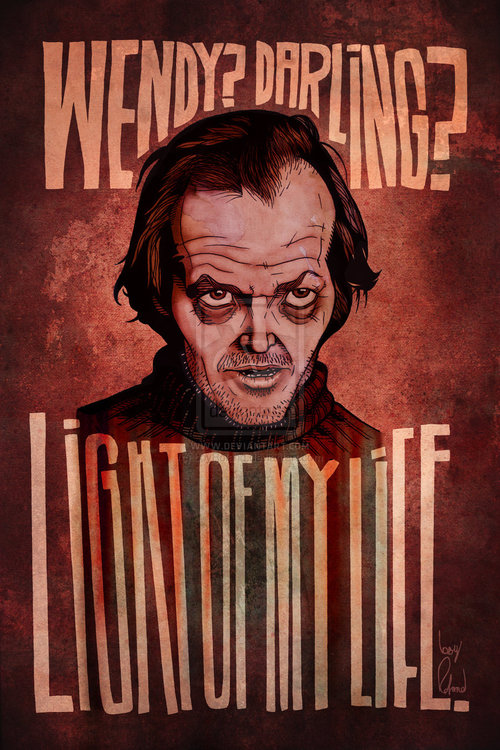
And here's some cool pictures I found while looking for some artwork for this post: 


Sunday, 14 April 2013

Learning to Read with Thomas Pynchon

Do you hate the kids these days? Do you often complain of them not being anything like the kids of your day? Do you blame a lot of this on the illiterate culture of today's world? All of it too focused on videogames and action films, throwing aside what was once man's go-to for complex storytelling and personal expression. If you do then 1) your an idiot, and 2) a few years ago I would have been one of your main targets.

That was until I decided to try out this whole "booking reading" fad, and discovered it wasn't half bad. I admit, I'm one hell of a slow reader, and since beginning my long trek into the land of the written word I admit I have bought way more books than a kid revising for his exams could ever hope to get through (at least for now) but thats part of the classiness of being a book reader, like being in some sort of expensive yacht club, isn't it?

Yet your probably thinking that I started off with something easy. Something that has a lot of pictures and is written in what Wikipedia hilariously calls "simple english". Yet I decided to jump straight into the deep end with "Inherent Vice", a 60s-set psychedelic detective story, in the style of the old Chandler-esqe noir novels.

I can't remember exactly how I find out about this book, but I can take a stab at it being from the announcement Paul Thomas Anderson would be making a film about it. Which to me, was basically a confirmation that this was a good book. Add to that-that every review used the term "Tarantino-esque" to describe the dialogue and everything I could find out at the time about Thomas Pynchon (which was very little, to be fair) made him out to be some sort of mystical figure, only seen by a small select group of people, and who writes ambitious and challenging books on a level of his own.


Which is probably the reason I went for this book in particular: because fans seem to have branded this as "Pynchon-Lite", which makes quite worried for when I get around to reading his earlier output. Yet despite being "Lite" it was a revelation for me in the way it was written. Pynchon writes in such as free way, his sentences are so long and ramble from one subject to the next, yet they never feel boring, they flow so perfectly.

I've read some really great stuff since then (most notably Blood Meridian and The Shining) from some of the most critically-acclaimed authors, and it's made me really notice something about great writing: that good writing is planned out, well structured, re-written and filled with good ideas and follows all of the correct marks which people are taught about to get good writing, but great writing goes past that, it breaks the rules (like McCarthy's complete lack of grammar, and Pynchon's long winding sentences), great writing is when the writer knows the craft so well they become confident enough to bend the rules around their own style, and Inherent Vice is a perfect example of Pynchon doing just that.

Like the two previous posts on this site, this post was just a introduction to the book based section of the site. I'll get around to writing more about Pynchon and Inherent Vice later, as I'm currently reading my way through Philip K. Dick's Ubik, and I'm planning on doing a book vs film article on The Shining. So as always, thanks for checking out the site, and I hope you find your way back here soon.