For anyone who's looking through the archives: this blog used to be called Culture Vulture, had a horrifically bland amount of white on it, gave pointless number ratings on all it's reviews, and was clearly run by some one who had very little interest in blogging.
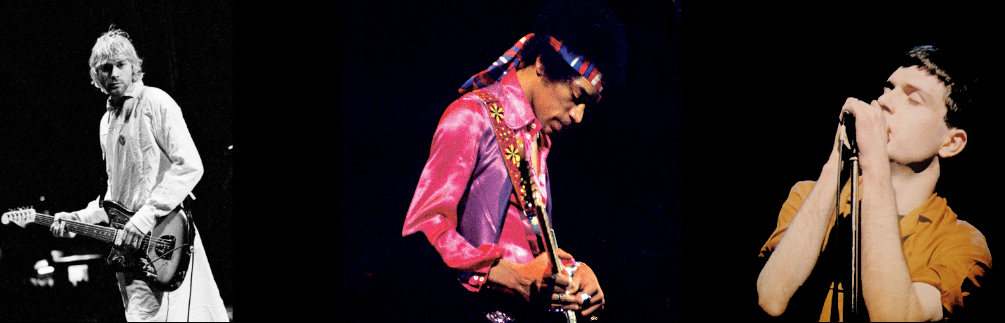
So this is like my mission statement, it's my second actually, I already got high off the blogging juices a few months ago and wrote a perfectly full of myself post, but this time it's for real; you can tell because I even made my own banner for the site, one with lots of dead musicians on it, or three to be exact, despite my intention not being to depress at all.
But the banner, and the reference in the blogs name that I hope to high heaven that you get should get across the point this is a music blog. I'll still be yapping on about all manner of stuff, but I noticed it's music speak that most easily floods out of my brain. So I'll be deleting the huge categories list as well.
Oh yeah and if you could just get me lots more readers, a boat full of cash, some pretty ladies and some unreleased Nirvana CDs that would be great too.
Lots of love and smoochy kisses
Charlie x
Saturday, 19 October 2013

Saturday, 12 October 2013
In Utero: 20 Years Later

The greatest moment for me listening to In Utero again in it's 20th anniversary form didn't even have anything to do with the new and remastered music, but was the moment of realization that 20 years was the amount of time it's took to stop In Utero from being a Kurt Cobain suicide note, a Nirvana sign-off or just a deeply depressing disk seen only through the veil of a shotgun-fueled tragedy that occurred months after the albums release. In Utero, both because of the 20 on it's box and the extra material, which leads into alternate cuts, outtakes and live performances, has finally become just another Nirvana album; a piece of the furniture. Most discs wouldn't survive being taken out of their place of importance or innovation or cultural relevance, but In Utero does because it has the thing that made Nirvana so great, and it has it in spades: that unassuming quality, the delivery of great rock music with no fake importance, painful levels of emotion without the need for an excessive production.
Yet the biggest praise normally leveled to Utero is that it sidestepped the major commercial success of their previous album Nevermind and actually reversed Nirvana back somewhat, away from the mainstream and into a much more raw, darker place that would make more sense alongside the obscure Seattle grundge rockers that Nirvana's success had left behind. Yet this is partly untrue; Nirvana did deliver an album almost purposely aimed away from the mainstream, but they in no way managed to escape the shadow of their success; everything from this albums first line ("teenage angst has paid off well, now I'm bored and old" - which here returns back to it's original sarcastic quip, and not the dark self-contradiction it could be seen as) to it's mainstream-crushing song titles (Radio Friendly Unit Shifter is the antithesis of a mainstream seller) all meant as a response to the band's success, which this whole album is; a darker, more personal, less clean response to an album that was squeaky and shiny and ironically the furthest Nirvana ever went from their signature sound.
And as an album on it's own, forgetting the personal and commercial implications, In Utero has always been a masterpiece, dark and personal for sure, but in musical terms a fast and angry punk-rock release; no remastering required. Which is why it's thankful the remaster has no resemblance to the lifeless remastering of Nevermind from two years back. Not that your stepping into a completely re-organized land of clarity, but this disc updates the original disc without stripping any of the personality out, and on top of that there's a "2013 mix" of each track, produced by original composer Steve Albini, that adds some slight differences to each song. The word slight should be kept in mind; the 2013 mixes don't have any jarring changes, not at all jarring enough to change anyone's opinions of these tracks, and probably un-noticeable completely to the un-Nirvana-trained ear.
Better than that is the entire "MTV: Live and Loud" performance from 1993. I caught most of it on Youtube around a year ago, and listening here without the stage persona, the impressively lively one that Nirvana had, to look at, does weaken things a little; but it's made up for with the great sound quality and some recordings which apparently never aired on TV. I'll stand by my assertion that the live versions of "Radio Friendly Unit Shifter" and "Scentless Apprentice" are better than the album versions; the lyrics are actually understandable and Cobain's gargled singing (and screaming) become less threatening. The highlight of Live and Loud though is a cover of David Bowie's "The Man Who Sold the World", there's already the acoustic version from Unplugged in New York, that has over time become more popular than the Bowie original, which is still the more impressive version, but the version presented here is a faster rock n roll version; and to compare the two is to see the two very different opposing sides of Nirvana.
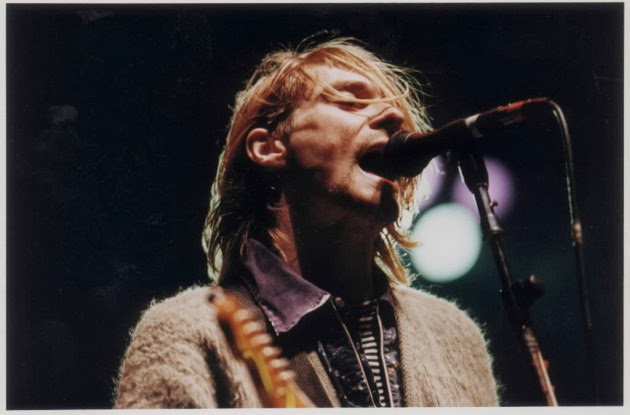
And now for the real draw; the unreleased material. It was with these that I started to see In Utero in a different light. These recordings take In Utero out of the weird underworld it has always been heard, that spectral world from the Heart Shaped Box video filled with broken hymens and biblical illusions, and takes us straight into the studio it was recorded in. Which was itself a fiery two weeks of recording; probably filled with recording sessions as claustrophobic as many of the tracks found here. The highlight for me was "Gallons of Rubbing Alcohol Flow Through the Strip" a track originally promised on my CD copy of In Utero as a "Europe only track" that my copy still never played. At 7:35 it comes in as the longest track in the Nirvana cataloge; the first half takes you into Cobain's parental fears, in all his screeching lyrical glory, but in the end it's hard to truly believe this track is any more than a part-sarcastic wink at his own personal troubles, confirmed by the second half of the track which is a rambling jam session, including Cobain confirming there's "one more solo" and heavy guitar feedback. And it's strange to hear this messy Nirvana for the first time; because for all the talk of slackers and greasy hair Nirvana wear always well-practiced and the unceremonious length of all their other tracks is testament to unacknowledged professionalism. It's a sad song really, taking you so close to the band members, and to someone the world left back in 1994, but it didn't stop me from listening again and again.
The rest of the recordings are no long lost treasure chest but they further illuminate some of the more messy sides of Nirvana; "Marigold" sees Dave Grohl preparing for Foo Fighters with what I imagine is his first recorded vocal performance. A live Foo Fighters version recorded around 15 years later is available, and like everything Nirvana-Foo it's the tidy, well executed and mostly emotionless ying to Nirvana's darker, more haunting yang. Not to pick sides, or even write about something that's pointless and needing of much more space than it would get here, especially when Grohl's enthusiastic rock is a joy Nirvana never gave out, but I've always prefered the older band; and the emotion poured into the final In Utero, along with willingness to go further out into places no-one knew they were even think about in these back-stage recordings, is my quickest way to explain why, and it's all their in "marigold" for you to see.
"I Hate Myself and Want To Die" pulls no punches; no explanation, no sarcasm, it's actually all nonsense to the point that it's title line is never even mentioned. It fits the muddled sound of the album, punctuated by a catchy hook, and was probably dropped more for it's name than any tonal flaws. It originally shared the name of the album before Krist Novelistic persuaded Cobain they were only headed for a lawsuit with that one. Strangely absent from the set list is "Verse Chorus Verse", youtube available, that was also an early album title, and adds to the themes of artistic boredom and personal anguish, but for some reason was not felt worthy of mention here. And yeah, there's other stuff too, there's an instrumental track and a even some demo's, one's called "Jam" although I still can't - even after two or three listens - remember anything about it. You'll gloss over most of it; even a lot of the good stuff, because surely the 2013 mixes are pointless and the live show deserves a separate listening sesh, no: this collection is an excuse to return to a great album, itself expanded by some extra tracks.
And this one's always been my favorite Nirvana disc. Nirvana's discography has always made me stop and stare; the three discs they released, the same two year gaps between each, and the emotional turmoil and changing living arrangements of everybody involved during these three releases all comes across as a perfect beginning, middle and end story. An amateurish garage record that received little success, a mammoth pop record that shot into superstardum, and this, a darkly personal record that went further into both blues and metal, and even had time for their acoustic ready-side ("All Apologies" just makes sense as the final Nirvana track on their final album) and even without the same commercial success has became the band's most loved album.

The actual sound of the album is very aggressive; the opening guitar riffs on "Very Ape" literally rip through the air molecules as you burst into the song which feels like an explosion of inner turmoil, all done in less than two minutes. It's not exactly punk; it's more structured and thoughtful than anything Nirvana had done previous, and songs like "Dumb", while not exactly slowing things down, do provide a more identifiable image of the emotions flying around. Each track tries to do something completely different from all the others yet when you get to the end it feels like a well rounded experience. Yet it's really the flaws that make this album. Some might find that strange, but have you ever listened to an album and simply went with every song there? Good maybe, but boring, and not much of a challenge for the ears. "Tourette's" is heavier than Metallica, and a lot more scary, and I've already mentioned the gargled lyrics and violent screaming on some tracks just come on too strong, but all these tracks really feel like they're going for something, pushing against each other with jagged edges; you wouldn't be expected to like it all. In the end it's just good music, simple as.
And that's really all there is to say. Go listen and enjoy. In Utero has always been tagged as the Nirvana album people who don't like Nirvana like, and the extras are only a support act to that. And it's an even better thought that people would discover the band, or at least the album, in this form.

(I'm going to stop giving a rating in my reviews from now on, it's always felt pointless giving them out so I'd rather just let the review speak for itself)
Wednesday, 11 September 2013
Arctic Monkey's AM Review

Which is to say it has so far been impossible to tell if each new Monkeys album heralds a new piece of musical evolution or just shows us another side of the same band. Their last album Suck It and See ditched the forward trajectory they were on; getting slower and more attuned to studio manipulation, and instead focused on a more raw sound and took Turner's lyrics back to finding the exciting in everyday mundanity. So the most impressive thing about AM is that it finally sums up the band. It fits in all sides of the group; the fast songs still manage to be soothing and the slow songs still have a beat. The whole album has a unified sound that finally confirms that the Arctic Monkeys have moved on from the past, all the while putting together the best track list since their debut.
Like a sudden jolt to the system we're welcomed to the album with the drum beat of Do I Wanna Know? Turner's lyrics come very fast; they remind me of The Rolling Stones, think 19th Nervous Breakdown, and both remind me less of rock lyrics and more of rappers; words, all rhyming, all coming at you fast. Do I Wanna Know? is a great rock song that works just as well as a party tune. The album starts off with it's fastest tracks, eventually slowing down for the aforementioned Mad Sounds and No. 1 Party Anthem, which feels like the loneliest dance floor in the world until Turner's "Come on, come on come, before the moments gone, number 1 party anthem" which sounds like a gleaming ray of hope and energy injected into a deadened night club; just like the rest of the album this song could easily fall into depression-filled plodding but instead I couldn't stop listening; it aims for the dance-floor but there's still something to return to when the party's over.

There's nothing to prove on this album either; which isn't meant as a criticism. The bands guitar is there to be admired but never takes over the song, it neatly folds into the production. And Turner's lyrics go through their biggest change, possibly brought on by his move to America, in which he looks away from the smaller details and happenings of everyday life and instead writes an album filled with poetic metaphors and the longings for love: "It's an exploration, she's made of outer space/and her lips are like the galaxy's edge/ and her kiss the colour of a constellation falling into place". There's a Hendrix-esque mystique in the otherworldly-ness of the lyrics on AM.
Yet when reaching such highs it makes it worse when you come crashing down; which the latter part of AM does. There's some filler here; Knee Socks and Snap Out of It being the main culprits. I have mixed feelings towards recently released single Why'd You Only Call Me When You're High? It represents the style of the album perfectly; once again it starts with a drum beat that leads into a slowed-down hip-hop sound and keeps accelerating throughout. But the chorus blurs into the verse and by then this same sound just feels like a drag compared to other tracks on the album. I hope the Monkey's don't tag this "their style" as if to say they'll stay on this path from now on, but for what it is AM is my favorite Arctic Monkeys album to date, and a great surprise following their weakest album. 9/10

Saturday, 7 September 2013
What I Watched This Summer

Slacker (1991)


So I really love 90s. I'd cut that down to just the movies but hell, I love the whole decade. The clothes. The hipsters. The angst. And the whole slacker thing too; all those great elements of the 90s and a whole sub-culture created out of it. Most time periods, even the most cherished of past times: the hippy 60s, can only be viewed in fragments, usually framed by a single authors viewpoint, no matter how much we think we're seeing the whole picture. Yet Slacker gives you a very unbiased look through the key whole into an early 90s Los Angeles. It has no plot; we follow some characters and when we are done with them the camera floats out onto someone new. No connections or backtracking.
The first thing I thought about was the films of Andy Warhol; for a man so obsessed with death Warhol tried his hardest to film real life, to remove the mechanizations of films of the time and show reality, or at least as much of it as the camera could catch. His films don't amuse me; actually I care more for the concepts of most Warhol films, the simple knowledge they have been created, than the films themselves. At the end of Slackers (don't worry, spoilers don't work on this film) the camera is finally acknowledged as a group of teens run around filming anything they can; there's no set-up for this scenario, just the images on screen. The camera gets swirled around and pointed at the other teens and then it's chucked into the ocean. It's gone, along with the images on it. Only it's not, because we're sitting here watching it. And that single image of the camera twirling around into abyss gives the full justification for this movie; to capture life. It was all to take a time and a place that was everyday for some and stretch it out using cameras so that it still exists here today in 2013.
Every film does this but they capture the themes and story the filmmakers want to show; I get the impression Richard Linklater set out with the idea to film lots of LA youngsters and the script came after. And it's in that script where Linklater manages to surpass Warhol in delivering an enjoyable experience, a one you want to sit through for more than the concept. The characters are semi-realistic but in no way boring (maybe that's what adds the "semi") and from conversations about art to flirting to long monologues about conspiracy theories, I never stopped being interested in the characters. Linklater's dialogue is very similar to Tarantino's: long monologues that don't seem to reveal anything about the speaker on face value but through the very subject of the conversation and the way it's said we start to piece together the character; more closely resembling life than most film dialogues.
In the end Slacker is in many ways just a modernized version of the Warhol legacy, albeit enhanced for greater enjoyment; which ends up making a film as unique as this so watchable. 9/10
Who's Afraid of Virginia Woolf? (1966)
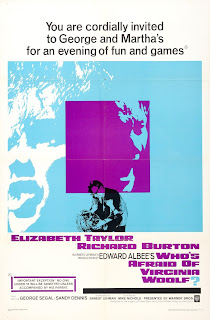
Does it make sense to be a film fan and dislike black and white? Or old films? If my love of films stems from naturalistic films (or very fantastical films that I don't mind believing are real) then what am I to make of older pictures which go out of their way to feel staged and remind the audience of their fantasy, or of black and white which seems to strip away control from the filmmaker; most modern black and white films, ala Control or Schindler's List, tend to work because their directors have decided that a lack of colour will go with the story.
So it should be clear that going into Virginia Woolf didn't look too positive from the outside. Although my biggest problem was that this was a "stage film"; adapted from the play of the same, Virginia Woolf falls into a category of film I dislike: films from plays that don't attempt to do anything unique with the medium of film and simply film the play.
We pick up the story as an older couple returns home late one night. They seem content if argumentative. They are soon joined by a much younger couple; very much in love and carefree. From their the arguments begin; boosted heavily by the excessive use of alcohol throughout. These are the only four actors who appear in the film, and aside from a location change in the middle of the film we spend the majority of the film trapped in the house. To people interested in making their own films it's films like Virginia Woolf that stand as big beacons of hope; it has no real structure as all events of the story stem from the characters, and there is a big focus on dialogue and ambiguity. The only problem is most of it doesn't work. The twist left me empty; I didn't see any way to relate it to everyday couples, while the stakes of the story never felt explicit (or even visible) enough to keep me interested.
Others might call this an "acting film" or if it was released today "oscar bait" yet one of the best features of the film is it doesn't shoehorn attention onto characters when their not needed; most of the weight of the story rests on the older couple: Elizabeth Taylor and Richard Burton. The two play a twisted game with each-other throughout. Burton is the highlight of the film; his character at once feels despicable but relatable at the times when the troubles of his marriage come to the forefront.
In the end I took little from Virginia Woolf. It has set the template for all stage films since; which to my mind is party what has made them so un-exciting. 6/10
Hobo with a Shotgun (2011)

I spent a small part of my summer reading up on this new found thing called "vulgar auteurism": think Michael Mann and Michael Bay. It's a good idea, maybe un-needed, but it throws out any ideas of what a good film should be; no looking for extra-long single takes and restrained cut aways from violence. It makes rating a film like Hobo With A Shotgun a lot easier; it doesn't have to be compared to Lawrence of Arabia or even Die Hard, the merits of a film like this exist in a far off place on their own.
Thinking of this side of "vulgar" cinema, Hobo reminded me heavily of Jason Statham action vehicle Crank, another fantastic movie that cares very little about critical success or even good taste. That movie creates a decent excuse for all it's mayhem to happen in it's real world setting, while the entire world of hobo is an excuse for such carnage. The city's in a mess, the police are corrupt, and apocalyptic gangs search the streets for targets. More worrying is that most of the inhabitants are part of the problem; only a small few people get on with their normal lives.
In walks the hobo. He's no Eastwood type like you might be expecting, he's just as helpless as everyone else in the city; although he eventually reaches his limit, and upon realizing the police aren't going to help him decides to deal with things his own. And out comes the shotgun.
The excessive violence and one-note world that's lost all humanity is what makes the film so good; it doesn't second guess it's limitations, instead it give us exploding heads and twisted characters with no apologies. The film saturates most scenes so that each one is dominated by a single colour. In the beginning we see this tortured suburbia through the veil of a bright blue sky. The sky owns the camera in these scenes. When we see the bad guys discussing plans in their hell-drenched lair we see nothing but red. It adds to the all-out nature of the film. Seeing such violence filmed in pure blood red across the screen just pushes everything to it's furthest point. If vulgar auteurism is all about throwing out good taste and constructing a taste that celebrates the extremities then I guess that makes Hobo With A Shotgun the Godfather of vulgar cinema. 9/10
4 months, 3 weeks, 2 days (2007)

Listening to Jim Emerson and his "opening shots" series would leave you to believe it's where a film starts that is most important but I'd vogue for the opposite; plough through a bad opening and their can be a hidden goldmine waiting for you on the other side, but a ending can effect (destroy or enhance) all that has gone before. Which is why it's so easy for me to call this movie great despite spending the first three quarters wondering whether I should just turn it off and get on with my life; because that last section of the movie really delivered.
The film is set in late 80s Romania; the communist regime of the time made abortions illegal, with the film revolving around Otilia who is attempting to get an abortion for pregnant friend Gabriela. The two go for help from a man who makes his money through illegal abortions; he's professional about the deal and getting everything right first time, although as Gabriela continues to do things wrong it is revealed what a more shady character he is.
As Gabriela is lying in a hotel room waiting for the abortion to complete we get our first sign of tension., although it leads to very little. The film is slow paced, and for a film that has a clear objective from the start we spend an awful lot of time learning about the characters, especially Otilia who's struggles with her boyfriend make up part of the film.
I was bored out of my mind until things started to... happen. There's no big explosion or car chase, but not only does the ending of the film actually make the viewing an enjoyable experience, it makes the rest of the film worth it. Boring boyfriend subplots might not seem important in a film about abortion but in the end when you can see all of the pieces on the board it's finally clear this film isn't really about anything; it raises some points and the unorthodox situation of the country their in opens up some arguments between characters that are very rarely said.
As for the camera, as is frequent with the majority of modern foreign films I've seen the camera is stationary and very rarely moves. It's the complete opposite of my normal cinematic sensibilities, but in the end it shows that behind what you see on screen, it's the films that leave you with something that stick with you the longest. 8/10

Who's Afraid of Virginia Woolf? (1966)

Does it make sense to be a film fan and dislike black and white? Or old films? If my love of films stems from naturalistic films (or very fantastical films that I don't mind believing are real) then what am I to make of older pictures which go out of their way to feel staged and remind the audience of their fantasy, or of black and white which seems to strip away control from the filmmaker; most modern black and white films, ala Control or Schindler's List, tend to work because their directors have decided that a lack of colour will go with the story.
So it should be clear that going into Virginia Woolf didn't look too positive from the outside. Although my biggest problem was that this was a "stage film"; adapted from the play of the same, Virginia Woolf falls into a category of film I dislike: films from plays that don't attempt to do anything unique with the medium of film and simply film the play.
We pick up the story as an older couple returns home late one night. They seem content if argumentative. They are soon joined by a much younger couple; very much in love and carefree. From their the arguments begin; boosted heavily by the excessive use of alcohol throughout. These are the only four actors who appear in the film, and aside from a location change in the middle of the film we spend the majority of the film trapped in the house. To people interested in making their own films it's films like Virginia Woolf that stand as big beacons of hope; it has no real structure as all events of the story stem from the characters, and there is a big focus on dialogue and ambiguity. The only problem is most of it doesn't work. The twist left me empty; I didn't see any way to relate it to everyday couples, while the stakes of the story never felt explicit (or even visible) enough to keep me interested.
Others might call this an "acting film" or if it was released today "oscar bait" yet one of the best features of the film is it doesn't shoehorn attention onto characters when their not needed; most of the weight of the story rests on the older couple: Elizabeth Taylor and Richard Burton. The two play a twisted game with each-other throughout. Burton is the highlight of the film; his character at once feels despicable but relatable at the times when the troubles of his marriage come to the forefront.
In the end I took little from Virginia Woolf. It has set the template for all stage films since; which to my mind is party what has made them so un-exciting. 6/10
Hobo with a Shotgun (2011)

I spent a small part of my summer reading up on this new found thing called "vulgar auteurism": think Michael Mann and Michael Bay. It's a good idea, maybe un-needed, but it throws out any ideas of what a good film should be; no looking for extra-long single takes and restrained cut aways from violence. It makes rating a film like Hobo With A Shotgun a lot easier; it doesn't have to be compared to Lawrence of Arabia or even Die Hard, the merits of a film like this exist in a far off place on their own.
Thinking of this side of "vulgar" cinema, Hobo reminded me heavily of Jason Statham action vehicle Crank, another fantastic movie that cares very little about critical success or even good taste. That movie creates a decent excuse for all it's mayhem to happen in it's real world setting, while the entire world of hobo is an excuse for such carnage. The city's in a mess, the police are corrupt, and apocalyptic gangs search the streets for targets. More worrying is that most of the inhabitants are part of the problem; only a small few people get on with their normal lives.
In walks the hobo. He's no Eastwood type like you might be expecting, he's just as helpless as everyone else in the city; although he eventually reaches his limit, and upon realizing the police aren't going to help him decides to deal with things his own. And out comes the shotgun.
The excessive violence and one-note world that's lost all humanity is what makes the film so good; it doesn't second guess it's limitations, instead it give us exploding heads and twisted characters with no apologies. The film saturates most scenes so that each one is dominated by a single colour. In the beginning we see this tortured suburbia through the veil of a bright blue sky. The sky owns the camera in these scenes. When we see the bad guys discussing plans in their hell-drenched lair we see nothing but red. It adds to the all-out nature of the film. Seeing such violence filmed in pure blood red across the screen just pushes everything to it's furthest point. If vulgar auteurism is all about throwing out good taste and constructing a taste that celebrates the extremities then I guess that makes Hobo With A Shotgun the Godfather of vulgar cinema. 9/10
4 months, 3 weeks, 2 days (2007)

Listening to Jim Emerson and his "opening shots" series would leave you to believe it's where a film starts that is most important but I'd vogue for the opposite; plough through a bad opening and their can be a hidden goldmine waiting for you on the other side, but a ending can effect (destroy or enhance) all that has gone before. Which is why it's so easy for me to call this movie great despite spending the first three quarters wondering whether I should just turn it off and get on with my life; because that last section of the movie really delivered.
The film is set in late 80s Romania; the communist regime of the time made abortions illegal, with the film revolving around Otilia who is attempting to get an abortion for pregnant friend Gabriela. The two go for help from a man who makes his money through illegal abortions; he's professional about the deal and getting everything right first time, although as Gabriela continues to do things wrong it is revealed what a more shady character he is.
As Gabriela is lying in a hotel room waiting for the abortion to complete we get our first sign of tension., although it leads to very little. The film is slow paced, and for a film that has a clear objective from the start we spend an awful lot of time learning about the characters, especially Otilia who's struggles with her boyfriend make up part of the film.
I was bored out of my mind until things started to... happen. There's no big explosion or car chase, but not only does the ending of the film actually make the viewing an enjoyable experience, it makes the rest of the film worth it. Boring boyfriend subplots might not seem important in a film about abortion but in the end when you can see all of the pieces on the board it's finally clear this film isn't really about anything; it raises some points and the unorthodox situation of the country their in opens up some arguments between characters that are very rarely said.
As for the camera, as is frequent with the majority of modern foreign films I've seen the camera is stationary and very rarely moves. It's the complete opposite of my normal cinematic sensibilities, but in the end it shows that behind what you see on screen, it's the films that leave you with something that stick with you the longest. 8/10

Sunday, 1 September 2013
Summer Holiday Send-off
The sun's setting and I have to go back but none of it feels real, it's never-ending; the longest never-ending I will ever have. It can't be 3 days left, I wanna do it all over again and not even do any of it differently. It was lots of extended lows punctured by soring highs. Sitting in the house. Internet. Have I got depression? I haven't when I'm too caught up to think about it, but maybe thats how it is for everyone.
Maybe I'm so young such a short time can change me; haven't spoken to you in what, 13 weeks? Maybe you won't even recognize me. But I can't start new. New institution, same people. Education never changes. It hasn't even started yet and I've already planned out the ending. And what comes after as well. But I don't know; my future is confusing. Would be worse if it wasn't. This way the road has lots of surprises. Not sure if I want any of them tho; I'm boring like that. At least I think I am, but I wouldn't want anyone to know that I am. But maybe they think I am anyway, which is why I spend so long trying to change that. I'm not a cool enough personality to be proudly uncool. I'll keep trying, dammit!
And I do all this stuff. Anything I do that looks from the outside like a fulfilling life is counted as stuff. Anything social; because that's the high that penetrates the low. I go to the beach. It's all good, every situation I'm in is easier to live than it is to think about. Even the bad stuff. I'm home and I got sun burn; sizzling up my skin; good excuse not to go out tho. It takes me a week to recover. Screaming like Kanye West on Yeezus; but much more high pitched, I think I scared my dog; and I wouldn't do it if my parents were around. Kill me now; worst pain I ever felt. So bad I couldn't even think; and that's one of my hobbies. I could think about the pain; and think about making deals with the devil. He'd take the pain away and I'd do some evil in return. One of those spooky realizations when it came naturally to me. But it ended after a week. One of those experiences I wouldn't change but definitely wouldn't re-live. I'd give you all my prized possessions; maybe that would help me.
And I end it all at a party. It wasn't even to celebrate the summer ending. Drunk: my body goes tipsy and swerve-y and I'd only describe it as being more free in retrospective, and the voice in my head goes drunk too. And I start to say all those things I'd usually just think about. Actually I probably wouldn't even think things those things, but I talk and talk, it's easier drunk. It's not the confidence it's the ability to forget your normal codes of conversation and join into a communal code. And all the none drunks just look at you, but even if there was just one of us they'd still be the outsiders. It's the beer: it's the right way to be. Before I'd say my first drunk experience was good research, but it was far too fun to be research, and how can something that is actual life help with all these made up things in our artist brains? And I kissed a girl for the first time, but that's private isn't it? A tongue swerving around in my mouth; it's beautiful, and so was she but I still had to clarify her name with someone the next day. And I wake up, actually no; continue consciousness: damn fucking wooden floor, and I think everyone there hates me. It's just the lads there and were all having fun and laughing; it must be all in my head; but the alcohol's already outta there. But so what, nevermind. I walk out of there with a friend and go back to society and join into the stream. But that nights still with me, and my mind's still drunk, still feels a little the day after too, even if my body's fine now.
And now I go back in a few days. But it's been a good summer. And the bad times and good times don't matter cause it's all one big thing. But the good times do matter because I wanna have them with me and they make me have more. And I think the bad times matter too, even though I didn't learn anything from them anyway. Ah well, nevermind.
Maybe I'm so young such a short time can change me; haven't spoken to you in what, 13 weeks? Maybe you won't even recognize me. But I can't start new. New institution, same people. Education never changes. It hasn't even started yet and I've already planned out the ending. And what comes after as well. But I don't know; my future is confusing. Would be worse if it wasn't. This way the road has lots of surprises. Not sure if I want any of them tho; I'm boring like that. At least I think I am, but I wouldn't want anyone to know that I am. But maybe they think I am anyway, which is why I spend so long trying to change that. I'm not a cool enough personality to be proudly uncool. I'll keep trying, dammit!
And I do all this stuff. Anything I do that looks from the outside like a fulfilling life is counted as stuff. Anything social; because that's the high that penetrates the low. I go to the beach. It's all good, every situation I'm in is easier to live than it is to think about. Even the bad stuff. I'm home and I got sun burn; sizzling up my skin; good excuse not to go out tho. It takes me a week to recover. Screaming like Kanye West on Yeezus; but much more high pitched, I think I scared my dog; and I wouldn't do it if my parents were around. Kill me now; worst pain I ever felt. So bad I couldn't even think; and that's one of my hobbies. I could think about the pain; and think about making deals with the devil. He'd take the pain away and I'd do some evil in return. One of those spooky realizations when it came naturally to me. But it ended after a week. One of those experiences I wouldn't change but definitely wouldn't re-live. I'd give you all my prized possessions; maybe that would help me.
And I end it all at a party. It wasn't even to celebrate the summer ending. Drunk: my body goes tipsy and swerve-y and I'd only describe it as being more free in retrospective, and the voice in my head goes drunk too. And I start to say all those things I'd usually just think about. Actually I probably wouldn't even think things those things, but I talk and talk, it's easier drunk. It's not the confidence it's the ability to forget your normal codes of conversation and join into a communal code. And all the none drunks just look at you, but even if there was just one of us they'd still be the outsiders. It's the beer: it's the right way to be. Before I'd say my first drunk experience was good research, but it was far too fun to be research, and how can something that is actual life help with all these made up things in our artist brains? And I kissed a girl for the first time, but that's private isn't it? A tongue swerving around in my mouth; it's beautiful, and so was she but I still had to clarify her name with someone the next day. And I wake up, actually no; continue consciousness: damn fucking wooden floor, and I think everyone there hates me. It's just the lads there and were all having fun and laughing; it must be all in my head; but the alcohol's already outta there. But so what, nevermind. I walk out of there with a friend and go back to society and join into the stream. But that nights still with me, and my mind's still drunk, still feels a little the day after too, even if my body's fine now.
And now I go back in a few days. But it's been a good summer. And the bad times and good times don't matter cause it's all one big thing. But the good times do matter because I wanna have them with me and they make me have more. And I think the bad times matter too, even though I didn't learn anything from them anyway. Ah well, nevermind.
Thursday, 29 August 2013
My Life in Music

Party like it's 1999

"You can dance, you can jive, having the time of your life/ See that girl, watch that scene, diggin' the dancing queen"
Pre 9/11 Music

"Uh, thank god for mom and dad/For sticking two together/Cause we don't know how"
(Early) Teen Angst: 2004

Yet I still wonder why I went for Nirvana. You can almost spot Nirvana fans; I took guitar lessons in middle school and the Nirvana fan there was a girl who I remember for wearing all black and looking like the definition of rebellion. I don't think someone could point me out as a fan of Nirvana or for that general vibe. I was actually pretty popular at school when younger. Now I'm more an outcast. Because y'now, people: what a load of fuckers. But thinking back I don't have the same lonely-and-bullied-kid-seeking-solace-in-kurt-cobain sob story that most have; I just liked the music.
"I found it hard, it was hard to find/oh well, whatever, nevermind"
2006: Rock & Roll is back?

Another band, maybe not as respected, but no less important to me, is Nickelback. They really have went downhill lately haven't they? You say you don't know, that you've never given a band like Shitelback enough thought to actually ponder any ups and downs the band might have went through. Well as someone who was very proud to tell of my love for Nickelback (Cringe) I can tell you full well that yes they have went downhill. They've went so far downhill they've plunged straight-through the ground, straight past Coldplay (used to like them too) and are plummeting straight for the center of the earth. Hopefully it's uninhabitable. But that does show that at one point they were flying high; like all 21st century bands they have done no experimentation or brought us any innovations and they have kept that misogynistic rockstar pose that everyone thought was banished away in the 90s (so much for forward progress) but when they weren't sucking up to the mainstream they gave me my childhood template for modern rock. Which meant lashings of 'How You Remind Me' and 'Rockstar' on endless repeat.
My opinion of this moment in rock is like two opposing forces pushing against each-other. Looking at it as a wisdomous music critic I must say this music is horrifically bland. Following on from the three-cord rock of the 90s and inspired by the simplistic tunes of Nirvana, this rock is recycled from the past but without any of the emotion or inspiration which made those older bands so good. But, but... ah fuck it; I love this music. Or at least it has a glowing halo above it's head protecting it from any negativity I might throw it's way. I grew up buying albums by Red Hit Chili Peppers, Snow Patrol, The Kooks, Foo Fighters and Keane; most represent a misdirection from 90s which was all about dark emotions and self-indulgence; this music is all meant to appeal to the mainstream, to be played in stadiums and fit the standard bill of what "rock music" is; by which I mean none of the people involved in these bands were of the Jim Morrison drugs-sex-rock-n-roll ilk of rockstars, they either pretended they were or just buckled up and stayed clean. Not exactly a bad thing, but most likely the reason for my determination to find bands that acted the complete opposite.
"And what a scummy man/Just give him half a chance
I bet he'll rob you if he can/Can see it in his eyes,
Yeah, that he's got a driving ban/Amongst some other offences"
The Spotify Years (2009 and onward...)

Which makes this the only era in which I can properly report on the modern music of the time. This was when music stopped sounding enhanced by machines and just started sounding like machines. Trademarks of this era include songs which ended with a high pitched "Jasoooooooon Derulooooooooo" just to make sure you knew who was singing, incase y'know, MTV forget to put the titles up or something; the beginning of modern artists trying to seem down with the moment, usually by utilizing twitter, internet speak and very poor dance moves; and lots of women, all apparently inspired by Madonna and Britney Spears (If only people could take other sources of inspiration) which has lead to a swarm of Katy Perry, Rihanna and P!nk, who you'll be happy to admit are pretty decent as long as your the same age as me and didn't grow up in some musically elite family, as well as spawning lesser demons such as Nicki Minaj and Selena Gomez. Yet I listened to it all, and enjoyed most of it. The music here starts to blur together but I'll choose OMG by Usher to sum up this time perfectly; it's a title derived from text speak, lyrically it's a by the numbers love song that has no self referential elements to Usher whatsoever, it's sung in auto-tune and lacks any live instruments, just computer work and a solid beat. Thing is, I enjoy this song; I will clarify: if asked to list my favorite films I would place Captain Ron very high purely for nostalgic reasons, yet asked my favorite songs OMG wouldn't be near, not even though it's attached to such a great time in my life.
In other words it was this period of my life I became a music snob: a huge one! Eventually, if your interested in music, the large world of music out there will be opened up to you, but until then you find the occasional band because the singer was married to Kurt Cobain or because your dad has their entire library of CDs. The Prodigy, The Beautiful South, Hole; all of them fueled the idea that I had heard all great music; that other than those oldies; Elvis and The Beatles and the like, all too old now to be relevant or in any way enjoyable today, I had heard everything, and was able to know for fact that the modern pop of the time was all rubbish that didn't stand up to the classics.
I believe the first real musical discovery I would call my own was Cream. You probably won't recognize them but you'll recognize the guitar riff from 'Sunshine of your Love', everybody does. It was them and Jimi Hendrix. There was something unique about these artists, not only because they were older than the other bands I'd listened to but because the vibe they gave out: manly and self-assured. Their sound was heavy, like a wall of sound coming at you. At the other end of the spectrum to modern rock. They were all about technically crafted guitar work and psychedelic lyrics.
At that point I thought I was to spend the rest of my life hunting down obscure records from unsuccessful bands in the hope of finding a gold mine, because what else was there?
"So don't mind me if i repeat myself/These simple lines be good for your health"
January 25th 2013

Oh and I'll use this as a chance to thank Spotify for not signing The Beatles; it brought me back to my childhood where I went through and collected the complete discography for some artists. And from then it's all a blur: Led Zeppelin, Pink Floyd, The Velvet Underground, Joy Division, The Beach Boys, David Bowie, Lou Reed, Guns 'n' Roses, Radiohead, Kurt Vile, The Who, The Rolling Stones, The Kinks, The Stone Roses; everything. I'm not saying I've heard everything, or even a small percentage, but I feel like it's all been opened up to me. I'm that astronaut at the end of 2001 flying through the infinities of possibilities and colour, all of them passing through me at once.
And it was once this all opened up to me and I could finally see musical history and all it's influences and connections and the early roots of everything new that I felt like I could finally claim modern music as my own. I could finally hear it and not look down on it; I see what other generations had and when I listen to new music it doesn't have to prove anything, doesn't have to stand up to what I imagined was there, it simply is what it is. So I started listening, turns out modern music got good; the pop machine is still in the crapper but thats good; this new brand of music may not be some politically charged fight against the powers that be but they shine like aluminous paint around the black heart of the corporate machine. Kanye West is the best of the modern artists, his whole life is one big performance art and his performance as an ever-exploding ego carries over to the music; very ambitious and all consuming. Daft Punk had a big comeback with Random Access Memories, a future classic, and The Prodigy look to be on a comeback to; so that's techno sorted. Arctic Monkeys, with the singles that have came out of their upcoming album, have escaped the trap that their early success put them in, and from Arcade Fire to Florence and the Machine to Taylor Swift, everything seems like it's going to be alright.
"Jenny said when she was just five years old/There was nothin' happenin' at all
Every time she puts on a radio/There was nothin' goin' down at all,
Then one fine mornin she puts on a New York station/You know, she don't believe what she heard at all
She started shakin' to that fine fine music/You know her life was saved by rock 'n' roll
Despite all the amputation you know you could just go out/And dance to the rock 'n' roll station"

Saturday, 24 August 2013
Thoughts on Porn

- I wish I could go back and save the first porn movie I ever masturbated to; it was a lesbian video, recently filmed but vintage looking. It was nothing special but it would be a nice time capsule for one Saturday afternoon when I was 13 years old. I still don't know the thought process that goes into the discovery of masturbating for most, although I look forward to that discussion, but I picked it up from a Lee Evans gig. His O2 tour; he does jokes about shopping for beds and at one points he acts out a pervy shop assistant and therein does that hand movement. I'd looked at porn videos before, thinking the aesthetic pleasure as all there was, but it was this Saturday I decided to apply that hand movement to see just what Evans was on about. It all spun off from there.
- My first inkling for porn goes back to being a kid, around the age of 10, watching The Legend of Zorro (that's the pretty average sequel to the great Antonio Banderas original) on a dreary Saturday night; I don't know either, I guess Saturday is just perfect for pornographic consumption. I was close to my appointed sleepy time so I quickly excused my self from the living room with the vagueness of "I have to use the computer" then loaded up AOL (yeah baby!) and simply typed in "porn". Contrary what I was expecting Google did exactly as I told it to and I was faced with a page full of links; I didn't dare click on them. I've always been paranoid about what other people my age are doing - probably brought on by a lack of siblings - although I know now that if I had clicked any of the links Google forwarded to me in that moment I would have been the first person out of everyone I knew to look upon those images. So lucky I chickened out; Taxi Driver fucked me up when it comes to violence so atleast I wasn't as damaged when it comes to sexuality. Also lucky was the fact that on at-the-time AOL the "recent searches" didn't show searches with adult words in them. So no telling off for me; although I still decided to leave porn alone for a while.
- That leaves some gap years from The Legend of Zorro to Lee Evans at the O2: in which I eventually grew restless enough that I tried again to get to porn: only this time with so much built in paranoia that my computer would rat me out that I ended up attempting to get onto porn sites in the most convoluted ways that have ever been done. This early obsession played itself out with me watching a lot of "youtube porn" which for anyone not in the know is basically a cheesy story of jealousy or cheating followed by (primarily Japanese) girls making out. This of course because porn can't be shown on Youtube. The stories, although silly and only existent at the beginning of the videos, are still sadly some of the best porn movie stories I've seen. There was tons of crap on Youtube too: one video promised the highest quality video Youtube porn had ever offered; right up until the point where the actor stopped, turned so his whole face engulfed the camera, and ranted to me about what a sicko I was for trying to watch porn. I don't remember the details of his rant although it probably had nothing to do with the act of watching porn itself: just disgust that I must have became so bored of porn on Redtube and other real sites that I needed the thrill of watching porn on Youtube to get me off.
- Inevitably these videos stopped fulfilling my primal needs and I was forced to devise a plan so cunning Steve McQueen himself would have applauded. I loaded up some Youtube porn, one of the short videos that shows you nothing sexual but promises you a video on some other site. Why I never thought to just search for porn and delete the history, or even write the porn links on these videos in the html bar, which my parents would never think to check, is beyond me. But thankfully Youtube (old Youtube that is; you kids don't know the shit they're feeding you) had a feature on each video that had links to every site that particular video had been shown on. Admit it, if porn was illegal I would be some sort of black market trader with this find. It took me a few attempts looking through all the links on every piece of super-soft-core porn I could find but eventually I found one that linked to a real porn site. Which was also my first realization that the majority of porn on the internet is free. I felt like a bored middle-aged man living in an oppressed Orwellian hell who had burst out of his cell block and was surfing through the streets on a hoverboard while the rest of the earth went along with their boring rituals as usual; unknowing of what was happening right outside. Here I saw my first real porn video, another time capsule I wish I had, of a black woman wearing a cowboy hat dancing naked on a table. Pretty soon I figured I could just search for porn like everyone else and not get caught which eventually lead me to that first masturbatory experience.
- I don't think talking sex or masturbation is weird; only as weird as you find the acts themselves, really. Like everything in life it's better to just share your twisted view of obscenities. Why? because everyone has them, at least you can paint yourself an interesting colour by sharing.
- Which could of lead us to my one masturbating anecdote; only the internet, or maybe just written word, sucks the lifeblood straight out of that one. Lets just say I've came close to being caught, and in surprising stupid ways.
- But that was when I was younger; I doubt I could be badly told off now; if you are a parent and find your kids masturbating wrong then it's not that your a prude, just a self-deluded prick. I've discussed this with friends before; I doubt in the moment my brain would be able to translate the bullet points we came up with; although it doesn't matter, they're all just translations of "we're teenagers, this is what we do". Ever hear the old saying "the liar's punishment is he can't believe anyone else", well I'll translate that into porn (like Sid Vicious covering Frank Sinatra) because all good things are more relatable when they're made dirty. Everytime my parents shout my name from the other end of the house, annoyingly using that formal phone-call voice as if they're shouting from the secret CIA office hidden in our house, panic rips through my mind. Said panic would be nowhere to be find if they shouted in angry-as-fuck voices. I have this weird image of answering this formal reply, going up into the room where the family computer is kept, my dad leading me in with an eager smile, then my mother jumping out and slamming the door behind me and all hell breaking loose. Again: lucky, it hasn't happened yet.
- Which all wraps into a sort of "prologue" to my experiences with porn; not many noticeable things or points of interest after that, just tons of wanking. I've still never seen the "classics" by which I mean the pizza delivery boy or the plumber, which I guess is a compliment to the modern porn industry. Although even with all the industry can throw at you your bound to get bored of the videos; no matter the category. Your imagination's good for a few, although eventually that just gets depressing. Never to fear though, the internet has other supplements for you too. Sex stories are my favorite of these; especially the ones on seriously-aimed sites that try to pass their weird situations and random sexual occurrences off as truth. There are sites aimed solely at sex stories but the majority of these writers seem to get carried away; I usually end up skipping to the end only to find a completely different set of characters have taken over the story. Another type is celebrity fakes which are varying degrees of photo-shopping craftsmanship used to place a famous head over a naked body. Which is porn's distorted take on celebrity culture in which people can take their gossip mag fantasies as far as they want.
- And that's porn in a nutshell. A (fantastically so) irreplaceable part of our culture. Go watch Boogie Nights, it doesn't make fun of porn; it uses it as much of a backdrop as Tarantino uses slavery in Django Unchained, some would say to the cause of less offense. Boogie Nights is also a great reminder that there's so much going on behind porn.
 |
| Any excuse to use this |
And it's punk too. It's more rebellious than rock and roll could ever be. It's like drugs: young people doing something juvenile in nature to show how grown up they now are. Both drugs and porn, and rock n roll too, carry over into adult hood, but it's made for young people. Porn doesn't damage people; yeah you can get traumatized sexually, but it would take a lot more than what's on a computer screen or a magazine fold-out to do that. It's part of growing up; going on some wild porn bender, watching messed up shit and trying out all the different types you can and doing something fun with the full knowledge you shouldn't be doing it. Porn would be of less interest for everyone if it was a social norm.
And that's why David Cameron's idea won't work. I doubt it will even happen but if it does then it's just a glitch in the system that'll be sorted out in no time and will stand forever as an example of why to just leave this whole porn thing alone. It reminds me of Arnold Schwarzenegger, near the end of his term as mayor of California, trying to ban all violent video-games. He likely didn't care, after all why would The Terminator give a fuck about violence? It was a last-ditch effort to say he had done something, anything at all, with his time in office. Which I guess makes David Cameron the British equivalent of Arnold Schwarzenegger, only without the acting chops, multi-million dollar film franchises, body-building legacy, or ability to have a cheating scandal and have no-one give a shit.

Thursday, 15 August 2013
FORCED TO READ: Reviewing Khaled Hosseini's The Kite Runner
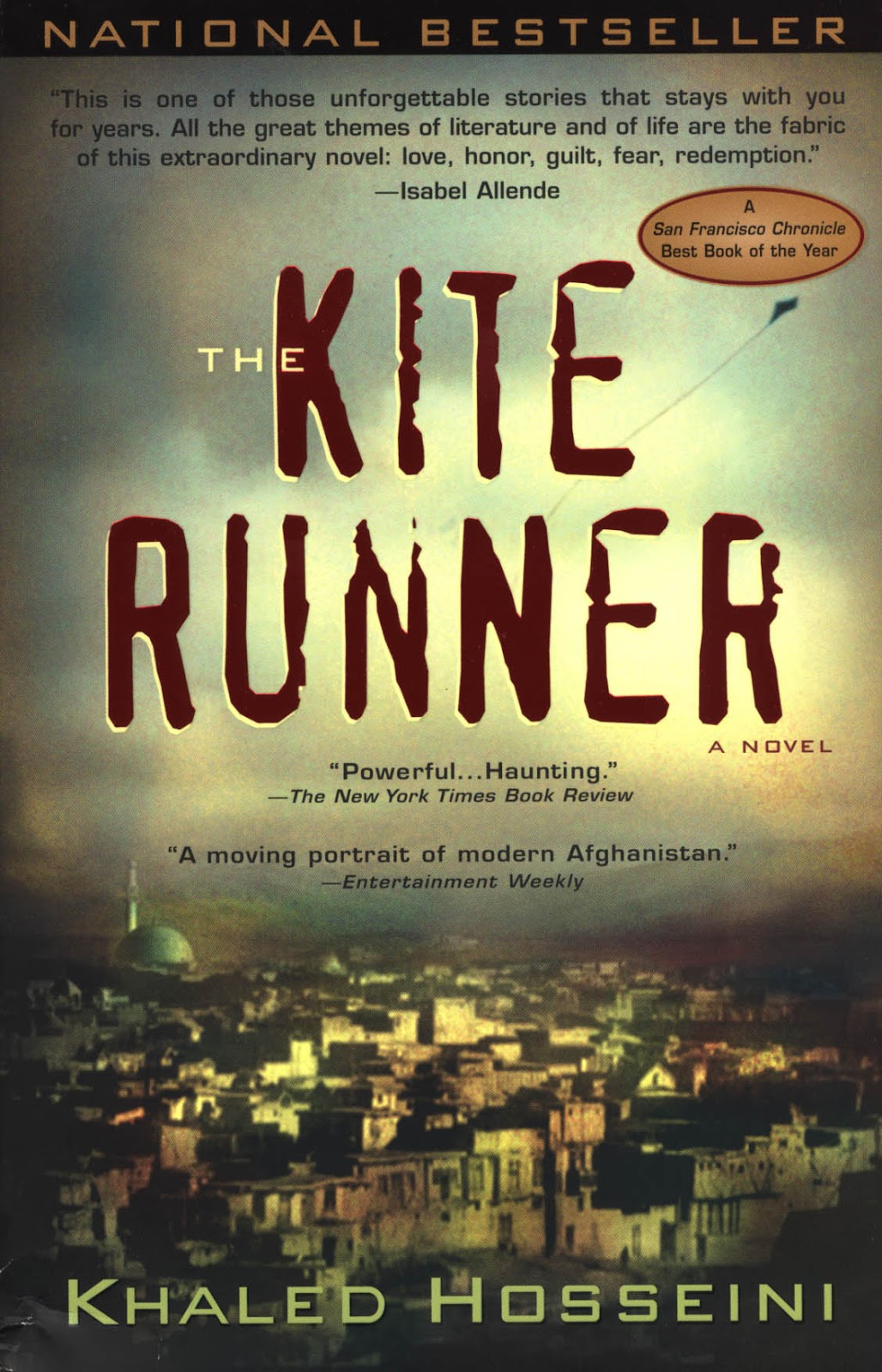
Unfortunately GCSEs don't mean shit. And believe me I am sorry to that small few who still picture that NASA job interview when you hand Mr. Smart Suit your Food Tech grades and receive a straight-faced reply like "Well that's just great, those astronauts do get damn hungry". So I bit the bullet with the hope NASA might except A-Levels instead. How could they not when I'm having to study The Kite Runner to get one? Which was when my just-flunk-it-off-and-don't-read plan hit jeopardy. And how could I refuse when I was handed a whole summer, an extended one at that, to read through a book which was a critically acclaimed bestseller; one that had been recommended by the master of all creation herself Oprah, no less.
My other forced reading was The Great Gatsby. You can find my not so enthusiastic mood coming out of that one in an earlier post, although the blandness I found in that story never reached any boiling point because the book's so short there really isn't any time to complain. And for that I applaud Scott Fitzgerald. Actually, the guy deserves more oscars than a vintage Jack Nicholson.
No, no, no, my mother (or maybe it was Jim Emerson) taught me better than that; as much as I would like to just turn, walk away and leave this one for the dogs I feel some obligation to write down why The Kite Runner boiled my blood to such a degree; if for nothing else than as a warning to any future travelers who, for some god-be-known reason wish to take this path. So what follows is quite possibly every element that makes up The Kite Runner and why it sucks.

So where should I start my nitpicking, the prose? Yes, those damn prose. Before the school started stuffing unwanted lettering down my throat I was coming down from a back-to-back hit of Hunter S Thompson and Lester Bangs, which was probably why there was still quite a heavy dose benzedrine in my system. If The Great Gatsby with it's squeaky clean style - Fitzgerald doesn't add a letter that doesn't have some major importance to the plot - was my come-down, then The Kite Runner was me hitting rock bottom; locked in a room with some screaming baby crawling across the ceiling to try and kill me. Maybe it's unfair because this author came from the same childhood move from Afghanistan to the western world that Amir does and English isn't his native tongue, but I'm only reviewing the end product and what you have here is prose that feel overly simple, and in moments of Spielbergian sentimentality only add unneeded hyperbole to the mix. And believe me it's a weird sort of sentimentality, with the story filled with hollywood-ready stereotypes and star-crossed coincidences all for maximum impact, yet where all the drama feels underdone, as if to show these set-ups in a "realistic" fashion. Hosseini's writing does do one thing that impressed me though, and that's the man's unique ability to turn even the simplest actions and story beats into the longest, most horrifically drawn out paragraphs you'll ever read without actually adding anything. The second I finished The Kite Runner I put the book down (I was tempted to set it alight) then went over to my book shelf and picked up Inherent Vice. I flicked to a random page and read the first paragraph of a random chapter, for the exact same reason a man lost in the desert for a week will run straight to the pool and start lashing the water into his mouth: to take the dry taste away. This was just a random paragraph but Pynchon added so much to it, most of it unimportant but it was great anyway; and that's because I don't mind long-winded writing or writing that takes it's time getting to the point, but Pynchon and Bangs and all those writers who tried so hard to put the freedom of the 60s that they stemmed from into their writing made the words just flow out of them. No matter how many times they sat there and wrote the smallest of paragraphs their writing felt unstructured and messy; the ultimate realization of a person literally spilling themselves and there soul into the writing. They, to me, are the real word-smiths, and on the complete other end of the spectrum sits Khaled Hosseini, who's every sentence feels like a strain. His explanations of funny happenings, that "that's just what happens in Afghanistan" like an added jab at his readers, made all the worse because he remains totally unaware of what he's doing.
So in the end it's a lack of personality that kills The Kite Runner. I always imagine troubled people, one's who have been through some great hardship at some point, as sarcastic or twisted in their sense of humor. It's a stupid cliche to follow, more stupid in real life, but in books and films it serves a purpose of standing opposite the horrors of the story. I'm not asking Amir possess the same off-kilter charm as Alex from A Clockwork Orange but Amir is an unlikeable main character. The first half of the book is there simply to enforce this point, yet I disliked Amir for the whole story. His guilt which appears later in life appears only so it can be quelled away. And in the end he remains as statically one-dimensional as all of the characters here. His childhood friend Hassan, the rape victim, is a symbol of untainted goodness; an incorruptible Atticus Finch in child form. His place in the story only to bring guilt to our hero. Amir's wife is just as simple, she has a troubled past yet that hangs over the story like the excuse it is; and excuse to why their marriage has so little turbulence, to why even when she finds out she can't have kids there is little drama created. She's the story's "solid rock", which in other words means she's the Seth Rogen of this story; only without all the funny. And our villain, oh god the villain. He loves Hitler because how else is one to show he's evil? and anytime a character needs screwing up or something traumatic needs to happen he rapes someone because how else is one to show he's evil? I'll give this villain, of which I've already forgot the name, his dues; he creates the one dramatic moment in the whole story. Not worth a read just for that, but this situation, bonkers in how it comes together, ditches the (fake) real world drama and gives us an old fashioned final fight. Which is how pitiful my praise for this novel is: that it's highpoint is a end-game boss battle.

And what more can I really say about The Kite Runner? It's a cliche told badly. Fuck you Oprah. Fuck you Khaled Hosseini and fuck you to all the idiot robots who wrote this one off as a winner on the idea it was about Afghanistan; Hosseini talks about his home country only in broad strokes, never making it feel like home. It's why later on the book when Amir returns to his childhood home, where I had spent more than 100 pages, I could sense there was a dramatic moment in there somewhere, it just wasn't here. My parents watch the soap opera Eastenders and my Dad once made the case for it with "But it deals with real issues" and I replied "Eastenders: showing real issues in a really unrealistic way" which is The Kite Runner. Some, not all, of the issues here are realistic, yet in trying to take the major dramatic moments out and be more like real life Hosseini has stripped all reality out of this story. Some will say that after all the heartbreak and "Tear-Jerking" moments that the ending is uplifting. But once again Hosseini has to cut ahead and show his story isn't some muddled fiction but a real piece of drama that could have really happened, and even on this page denies the reader a true payoff to all the stories troubles. Which is the least uplifting thing I could imagine from this story, because it shows a lack of faith in people; and I will never praise a book that shows such a low opinion of Humanity that even it's ending moment, to point us to the happiness of our characters, is bleak and unsatisfying.
Although I don't hate Khaled Hosseini. Well, ok, I really really really do, but I hate the fact this book wasn't shat out straight into the bargain bin more than I could ever hate the man himself. With American Psycho Bret Easton Ellis was, and not even satirically, trying to show that in a material world like ours, or specifically the world of 80s coke-fiend business suits, that a killer as sick as Patrick Bateman could not only exist but that our twisted society could let him get away with it; because after all he's got the fancy car and the expensive suit.. In all of The Kite Runners pages there is not, satirical or otherwise, any sort of meaningful sentiment or message, yet the book itself is a message. The message is a PG-rated version of the one found in American Psycho. That this book, released in 2003 by a first time writer, didn't need a unique (or half interesting) writing style, memorable characters, unexpected twists or any inkling of enjoyment or purpose, to become a major bestseller all around the world. All it needed was a story about a country we were all scared of, lots of symbols and characters we could easily understand and lots of sentimentality and big drama created for no other reasons than tears and quick shocks. 1/10

(So I managed to escape the kite runner, although not really since they'll have me studying this shit for the next 12 months. I actually felt my own writing getting worse as I read Hosseini. Hopefully Joseph Conrad's Heart of darkness will help set things right)
Subscribe to:
Posts (Atom)