Pages

Saturday, 15 February 2014

The Perks of Being a Wallflower

Every writer who makes a film or book or anything about high school, one of the few periods of life that land on practically every writer's "write about what you know" range, faces the question of which side of high school they're going to show, knowing there's so many they couldn't do the realistic thing and show them all at once. There's time capsules like American Graffiti and Dazed and Confused, there's of-the-moment vulgarities like Project X, and there's those that show high school, and life in general, through a single lens: from a loner's diary to a sexy romp through the golden years: from Donnie Darko to American Pie. In The Perks of Being a Wallflower, which looks back to it's early 90s setting with a passionate nostalgia, we're taken through the loner high school experience seen through romantic eyes; and we accept the impossible sentiment we see on screen because we accept that everyone goes through high school differently and this could have been someone's high school, same as it could have even been yours.

The loner kid we follow in Perks is called Charlie. He's recently been let out of an institution (from a mental disorder brought on by a traumatic childhood event and more recently a best friend's suicide) and into his first year of high school. It's easy to like Charlie because he does all the things we wish we had been doing while we were uncool: making mix tapes for friends that include his favorite song, which is the final song from a Smith's compilation disk, and giving copies of The Beatles' Something (on vinyl no less!) to girls he likes, although never crossing the line into romantically cool in the process.

Charlie quickly falls in with eccentric and happily uncool step-siblings Sam and Patrick (played by Emma Watson and Ezra Miller) while at a school football game and in that beautiful way you drift from place to place not even knowing how when your young, ends up stoned on the floor of a house party filled with the uncool sub-culture of kids he soon becomes a member of; a bittersweet success in that all these people he can now call friends are in their last year of high school while he, remember, has just started his first.

Although Charlie never says being a writer is what he wants to do with his life, he writes letters throughout the film, which are what made up the book version of Perks. Like all writers he can see what others can't (after all he's a "wallflower") yet he's cursed in that he never loses himself to anything, and Logan Lerman who plays Charlie perfectly acts out the physicality of someone never truly lost in the moment. Instead he's an observer, as Jack Kerouac once wrote "I shambled after as I've been doing all my life after people who interest me" and so does Charlie shamble after Sam and Patrick and the wonderful band of misfits they're part of.

Stephen Chbosky wrote the original novel, and has done sketchy-at-best work in TV and film since, and here becomes one of the rare authors to adapt their own work with positive results, showing a passion for his own material which has been very illogically lacking in previous self-adapted works like The Cider House Rules. It's hard to tell if it's Chbosky natural direction or if it's a side product of re-working your own work 10 years after originally writing it, but Perks has a scene-by-scene fluency that makes the year in the life of a high school outcast a breezy watch.

It's movies like this, which pull on our nostalgia for things that didn't even happen to us, that can't simply be labeled either funny or dramatic, because it's movies like this that try to hand us truth even though they're unrealistic, and like real life things are funny and dramatic and sometimes weird and awkward and surprising in good and terrible ways, and unlike real life they somehow end up feeling perfect, so I guess the best word I could attribute to Perks is "sweet" which is something no one describes even their best high school years as.

Friday, 7 February 2014

25.06.09

(I don't really know if this was meant to be a journal entry or 'in memory' type post: I wanted to write something about the day Michael Jackson died and here it is) 

The morning Michael Jackson died, or at least the morning after when we all heard about it, I woke up and re-enacted the same routine I'm (depressingly) still doing now. I'm too tired while wetting my face and eating cereal to notice anything, in this case the news; meaning I left the house thinking it was just a normal day.

I walked to a friends house. We'll call him Raj because I don't speak to him anymore to ask permission and probably wouldn't have bothered anyway. He was Indian but born here. He was a sporty type, which clashed with me who doesn't even like sporty video games, and he grew up in a strict family, or at least one that must have filled him with pressure: his sister was a trainee doctor (probably a real one by now) and his dad a maths teacher. A good example: in Raj's living room was a cut out of his only bad school report from years before which his dad had cut out and sadistically glued to the wall and left there for everyone to see, probably still there now, which I found sickly funny.

I sat in their cosy little living room every morning waiting for Raj to be ready, never figuring to just arrive later. He came down that morning and said "I guess you heard that Michael Jackson died" I told him no and after some seconds he summed everything up with "it feels weird, doesn't it" which it did.

Raj's dad was teaching at our school and gave us a lift. He never taught me although I heard the horror stories from friends. In the car Human Nature played on the radio, which I'd never heard before. I should say that I had never given much thought to Jacko, hadn't really tried to get into his music, although I knew who he was. Raj's dad said Raj was a big MJ fan, which I had never figured, mainly because I'd never managed to pin-point which demographic, be it age or gender or country of origin, was supposed to be into Michael Jackson. The media said everyone loved him but up til then it never crossed my mind that anyone really loved him.

I remember the details of the day to a weird degree: it was soggy grey and raining outside, as if the weather itself was feeling sad for our lost hero; and my first lesson was something called "Learn 2 Learn" one of many lessons my school made up. In it we sat in the sofas in the corner of the room and discussed Jacko.

Most of us just made fun of him. He was a pedophile, and that whole thing about not being charged is really murky, and simply ignored by most people. He went from black to white and had that weird nose. He dangled his kid off a balcony. I suppose if I grew up in the 80s I would have seen him do the moonwalk for the first time and release the world's best selling album and marry Elvis' daughter. I suppose it all seemed like some crazy performance art; someone in the center of the disco lights firing himself upwards to the place of mythic celeb-god. But I didn't grow up in the 80s, I had the 00s, better written as the noughties, instead. I didn't know he had got married or ever even had a reported relationship; from the videos I thought he must have been gay. I never suspected his success anything more than other 80s pop stars who occasionally got their turn on the music channels. To be honest I only knew him as the butt of the joke. Some knew Jackson as some sort of megastar genius, but I knew him from a Russel Brand routine and a South Park episode.

One of my friends in the class, who was in the sofa conversation, was Jack, still the only Scotsman I ever met. He was a funny man and had a real confidence to him, like giving presentations and talking to girls, and I'm still not sure if that's what most Scotts are like or if that was just him. I never saw him more annoyed than on the sofa, he called Michael his "hero" and shouted at us everytime an insult came out. Based on his defense I'm guessing he read the Michael Jackson Wikipedia page damn thoroughly. He explained the abusive father, the falling over and broken nose, the pills which changed the skin (y'know, because we all thought that was surgery) and about how Michael Jackson was just some genius who we didn't understand and needed to stop making fun of! We didn't though.

Fun fact about my school: instead of a bell that just rings to signify break or home time or whatever (like those disgusting "normal" schools we obviously don't want to be associated with) our school instead plays Aretha Franklin's Respect through the school at a horrible volume. It's like the Ludovico technique in that I feel only inner violence and anguish if I hear the song outside of school. We went down and asked some teachers if we could get a Michael Jackson song to play today instead, starting up a "rumour" that something by the Jackson 5 was gonna get played, probably Blame It On The Boogie, although they never played it.

That was the day really, it made me feel indifferent. I remember it well though, just like old people who always say they know where they were when JFK got shot, and MJ dying is still the only event I've lived through when I've felt connected to the whole world. I watched the London Olympics Opening Ceremony while everyone else on Earth watched with me but I only felt connected to Britain, who were all looking in at themselves, but when MJ died we weren't all looking at Jackson, probably because no-one knew where to look.

I felt most connected a few days later, or whenever it was, when Jackson's funeral was televised. According to the news billions watched it. The crowd was bigger than I've ever seen turn out for any artist in concert, and the celebrity list was probably the biggest ever assembled. The man himself, in the coffin in the middle, hung over the whole thing. He felt bigger than the stadium where it was all taking place, burning brighter than all of the millions of lights constantly flashing from the crowds. It felt like royalty dying. His kids were there, Blanket - the most parodied of them - is the only one I knew the name of, and they were all dressed up like the kids of a recently deceased military general who had just died in the heart of battle. Jackson had been such a big star there wasn't even any pressure hanging over his kids, no expectation they would follow in his footsteps, because you couldn't really compare someone to Michael Jackson when he wasn't even human anymore; I mean sure he was in the flesh, but in the media and all, even long before he died, he had ceased to be a human and just became an idea, a giant invisible force that everyone knew about, just floating up there in the ether. The sunglasses he wore so frequently never made sense to me: most celebrities hide themselves behind shades but Jackson had nothing left to hide, he'd showed it all.

Then the comedians moved in and had a riot, not that they waited til after the funeral: most comedians got straight to it. Most dead celebrities have a waiting period til they're back on the menu but not Jacko, because as I said, he wasn't flesh and bone, not even in that coffin, he sacrificed that long before, and I guess the tragic narrative so many paint around him (the lack of any movie really is surprising) was him spending his post-success years trying to get the flesh and bone back.

I still haven't gotten through much of MJ's discography. I listened through Thriller which has some great stuff on it (the opening track) some piss poor stuff on it (back to Human Nature) although in the end is hard to listen to as a normal album being it's mostly a collection of such huge hits that most of it's sounds are just part of the status quo. It's close to sounding like an album long cliché. It has the same too-far-to-touch-up-close feeling as it's maker.

The last time I really saw Jacko was on the Christmas day just past. It was night time and everyone was a bit tipsy. Jackson's This Is It show was on TV, which was a gig from his final, uncompleted tour, although I admit we could have been watching a behind-the-scenes documentary since I don't know what's in the film version. My uncle went into a rant about celebrities and how they don't give enough money to charity, and how Jacko himself made all those songs about inequality and helping Africa but he didn't give his actual money away. He even gave us some statistics about how much it would take to stop disease/hunger in third world countries and how if Jackson really cared he'd have just given all of his money away, literally the whole pot, and solved the world's problems in one fine swoop. I do know this argument doesn't make complete sense, even if I haven't got any facts and figures, probably because I'm guessing Jackson did give a lot of money away and not just do songs, and probably did care quite a bit.

I noticed something then though, while my uncle was on his rant and my dad was telling him he was wrong and neither was standing down. I was just looking at the screen and watching Jackson dance during rehearsals. I looked on the screen and realized Jackson was as much alive there - on stage on our living room screen - as he was when he was actually alive. We all made a big deal about him dying but he was dead long before that, he had given himself out to everyone. The same way he didn't really die at all either. All the myth, the crazy myth he spun around himself: the Neverland theme park and bubbles the monkey and his celebrity brothers and sisters; no-one can tell me they feel further away from Jackson now that he's dead. Watching This Is It on Christmas, he was alive in the same way he always was: trapped on the stage and in the persona.

When Elvis died a famous rock critic said we'd never agree on anything like we agreed on Elvis. Jackson was still a kid at the time, if building up successes, and that particular rock critic died before Thriller released, never knowing there was one last person to prove him wrong. Before, I said that the day Jackson died I couldn't figure out who Michael Jackson was for, although I realize now he was for everyone, and always will be.

Sunday, 2 February 2014

R.I.P Philip Seymour Hoffman

I'm guessing the first time most people took notice of Philip Seymour Hoffman, at least if they were around and old enough at the time, was in Boogie Nights. That movie has such a cosy mentality to, of some guys hanging out making a semi-serious movie about porn. I like to imagine all the actors in Boogie Nights were friends before shooting started and they all went down to John C. Reilly's house and pulled straws to see who would get to play each character, and when Phil Hoffman got Scotty, "the gay one", they all had a good laugh about it and patted him on the back, and P.T.Anderson told him he'd get a bigger part in his next movie, and Hoffman decided to be a good sport and play the role with the fiery liveliness, not to mention heartbreaking reality, that you can go back and see on screen.

Hoffman was a working actor; he lacked a movie star quality but had a particularity to his performances, and a certain like-ability that made you relate to him (the nerdier, more sexually repressed character usually the better) that has lead to a hell of a filmography. He worked with a lot of modern greats: the Coens, Spike Lee, Todd Solondz, Charlie Kaufman, Sidney Lumet, and many more, with each name attached to some great movies, although Hoffman will always be Paul Thomas Anderson's boy (and in The Master - possibly Hoffman's last great performance - his big podgy man) who seemed happy to give him every sort of role available: the hard ass boss in Punch Drunk-Love, the good intentioned dweeb in Magnolia, even the scene-stealing gambler in Hard Eight. His movies didn't make him much of a star, but earned him a big fan following.

Regular readers to this blog will understand my excitement when I found out that someone had put Lester Bangs into a movie. Hoffman plays him in Crowe's Almost Famous, and I believe Hoffman's main abilities as an actor are most clear in smaller supporting roles like this one. Hoffman/Bangs doesn't get much screen time, he's not the main attraction of the movie, but he hangs over the movie, always in the back of your mind even when he's not on screen. Most would have played Bangs up to the cool reputation he's gained (gained, it should be noted, after his death) and others would have played him as a cliche of the Yoda style mentor figure, while Hoffman played him just right, he didn't care if you didn't like him, but he made you like him anyway through a vulnerable confidence that he has in all of his movies. It's a small role, but like all of Hoffman's many small roles he did something big with it.

His list of roles is impressive, including on stage where he built quite a repertoire. More than enough to have him remembered as one of the greats. Looking at his last few movies still waiting to be released, none seem to hold any grand final statement, although leaving behind a film by Anton Corbijn is better than most get, and one can only imagine (in a hopeful sense) his part in the upcoming Hunger Games movies will open him up to a younger fan base who'll eventually get around to his best work. 

Hoffman died today aged 46, the authorities having apparently found him dead in his apartment with a needle still in his arm, a sad end that can be linked tragically to reports last year that he had entered rehab for Heroin addiction, not that this makes his death any less of a shock. Hoffman's death is different from that of a young star's death, which creates a big what if? around the star, while we already knew the what of Hoffman, he showed us it in Capote (which bagged him his only oscar win), in the grandiosity of Lancaster Dodd, in the smaller but no less memorable roles like that found in The Talented Mr. Ripley. He gave us such greatness, and now no more.

Then again there's a side of me that doesn't want to morn Hoffman. I felt devastated at the news of his passing, although I haven't allowed it to turn into sadness. I never saw Hoffman in interview, so I can't comment on his personality, or more precisely the side of his personality he felt most comfortable showing to the media, although I do know he was a family man - a girlfriend and three kids - and his death through drugs does seem to cut through any personality people saw in him or any of his career milestones. I have no doubt most will be happy to remember Hoffman unequivocally, although I'll choose to stick him on the list of great artists better remembered only through their work. 

Consider David Foster Wallace

It's hard to write a post trying to sum up a man who from what I can tell wanted to be everything. The contradictions are everywhere: it was Wallace himself who, during interviews, linked his generally accepted masterpiece Infinite Jest to the weight of the impending millennium, yet in a piece written not long after writing this "great American novel" he asked his readers to imagine what it would be like to be one of the best in the world at something, and with the same modesty and self-guessing he summoned through all his career he wrote "I have tried to imagine; it's hard". He was a self confessed SNOOT (or an academic-level member of the "grammar police" as you or I'd label it) yet supplanted his hip image with slang language and iconoclast views. He frequently documented his social awkwardness and anxieties yet willfully put himself forward for many of the crowd-speaking activities that the socially awkward readers who related to him would be so scared to do, like teaching lit courses in college. He cut through the bullshit and gave it straight (gaining what has became a huge following) and was a beacon of a very 90s type of anti-capitalism, yet he seemed very interested in adding to his own myth, in the end leaving behind an unfinished third novel for publication after the demons of his depression eventually caused him to take his own life in 2008. Wallace is a paradox in theory although makes perfect sense on the page; his desire to be the the show-off, the boy wonder, the cool kid, the joker, the relatable nerd and the mythical genius - in many cases all at once - is what makes him reflect the 21st century in a way that few other modern writers do.

Not that I know of everything that Wallace tried his hand at being, just what's in the second-released of three collections of his essay work: Consider The Lobster. There's no general theme connecting Wallace's journalism/essay work which is why Lobster has such a plethora: a report on the 1998 porn awards; the little reported reactions to 9/11 from Wallace's home in the South; a look into the morales of eating Lobster through the lens of the 2003 Maine Lobster Festival; the transcript of a college lecture he did on the easy-to-miss humour in Kafka's work and many many others. The pieces differ so much I'd be greatly surprised if anyone was avidly interested in reading all of them for the subject matter alone, when instead, even for the pieces that might interest you, it's Wallace who you read for. While reading Lobster I kept thinking of a quote, by someone important enough to be quoted on the back of a book, on the back of a Lester Bangs collection I own that called the 70s rock critic "one of life's greatest gurus" which I guess would seem strange to someone who had never read anything by the man, known almost entirely for record reviews and Lou Reed interviews. Although if you read Bangs you'll know exactly what the quote means: he used rock journalism, which I guess doesn't give writers much room to spread their legs, to talk about everything he could, from religion to feminism to sexual desire. He commented on a whole culture while riffing on Blondie. I don't know exactly what Wallace thought of Bangs, although he (Wallace) considered Bangs enough of an influence to dedicate his little read, co-written book Signifying Rappers to him. Wallace's writing is just as far reaching: he's another great life guru. During the essay Authority and American Usage Wallace reviews  Bryan A. Garner's A Dictionary of Modern American Usage, although the "review" is just a book-end for Wallace to talk about language use in general. He praises Garner's book, and Garner's prose in particular for their lack of personality, allowing the reader to take his uses of grammar and phrasing on face value, unconnected to Garner's ethnicity, gender or age, yet the irony here is obvious as Wallace can't even write a simple book review without injecting himself all over the page: he talks about being a kid and learning the songs his mum (an English teacher - explaining a few things) would come up with to make her son remember correct grammar. Then talks about the prosecution he and every other grammar-loving kid would get when showing off this knowledge in the classroom. It's these little injections of personality, and of Wallace's highly opinionated self that comes through on almost every page, that made reading a review of a book I have no interest in so readable.
A frequent comparison Wallace got was to Thomas Pynchon, an obvious comparison in their similar post-modern fictions, but also similar in their prose in which both turned the kaleidoscope of a million inter-connecting thoughts going through their heads into beautiful fluency. They both crafted sentences with a simplicity to them, a gentle flow of language that most writers - dealing with half the weight of ideas these guys had - could only dream of. Yet there is another paradox to be found here: mainly that for the simple pleasure that Wallace's prose are, his writing is certainly intimidating. Not just the length either, his writing is a sea of brackets and italics and parenthesis adding explanations that seem put there by an obsessive need to explain everything. An average one of his paragraphs will have a few footnotes (oh how Davey loved his footnotes) and once in a while a footnote will be so long it spills over into the next page and fills the page after, itself with it's own cordoned off section of footnotes. It's obviously impressive stuff, actually there's such an air of intellectualism to some of Wallace's pieces that it feels like an actual triumph (hence a sort of obligation) finishing them. This style is what makes Wallace so unique, although it sometimes (if only rarely) doesn't work, as in Host, the final essay in Lobster and the only I couldn't bring myself to finish. Wallace's usual bottom of the page footnotes are here replaced by boxes which are fitted around the text, an unintentional visual metaphor for how lost you get within an article about talk show host John Ziegler, where any sense of a message Wallace is trying to get across gets lost in the mess of information. These endless box notes feel like Wallace showing off, but not in his usual modest parade of excellence, which - although it undeniably throws some off - is simply something I think most like to read, if only because so much of what is "great writing" usually gets its reputation from supposedly smart people who explain why it's great, while Wallace's intellectualism quite literally smacks you in the face with the knowledge of it's own greatness, while in Host Wallace tips overboard with his endless explanations and descriptions; that kaleidoscope of ideas never getting smoothed out like it does in his better pieces.

Much has been made of Wallace's arguing style, the weighty description of the subject matter and the frequent diversions covering the surface so you no longer notice an argument is even being made (and just as much has been made of the apparently bad influence this has had on the many bloggers who take to doing bad Wallace imitations). A good example of his essay technique can be found in Up, Simba where Wallace followed John McCain's 2000 presidential campaign. Like usual he opens by telling us how unqualified he is for the job (in the same way he opens so many footnotes with (paraphrasing here) "although you're probably not interested I'm going to explain anyway" or "the editor will probably take this out anyway") and starts by giving us the story of how he got the job in the first place. It's Rolling Stone who hired him for the campaign and he turns up in the Bangs-style leather he thought all people working for RS were supposed to wear. Wallace knew full well he was no political journalist so instead he fills up what is one of the longest essays in Lobster with more information about how a presidential campaign actually works - the backstage rooms, the tour buses, the atmosphere between parties, the chatter between the techies etc - and shies away from going full-detail into the nitty-gritty of the politics. Wallace does report on some of these politics, though, and having written it all just as it happened means the article, which doesn't section off exactly when one time zone in the story has became another, reads like a live journal from a press event. In the end though it's not the end message or even the sudden bursts of personality but Wallace's clear mission to paint for the reader the full picture of whatever he's reporting on. In Big Red Son, about the porn awards, Wallace doesn't pass judgement on the stars or the producers - or even the millions watching at home - yet neither does he have a major argument to get across (although his musings on the modern state of porn and it's place in society/place right next to Hollywood are insightful and sometimes hilarious, like usual) but instead he simply describes, in details most writers don't bother to go into, the porn awards, including the way the award shows work, the people he met there and even the recent history of the awards. It seems like Wallace's mission, more than anything, at least in his non-fiction work, was to give readers the whole picture of something; the truth behind it. There is undoubtedly much more detailed analysis of John McCain's presidential campaign, and the man's politics in general, than you'll find in Up, Simba, yet I know I wouldn't be interested in reading them. Although Up, Simba is interesting, and seeing the inner workings of the campaign and the reactions of those actually close to it make it much more than an essay on John McCain or the 2000 presidential campaign, instead they make it relevant to politics in general, even for those, maybe even especially for those, not interested in politics in the first place.

I loved reading Consider The Lobster, and would recommend it to anyone whether the list of essays particularly interests them or not, although it's hard to separate the subjects being dealt with from the man himself, which is why I'm still not sure if this post was about the book or about Wallace himself and all that is to be found of him in Lobster. Some will say this is Wallace's flaw, that he wanted to be known as a great writer so he made his writing so that he would be. Which is true, although that's just adding to the Wallace myth, isn't it? When he was really just a normal guy, an impressive writer sure, and someone you need to read, but so frequently linked to his generation as a voice or figurehead, when he was actually just like everyone else of his generation, he just never quite wanted to be.

Saturday, 1 February 2014

January

- I had a topsy-turvy January. It certainly felt long, in both good and bad ways. School was a drag, so much that my week back, which was filled with exams, was the highlight. My results were pretty good but as is traditional with my school there was no celebrating as all my teachers tried hard to make sure all of that exam pressure carried over into our day-to-day lives (and I suppose I'll thank them for it later and etc).

- The rest of school I'll simply mark down as busy. We're studying The Kite Runner now in English, which is basically just me and no-one else putting my hand when the teacher asks (and they've asked a surprising amount of times now) if anyone doesn't like the book or the passage we've just read. I do hope this course entails writing a review of the books we're reading so I can outline exactly why The Kite Runner is over-written, manipulative bullshit. Having to read out The History Boys is fun, even though I'm reading for Lockwood who is one of the most un-memorable characters in the whole play, thank god I'm not involved in any awkward sex scenes though.

- I was having a happy time for the first half of the month before I was hit by nasty bout of depression that had me lying in bed for hours in the middle of the day and practically giving up on the gym. I think I'm fine now, though, which probably has something to do with me falling madly in love with a girl (although it should be noted I fall in love waay too easy) and spending the last week kicking around with her and trying to make her laugh.

- After firing my original driving structure (who seemed to take his almost constant state of agonizing stress out on my admittedly poor driving skills) all my friends have been recommending me their instructors. Right now I've got a choice between "pedo Daz" and "rip-off Dave", great.

- I spent the month crossing off blindspots. I stayed up until 3 in the morning watching Seven Samurai - which deserves it's reputation - and combined with Frances Ha, which I've already wrote about loving, I'm now in a very black and white mood. which I'm never usually in. I also read my first David Foster Wallace, with Consider The Lobster, of which I've nearly finished a post about, and was so impressionable to Wallace's style, which I thought was great, I even wrote an extremely over-written post on The Sopranos, which I finally finished at the beginning of the month, as a form of poor imitation. I also read William S Burroughs' Junkie, which I took as a grand apology for Naked Lunch.

- In my media course we're currently doing a music video unit, with me and a friend making one for a indie band down in Sheffield. Which is why Media is basically now just one big musical discussion class where we argue about if rock n roll is dead and our teacher gets all nostalgic and answers questions about why he quit a job working in TV and meeting celebrities to teach us. I chose to analyze Weezer's video for Buddy Holly, which is why I finally got around to listening to Pinkerton, apparently the jewel within the Weezer shrine. Apart from the first and last track I don't actually recall any highlights, although it's one of those albums that works better as a whole, just taking in the general sound. It sounds like a cheery band stripped bare (probably because that's exactly what it is) and my favorite of the month.

- I said last month I wanted these posts to collect all my favorite writing of the month, which in retrospective was a stupid claim considering how much I read in a month (who knew) and how much I forget to actually save it somewhere, so here's some good internet reading I did this month: I don't know what to think of Bret Easton having not read his fiction and only knowing him from an angry twitter account, but I read an old piece he did on the current state of celebrity that I thought was great; understandably I've been reading a lot about DFW, and how could I not read this conversation that linked him to Lester Bangs; I didn't watch the Grammys, although my friend kept sending me links to videos everytime a member of Daft Punk was on screen for longer than a second, and as always the best coverage is from Sasha Frere-Jones; HTMLGiant continued to be my favorite site with great pieces all around: Lily Hoang wrote a beautiful post on our reactions to grief, if you've ever wondered what Macaulay Culkin was up to then A D Jameson found out for you, with interesting results, while Seth Oelbaum did a series on "boys who kill" which caused such ruckus on the site the first part has already been removed, it was interesting none-the-less, and Janey Smith started up a series where she posts pictures of her facebook friends, with the first post interlaced with a Guardian article about friendship; and although I hate to report on things I don't like (I mean really) the fact the most sentimental, amateurish crap I read all month was on The New Yorker of all places, and about my sacred cow Nirvana too, made it seem worthy of note.

- It looks to be a more relaxed February, I can only hope the sun returns to Britain soon. To whoever reading, have a good one.

Tuesday, 21 January 2014

Frances Ha

It makes sense that Frances Ha takes place in New York, one of the most romanticized cities on Earth, since it's about being in your twenties, the most romanticized time anyone gets to live through, which is probably why I think it's important to note I'm neither a twenty-something or have ever been one. Even then I'm going to guess that Frances Halladay wouldn't call her life romantic, and that neither would anybody living the same life. Everyone sticks poster's of French New Wave films on the walls and no-one knows how to cook. They all call themselves "artists" and write fan scripts for Gremlins 3. It's beautiful really; they can't say "artist" completely straight and they know full well the value of Gremlins 3, they know full well your twenties is just an excuse to live the twenties cliches and not have to apologize for it.

Frances is a professional dancer, although still worries about the rent (obviously). Ha kicks off when she 1) breaks up with her boyfriend after declining to move in with him and renew the lease on her apartment with her best friend/roommate, only to find out that 2) her best friend/roommate is moving in with her new fiance, making 3) she's been dropped from the Christmas performance at her dance troupe even worse. She manages to land on her feet, getting an apartment with two men society would brand "Hipsters" with one played by Adam Driver who also stars in the TV series Girls, a similar look at modern young people culture. It's the sort of apartment where at one point Frances sits with one of the guys (the other one - played by Michael Zegen) watching a subtitled French New Wave film in the dark. They watch it expressionless, and don't even speak except for Frances' "we need cookies". I feel awkward putting on a mainstream action movie when there's others around and spend more time looking out for signs of their disappointment with my film taste, but the twenty-somethings in Ha don't care, they care about some things, and that they do it passionately, the stuff that doesn't matter but we all secretly wish mattered. It's great and they don't even notice it.

Frances herself, played by Greta Gerwig who also co-writes, is sweet and charming and very quickly puts you into a hypnotic spell, even if she hasn't yet figured out she isn't the most important person in the world (which, please note, is very different from thinking you are the most important person in the world). In one scene Frances sits through a diner scene with a group of (mostly older) "normal people": she speaks for too long, telling them things they can't possibly be interested to hear. She talks about herself and even does some "oh look at me being all normal" jokes, including one about a diner guests new born baby, and outs herself as one of those people who tells you the names of everybody in her stories despite you neither knowing them or caring. Then remains oblivious to the fact that it's only her enthusiasm and general politeness that is filling the dead air in the room. In the scene after, lots of drink in her, she describes that "one moment" the magical one she longs for in a relationship, and she describes it as the mystical movie moment is certainly is. The camera doesn't cut away from her while she speaks, the other people's reactions unimportant to us and to Frances. It's telling of her character, only looking at herself, but only in a nice un-damaging way, one longing for happiness.

Baumbach (Director) says he wanted the film to look like a debut although on that account he's failed, no debut I've ever seen has the swift confidence of Ha, 86 minutes that fly over. It's filmed in black and white, but not the sort of grainy colorless-ness you'd associate with being young and broke and with a cheap camera but a beautiful black and white, right out of the French films twenty-somethings feel obliged to watch. That's because as much as Ha is a realistic film in many respects, it's a fantasy for everyone not living this lifestyle. Frances is very happy being herself. She takes unwanted chairs into the street and writes ironic notes for the finder. She goes to Paris on a whim for no apparent reason, similar to the on-a-whim holiday Ben Stiller almost goes on in Greenberg (Baumbach's last film) before realizing he isn't Frances' age anymore and has the responsibilities she doesn't have yet. In Steve McQueen's Shame Brandon runs across the NY streets with a static sideways tracking camera and nothing but the sounds of the streets with him; in Ha Frances runs through the same streets dashing and twirling through the people, the camera from a diagonal angle, somewhat imperfect, while bouncy dance pop plays in the background. This isn't the complete u-turn from Hollywood convention that the New Wave was, there's a want to entertain in Frances Ha that sticks out like a big red throbbing heart among the black and white.

Friday, 17 January 2014

The Sopranos Review

The first moments of the first episode of The Sopranos is quiet and calm: Tony Soprano sits in a waiting room, he's wearing a casual top and around his wrist is a golden watch that would have been very trendy back in 1999 when the show first aired, he looks around at the statuette in the middle of the room and at the paintings on the walls. This moment is followed by a total of 86 episodes making up six seasons and broadcast over eight years. Tony sits waiting until Dr. Melphy (played by Lorraine Bracco - the first of many Goodfellas casting crossovers) opens the door and invites him into her office, the same therapist office he/we will be returning to throughout the following six seasons, the office becoming an alien environment where the happenings of the outside world are only talked about and analyzed but never actually acted out inside: the windows are blurred out, the waiting room is always empty and we never see how Tony gets to the office or get given a shot conjoining the office with the rest of the building. It's in this first therapy session that Tony reveals he's been having panic attacks. The obvious explanation is that it's very stressful being one of the top men in a crime family, yet it's doing this work Tony seems most sure about things, instead Tony tells Dr. Melphy about some ducks that have been coming into his garden and about his uncharacteristic sadness since they left. Which eventually allows them both to see what he's really worried about. He says "I'm afraid I'm going to lose my family. Like I lost the ducks". I forgot about this line not longer after I started watching the show, mainly because when I started watching, prompted at the time to watch by a feeling of almost-obligation to James Gandolfini who passed away far too young last June, I wanted nothing more than brutish gangster violence, of which it's easy to suspect The Sopranos will be. Yet it's a line that vibrates through the whole show, his home family getting a lot more screen time than his mob family: The Sopranos lives up to it's namesake. 

Talking of the mob family, The Sopranos (referred to as SP from here) is as much a comedown from the cultural highpoint that was the 60s as Fear and Loathing in Las Vegas. In this first episode Tony, embarrassed to need medical help and focused on hiding it from everyone other than his wife, tells his therapist:
Let me tell ya something. Nowadays, everybody's gotta go to shrinks, and counselors, and go on "Sally Jessy Raphael" and talk about their problems. What happened to Gary Cooper? The strong, silent type. That was an American. He wasn't in touch with his feelings. He just did what he had to do. See, what they didn't know was once they got Gary Cooper in touch with his feelings that they wouldn't be able to shut him up! And then it's dysfunction this, and dysfunction that, and dysfunction vaffancul!
Tony got his idea of how to "do what he has to do" from his father, now dead, and all of the other 60s gangsters who ruled New Jersey when he was a kid, only he simply can't do it, not now they've got him on Prozac and in a therapist's office. The show visualizes this change from old fashioned self-surety to self-conscious post modernism through the six seasons. That's why series one is the most cinematic of them all, obviously slower paced and more drawn out than the movies but resembling them in the larger-than-life characters and a satisfying resolution: this season works as a self contained narrative, it's ending tying things up nicely, and as sign post of the closest the show ever comes to the cinematic weight of it's film counterparts The Godfather and Goodfellas (and countless others of-course). Season two uses the Hollywood formula of the darker-toned sequel following the same structure as the original - in this case both seasons involve a more-or-less straightforward story of Tony facing off against a villain character who threatens him and his family. Both these seasons feel resolute, yet despite showing a less flash side of the gangster life than most crime movies would they are still a more polished version of the real thing than what later seasons show. In season 3 the show starts to splinter off, there's no longer a villain tying up the main narrative, and the supporting characters and their sub-plots - although all linking back to Tony - start to take up more and more capital. Season four, my least favorite, uses the show's change of focus to the day-to-day living of these characters instead of a focused goal as an excuse to drag out stories past their natural conclusion and go off on the TV-equivalent of rambling tangents. Season five, what I found as the most enjoyable, uses it to spend a whole series in a ponderous depression yet makes it feel worthwhile and fun to watch. By the time you get to season 6 the show's splintered off into a million directions. The ending of season one is infinitely more conclusive than that of season six, but that's why it works so well, it goes the full distance: it's no longer tight entertainment but a ponderous, messy masterpiece. There's no Gary Cooper's by the end, there's not even a surety of what one would do if they were around, instead The Sopranos becomes an existential show asking us what it's all about, and unsure about any of it. In a later episode, somewhere in season five if I remember right, Tony brings up the Gary Cooper point again, this time in a car filled with members of his crew (these people also his best friends) and he once again asks "whatever happened to Gary Cooper?" one replies "I think he died, didn't he?" What was once the show's heart, was once a monologue I really connected with, becomes a punchline. SP, more than any other show, or work of art I've ever viewed, understands that in the end everything becomes a parody of itself and that life never really closes up and concludes, it just becomes wider and wider, inevitable on and on.
This slow series-by-series dissolve from modernism into post-modernism hits it's peak in the final episode which questions what the end of a TV show should even be, despite SP being the show that arrived in '99 and showed everyone else how to do it. Although it's true the TV revolution started earlier than '99, with shows that ignited just as much (but a different kind of) passion like Sex and the City and Buffy the Vampire Slayer, although both are easy to label as "low art" so don't get thought of as having any importance to the current TV climate despite the fact they very clearly helped to clear the runway for the major landing. SP, both through creative inspiration or through simply making it financially possible managed to, in one way or another, spawn The Wire, Breaking Bad, Boardwalk Empire (which features many SP writers) and Mad Men, along with shows not as closely resembling SP but still hung under the banner of the "TV Golden-age" we're currently in such as The Walking Dead and Under the Dome and the like made on smaller channels. Which show is better is a pointless argument, but I will argue that SP's major one-up on these shows, probably brought on by the pressure of being the flagship show of the TV revolution, was the show's lack of the singular focus these other shows have. David Chase (SP creator) said that during the development of SP the family side of Tony's life was written first, meaning his struggles with being a father, his financial situation, the ups and downs of his marriage, the everyday stuff that everyone can relate to or at least imagine themselves part of, with the crime-drama elements, the villains and violence, were written into the show after. I won't take anything away from Breaking Bad or Boardwalk Empire, neither of which could be accused of being simply crime-dramas/thrillers, yet both are self contained in their own universes, while SP touches on everything it can reach out to. SP was the longest running of these shows, and is still seen as the most important of them, and even watching now one can feel the weight of the world on Tony Soprano's shoulders, and David Chase's and his team's too.

As for the actual content of the show: many people call SP a drama-comedy although I wouldn't go that far: it's a serious drama with comedic elements, by which I mean it's comedic elements never dictate the plot, but then again SP never advertises itself a comedy, which is why strands of time, especially it's final strand of time, go by without a joke uttered, but when SP's is funny it's belly-laughing funny, which is a way of saying it never forgets to entertain, even after accepting it's own importance. Further than that I wouldn't call SP all that violent, choosing to hide most of the red stuff from the screen, although this is a blurred argument as it's true someone is killed in almost every episode. The stories themselves are brought on almost entirely through the characters, which is why - especially in the interest of dodging spoilers - I feel it's more worthwhile to take a look at the main characters than any of the many stories that appear throughout the show:

  • Tony Soprano: the main man, both in the family and the mob. He resembles Homer Simpson in many ways (and the SP is very much the yin to The Simpson's yang of artistic explorations of the nuclear family) both are slightly over-weight, self centered takes on the ideal American family man. It's not even surprising that so many SP stories are structured like The Simpsons, with Tony causing problems, sometimes even offending his family in the same unbeknown to him way Homer does, and having to sort things out in the end. Tony, already thought of as one of TV's best characters, is the example of enigmatic figure all TV should aim for, he can be low and depressed, gruff and un-bothered, angry and psychopathic. He enjoys playing the charming family man when in huge groups, like at the parties and diners frequently held in the Soprano home, but so too can he be so unknowing in his own flaws that he becomes the villain in other characters stories. Gandolfini's performance deserves great praise: it's well known that Marlon Brando based his performance as The Godfather on a bull, and I wouldn't be surprised if Gandolfini based his performance of Tony on a bear the way he lumbers around, having the ability to be gentle yet with the constant threat of powerful violence.  
  • Carmella: the big man's wife. She the Marge (The Simpson's analogy fits almost perfectly onto the four main Sopranos) a stay at home mum. Many have praised the femininity of Carmella who Edie Falco plays with a confidence and self-assertiveness missing from most mob wives. She is a more assertive than most mob wives yet Tony still cheats on her freely and controls her with the lavish lifestyle he gives, which makes me disagree with the femininity argument, in which Carmella is an interesting character but not the beacon of empowerment many think of her as.  
  • AJ: the couple's son, youngest of the family, who we meet when he is still young enough to believe it is a job in waste management that has allowed his father to buy him practically everything he's ever wanted. At one point in season four Tony looks at his therapist with tears in his eyes and says "How are we gonna save this kid?". It breaks Tony's heart that his son is an unambitious loser, and not because he wanted his son for the mob - he hates the thought of either of his kids in the mob - but because the more he seems to push AJ, the more chances he gives him, the further he seems to fall. By the end AJ is the harbinger of the narcissistic world view SP is trying to get across: he's an angsty teen disgusted with the consumerist world he's been brought up in but too lazy to get up and not support it. If that sounds one sided then understand no character in SP comes across black and white, AJ is defend-able in many ways, and he changes so much through the show that it's impossible to sum him, or any of the other characters up in a paragraph. 
  • Meadows: the daughter, the Lisa Simpson, the star pupil with the big ambitions and the heart in the right place but who too goes through phases of being in the wrong. As she grows up she starts to question her future, as even the oldest characters in SP seem to, and her list of boyfriends is less than stellar, especially in Tony's eyes. 
  • Chris: Tony's cousin and my favorite character of the show, or if picking a favorite character from a six season show is like choosing your favorite person from your work then he was at least the one I felt most invested in throughout, which makes sense since he is the one who changes the most throughout the show. As the show starts he is still a kid in nature, doing small jobs for the mob but holding out dreams his screenwriting career will take off (he even goes to writing classes), he's got a girlfriend named Adrianna (an important character in her own right) and most of the time he acts like a hot head trying to prove himself. He gets the meatiest stories: a heroin addiction, a very rocky relationship, and the pressure coming from being Tony's hope for a successor. If Tony makes SP a grand epic and his family make it a small scale drama then Chris makes it a Greek tragedy. 
  • And the rest: the cast is too big to explore each even in small detail here. There's Tony's overbearing mother; his uncle - the last remaining link to that older world of the mob; Tony's sister Janice who annoys him to no end; and another sister he has who plays such a small part I can't even remember her name; Paulie Walnuts a once cool gangster a little past his prime - and a character who manages, very tellingly of the show, to be both the slimiest and most clearly psychopathic of the lot and also the funniest of the show; Bobby, another crew member who grows from his place as the helper man; and many more. 
After reading the character list, which leads to all the stories of the show, the biggest question one might ask would be why one would want to watch a show about gangsters doing horrible things, especially if all it's got to tell us that the world is a nihilistic swirl that always ends in the same lonely void, or more precisely why should you care what the world looks like from the perspective of Tony Soprano? The Godfather followed a respectable morale code, although Tony, despite trying, isn't too good at keeping them up, and Henry Hill had the life of excess which Scorsese presented to us at 300mph, although Tony is the modern man as gangster. He gets excesses but not to the same degree. Why you should watch can be found in one of the show's best episodes, an early episode entitled "College" where Tony takes Meadows around to different college open days. Yet while stopping to get gas Tony spots an old crew member, who as it turns out ratted some people out and found his way here through the witness protection program, and he quickly tries to follow him without letting Meadow in on what's going on. This episode is both a bonding road trip experience and one of those violent mob stories you first tuned in for. In this episode Tony does the same juggling act Spiderman and Batman have to do in their respective summer movies. Tony is a caring father, and there's a brilliant scene here when Meadows confronts her father for the first time on exactly what it is he does. He says it's illegal gambling and strip clubs (so only a white lie). Yet in another scene the man he's been chasing tells Tony's he'd spared Tony's life the night before, but this means nothing to Tony who "does what he needs to do". And that's exactly the point, what Tony does all through SP is wrong yet it isn't wrong for Tony, who is never a bloody psychopath but a killer doing his job. He's a fully formed family man with responsibilities and worries (the duck analogy) from the moment we meet him, and it's hard not to watch him because of this. Because there's a sense he's upholding something, that he understands the struggles of most people, and you want to know if he can keep upholding them, because maybe if he can there's more than a dark void to stare into at the end. 

A few weeks after finishing the show it's still rattling around in my head. It touches on so much, from a full on gay love story to a Hollywood sub-plot on the production of a horror b-movie. The chef Artie, who serves the crew and their families almost every day, has his own troubled marriage explored, even Dr. Melphy needs therapy herself as she questions helping the psyche of a gangster. The show isn't about men in suits killing each other for now-redundant reasons, it's funny and sad and thrilling and everything else it possible could be. You want me to gush and scream like an rabid fanboy, gladly, it's my vote for THE GREATEST TV SHOW OF ALL TIME and even that sounds too little a praise for something that is big and grand in every possible way.

Saturday, 11 January 2014

How Doris met Yeezus: The Music of 2013 in 19 Albums

2013 was a great year for music, although typical of me I spent the year like a boring rock academic listening to lots of old stuff, although who could blame me for having my year of "musical awakening" (don't all music fans need one?) this year and not having time for the stuff going on outside. I listened to the most talked about releases, although even they outnumbered me, and tried to make up for things with a month, last month, filled with getting through all my biggest blindspots of the year. Which is to say that below is what I can make out happened in 2013 music-wise, not that any of us really ever know what's happening right under our noses.

I didn't get around to everything. Beyonce released a surprise album in December and everyone ran around crazy like it wasn't almost customary this year to not tell anyone about your album until the day of release, although the surprise means I still haven't got around to what I hear is Beyonce's best album, or at least the farthest she's gotten from the mainstream. EDM had (another) good year, although it wasn't the familiar faces (does anyone even remember who Skrillex is anymore?) but some new players: both Discourse (with Settle) and Run The Jewels (with their self titled album) debuted this year, bringing back a Prodigy-esque rawness I've missed for a while. I didn't spend enough time with either to rank them below although listen to Discourse's When A Fire Start's To Burn for my best example of this returned rawness. From the perspective of someone who doesn't always give pop that much of a chance: pop had a good year this year, and not just in profits either. Justin Timberlake deserves an honorary badge for having his heart in the right place. From what I've heard of his album The 20/20 Experience it's more or less an overlong wreck, although it's also slow, soothing, faintly optimistic and everything else you don't associate with modern pop, and especially not Timberlake, which I guess is a sign, along with a few others, that some big pop stars are interested in making some good music.

Although don't think I'm stupid enough to think the music of the year would perfectly line up together. The music industry is more fractured than ever: pop is a whirlpool of nihilism (expect to see this word a lot throughout this post) and most of the big artists aren't any better, they're worse actually. There was no real competition between the artists this year (unless you count Jay-Z's Magna Carter Holy Grail as a failed attempt to make an artistic statement like Kanye West's Yeezus). No, instead everyone was in competition with themselves, everyone was releasing albums trying to prove they're not who we think they're are. David Bowie wanted to remind you he was still alive, Drake wanted you to know how much he had changed and even Fall Out Boy wanted to show what a mature band they've suddenly become. Things we're so aimed at the individual that both Britney Spears and Avril Lavigne released albums with nothing on the covers but their faces, and no actual album titles, just their own names. Although ignoring those last two, didn't ya hear: THE ALBUM'S BACK. Most of the albums this year work much better as a single experience than as individual songs plucked out of the original package, and some artists seemed more concerned with the end message than the journey, which going by this year's releases is a very good thing.

Below is the 19 (sorry for the awkward number) albums of the year I most vividly remember, at least enough to comment on, starting with stuff I didn't think was all that great. I did originally plan this post as a mega-list of every album I could get my hand's on, but upon writing I came to the realization that it's quite hard to write about an album you yawned all the way through, so everything below did at least something right. If your one of those people who hates listing the quality of art/consumerist products then just ignore the numbers behind each title, either way, here's what I thought the music of 2013 was:


19. Katy Perry - Prism
Perry's PR team in particular deserve a big well done for spending a whole year making the right moves. Not long after Miley Cyrus (and there's another album to get around to)'s racy VMA performance aired came the video of Prism's lead single Roar where Perry appeared fully clothed in a jungle setting giving off the "strong independent woman" vibe. She's a great role model figure, which has become such a rarity that she deserves nothing but praise for that alone. Her album's as serviceable and successful in delivering the catchy beats and positive lyrics that most pop albums set out to do, without even attempting anything else.

The best tracks are "Birthday" and "International Smile". The first is a sexy tease that borders the line of innuendo ("pop your confetti/I'll give you a taste/Make it like your birthday everyday") and the latter being pure pop enthusiasm, with even an airplane announcer half way through to remind you to "Please fasten your seat-belts/And make sure your champagne glasses are empty" just to remind you this whole album is a tranquil flight were you'll be catered to as much as you'd like. I won't overly praise Perry because I don't believe she created any great artistic creation this year, and it's possible she'll never aim to, but her songs are catchy and her lyrics are the same nice sounding yet ultimately meaningless stuff that made up many early Beatles tunes. It's telling that the biggest mishap of the album is the biggest deviation from formula with a track called Dark Horse that guest stars a rapper you've never heard of called Juicy J.


18/17. Deafheaven - Sunbather/ My Bloody Valentine - mbv
If your thinking my putting of both Sunbather and mbv in the same slot is a criticism of "noise music" all sounding the same, then I must say that isn't the case: I know very little about the history of noise music beyond previous MBV albums and Sonic Youth, I know even less about "Black Metal" which Deafheaven characterize themselves as, and I'm taking an all too presumptuous guess and thinking that the average member of the "mainstream" will know even less than me about both, which asserts that noise music had little to no influence on the musical scene this year.

Not that these albums don't deserve praise, especially as both divert what you might expect going in. mbv (and it took me a depressingly long amount of time to put together what the abbreviated album title meant) did a u-turn on all the people who know the band primarily from "Only Shallow" than anything else. This album is actually a slower, more relaxing path down transcendent noise music, think dipping your feet into a gently mulling stream or slowly floating upwards into the clouds, and nothing like the more aggressive sounds of Loveless their last album (y'know, the one from 22 years ago). While Sunbather, from the complete zilch I know about Black Metal, turned away from the genre, probably aided by the fact the album has no lyrics (I've already written about it inspiring me to listen to Metal Machine Music - which must count for something) but also by the relaxing feeling created by the beautifully endless onslaught the album creates. The word in the year of noise music was: relaxing.


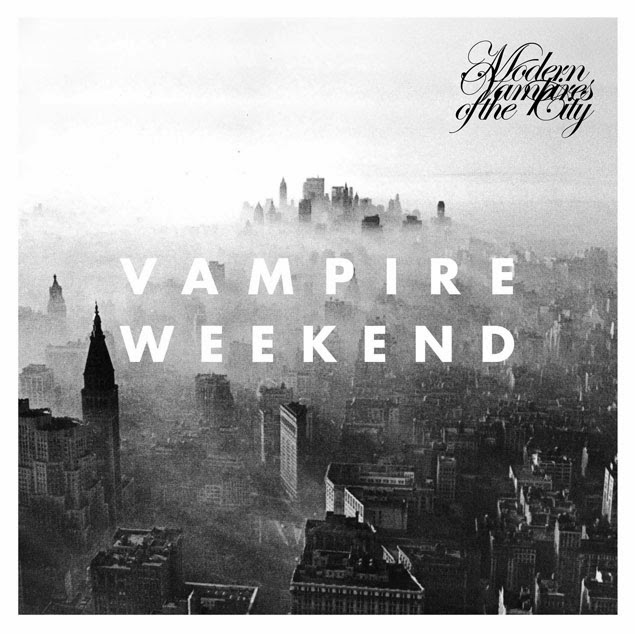
16. Vampire Weekend - Modern Vampires of the City
If your looking for an at least educated guess of a look into where rock is, and where it's headed, then look at the delicacy of Vampire Weekend. If the worst rock of the last 10 years has been bad simply because of it's poor imitations of long gone hair rockers and a cock rocker attitude we all thought we'd left behind in the 80s, then I'll say that the current rock underground, which feels fragile both in it's music which sound's so sweet and tuneful they could fit it into children's TV shows and Wes Anderson movies, and it's lyrics which sometimes take a subject like teeth or the use of grammar and seem to revel in making a serious song about something insignificant, is at least an interesting direction for rock to go in.

As for the album itself, I liked the style although the album itself only did something with it for occasional patches of the duration. Yet when Vampire Weekend get it right they hit a bone of emotion you thought you'd lost when you stopped being a kid. There is a beautiful simplicity to "Step", the beat ting tings along without any shuffle to urgency and the distortion of Ezra Koenig's vocals seems like such an unspectacular trick it works because of it's playfulness with the basic's of studio manipulation. Modern Vampires of the City wasn't close to being my favorite album of the year but in it's best moments it had such an untouched sense of youthful emotion, of playfulness, and the band has a style that's all to itself, that I just have to recommend it.


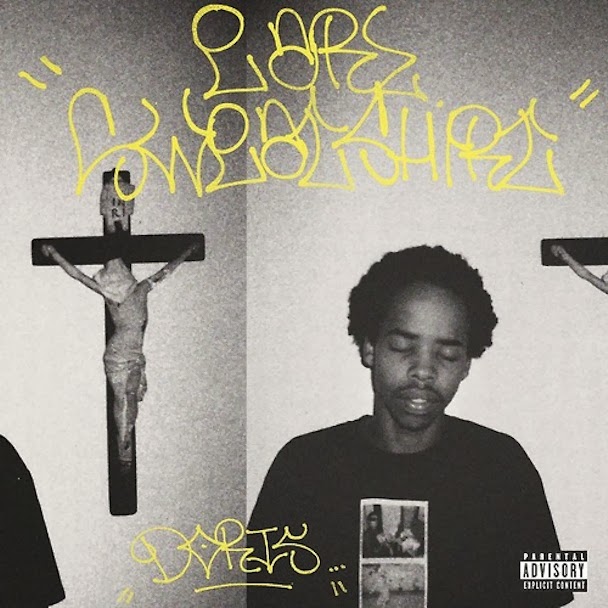
15. Earl Sweatshirt - Doris
Rap, when talking about artists, is the most connected of all genres. Rappers become mentors and producers to each other, they compete with each other to the point they have highly publicized "feuds", and they group together to make rap that bounces to the same beat. The current new kids on the block all seem connected to Odd Future, the rap collective, who as a group haven't done that much of worth, but twisting that logic on it's head they have have as solo artists gave us some of the best, or the most talked about albums of recent years. The obvious prodigal child of "Odd Future" is Frank Ocean, although it's Tyler, The Creator who's set himself up as the friendly face. Yet Earl Sweatshirt caused the most noise this year with an album that continued modern rap into the slow confessional it's been headed to for a while. Sweatshirt can be aggressive, but it's when he comes out with a line like "It's probably been twelve years since my father left, left me fatherless/And I just used to say I hate him in dishonest jest" that the real beauty of Doris comes out.

Doris is good, but it doesn't live up to hype. It deals more than anything with the act of it's own creation, what seems to be this years most loved lyrical topic, and there is very little to get out of individual tracks, instead leaving Doris as an album best heard in one sitting if only to hear the slight shifts in mood and tone that mean very little when you pluck them out of context. It's a tense and focused album, and as quoted above it has wonderfully human moments, just not enough to ever get much of a real picture of who Sweatshirt is, or why it is exactly that people keep saying he's great.


14. David Bowie - The Next Day
The Rolling Stones turned 50 in 2012 and suddenly everyone woke up and realized this whole music thing is an old man's game, or rock 'n' roll is to be exact. The Stones are touring, and seem to be on better form than they've been in years, The Beach Boys are still singing about surfing (even if they're clearly not doing the surfing anymore) and this year sing-songwriters of the old variety wanted to show more than anything else that they were simply still alive and rocking as good as before. Everything about The Next Day has a very "I'm back, baby" feel to it, from the very title which is Bowie powering through any rumored health problems and what has been a 10 year musical silence, and the front cover which over pins the new title over the cover of 1978's Heroes cover, as if Bowie was trying to tell us he's still capable of things just as great. Although Bowie's biggest influence of the year was the album's release, which came out of nowhere and spelled out a new way for big artists to release albums, which turned out to be one of the rare things music fans and business execs agree on.

As for the album, it's nothing if not living up to it's simple promise that Bowie can still rock, with fast guitars and a smooth production which makes everything, even Bowie's vocals (undiminished), take up the same share on the album. Bowie's lyrics are all encompassing - you still believe this disc could be sent from the future with Bowie the only man left on earth - with the highlight being "Valentine's Day" which tells a simple story of a romance filled desire quickly turning bitter. It deserves a spot in the Bowie cannon, which has never gave us two albums the same and still hasn't.


13. Arcade Fire - Reflektor
I find it funny, maybe even a little ironic, although certainly depressing in a sense too, that what has been pegged as, and what most likely is "the most important rock album of the year" is also the most traditional. The influence of big ambitious 70s rock, and even a little sonic Bowie (who even appears on the album as if to drive the influence home) makes the album sound almost too indebted to the past to be hugely important to the now.

The album's biggest problem seems to be it's knowledge of it's own "importance" (as has killed many fine artists but don't seem to be killing Arcade Fire just yet) with it's best moments being the straight up rockers ("We Exist") the very clear cries to alienation ("Normal People") and the more tuneful tracks (husband and wife duet "Joan of Arc") while the album is at it's lowest in long drawn out repetition-fests ("Porno", "Afterlife") and pseudo-art tracks that are really long spans of nothingness ("Supersymmetry") which makes the case for Arcade Fire being a band with a great sense of a fun beat and relatable lyrics - the first of their four albums to make me think they possess the skills to do with either - and a band who, at least while they're youthful and have the world at their feet, have the decision themselves whether their next album will be "important" or good.


12. Paul McCartney - New
As I said before: it's an old man's game, or it is at least easier than ever for older musician's to release new music and not simply get passed aside as stuff only for the hardcore fans. McCartney fits the bill of the older performer like a well worn glove, mainly because Paul never felt that new in the first place. He was always the Beatle perfect for making a Christmas song or starting a group with his wife, which is maybe why he's seems so natural in his appearances now.

This friendliness has never stopped me from ignoring poor old Paul who always seemed the most interested in releasing some new stuff and the least interested in some sort of artistic growth. This is all true for New, which is a great album in it's complete acceptance of McCartney's blankness as an artist. What you get here is a collection of fast, youthful pop songs that touch on the longings of love and are almost a celebration of McCartney's life so far, with a song like Early Days about that band he was in. It's as smooth and catchy as anything he's ever done, and has more warmth and familiarity (sometimes needed) than other album here.


11. Arctic Monkeys - AM
It's only getting harder to tell how popular/loved the Arctic Monkeys are. Many original fans didn't even bother with AM, they gave up a few albums ago, yet NME named AM album of the year (the review named it rock album of the decade). It got the Monkeys in the charts for the first time in years yet the album itself was nowhere to be found in the critical discussion. Yet AM is an automatic success because it brings the Monkeys out of a wobbly transitional period and shows (finally) some real signs of growth: the songs here, many of them more straight up longings for love than Turner has ever given us ("Secrets I have held in my heart/Are harder to hide than I thought") have a Hendrix-esque otherworldliness that mixes with the Monkeys' new neon lit street poetry style perfectly.

Do I Wanna Know takes the band into their Hendrix/Zeppelin guitar influences, although faster and with more of the hip hop influence that was said to be in their pervious albums although never fully materialized. No.1 Party Anthem makes the case for Turner as Lou Reed's successor in creating beauty out of an un-beautiful world, and I Wanna Be Yours is dank poetry, originally written by John Cooper Clarke (a perfect fit) and shows a band working in tandem with each other like few bands can do anymore. AM is the faster, looser side to their other previous Josh Homme produced album Humbug, itself a sign of growth but too much of a turn away from traditional Monkeys, which AM never strays too far away from.


10. Lorde - Pure Heroin
Scratch that bit about an old man's game, because the young people were here in swarms, for the first time in years - which I guess means if your a crank who's used to complaining about how the kids these days don't even have a culture to one day reminisce about then you can rejoice at the fact there seems to be some pressure back on artists to say something, and an actual culture, which isn't predicted but is actually outside your door brewing away right now. Lorde, by making music almost exclusively about the self-obsession and dreams of grandeur that occupy more space in the heads of her (my) generation than they should, has become one the best oppositions to the plague of narcissism we're currently stuck in. I know I, in full knowledge of such a generation wide problem suffer from such problems anyway. And I bet Lorde does too, which only adds to the greatness of her darkly moody anti-pop.

As for Pure Heroin, the album sounded good on first listen although has only seemed to get better and better since. PH gets my vote as the best lyrical work of the year (Take your pick: "we're driving Cadillacs in our dreams", " am only as young as the minute is full of it", "We live in cities you'll never see on screen", countless others) while the soothing backing tracks fit the void of an empty world presented in Lorde's words perfectly. I'll stand by my original assertion that Lorde isn't saying things that are as smart as she thinks they are, I mean isn't it almost mandatory for each generation to turn on themselves eventually? Yet I think Lorde is as smart as she thinks she is, and this album, as good a debut as any, is the living proof.


9. King Krule - 6 Feet Beneath the Moon
Another of the many younglings to make a big deal this year, and to gather a strange amount of mainstream attention for such a (what one would think to be) a hard to market act. KK recalls a boozy slurred style of singing - it wouldn't be strange for you to get the image of Joe Strummer from The Clash in your head - and songwriting which also has has an old British rustic vibe to it with KK singing about his "baby blues" while finding time to hate on the cops. What's so strange, and what answers a question I've been hoping would be answered for a very long time with an answer the complete opposite of what I was expecting, is that KK and this album itself show that older style music, as well as straight-up singer-songwriter stylists, and guitar soloists, not only sound perfectly fine in the framework of modern music, but also seems to appeal to a young audience too.

The first time I listened to the album I focused entirely on the faster, more aggressive tracks (lead single Easy Easy and the brilliantly police-siren mimicking anger of A Lizard State) although it's really the softer parts of the album where the music, and the lyrics, come into their own, and make the case for KK as such an exciting artist and lyricist ("Edging closer/You swing my way/I've got no chance/And nothing to say/But stay/Here for a while/Baby blue").


8. Pusha T - My Name is My Name
I'll be the first to admit, predicting we're all in the same boat here, that we all listened to My Name is My Name because of Kanye West, who produced the album, and who met Pusha through his G.O.O.D Music label. It continues a trend, most likely spurred on by the breakthrough success of Kendrick Lamar, of violent street rap. I suppose some would call this gangsta rap but that ignores the more personal side to Lamar and Pusha and the Odd Future gang, who have spent the last few years spinning rhymes that could easily be interpreted as shock tactics but are more than anything else a clear response to the over commercialization of rap in the mainstream in the last few years.

My Name is My Name sounds like what everyone else expected West's Yeezus would sound like when every critic branded it "minimalistic". The production, angry and raw, organically fits itself around Pusha's lines, as if they're scared of the man himself. Pusha is one of the best rappers working now, nothing even to do with his flow, but simply in his ability to ignite great aggression in his voice without even having to do anything more than calmly plod through the lines where some rappers would go into override trying to summon some inner scary. No album this year managed to sustain a focused, and very claustrophobic vibe throughout like this one did. Plus MNiMN is the best case there's ever been that there's no such thing as "too many guests" on an album, being that only two tracks go without them.


7. Kurt Vile - Wakin' on a Pretty Daze
Am I guilty of this already discussed nihilism for hoping, after first discovering Wakin' on a Pretty Daze when it was released early in the year, that no-one else would find it and it would be my niche discovery of the year. Yeah I know, it's wrong, and in the end I'm happy Pretty Daze ended up on almost every year-end list I could find. Vile himself is a unique singer-songwriter, his music is a mix of spiritually transcendent psychedelic musings and piercing beats of his guitar, and from what I've heard this is his best disc yet.

Walkin on a Pretty Daze plays well to it's title being a calm and at times relaxing collection of songs, his lyrics are like long form meditations on simple subjects, many of the songs quite long, long enough to let the rhythm set in and allow you to get lost in the haze of the tune and the lyrics.


6. Eminem - The Marshall Mathers LP2
This is what Eminem sounds like when the pressure's off. He doesn't have much capital in the political scene anymore (I think he about shocked everyone out 10 years ago) and expectations aren't on him to be the pioneer of hip hop anymore. That's not to say he doesn't have any more interesting music to make or anything left to say, but Em's finally not the guy in the spotlight. LP2 feels free and loose, the most Em's ever felt, and the song's he wriggles out of it are the best since The Eminem Show back in 2002. That's why - infuriating to many - Em went back to offensive language and stories of family killing, because right from the album's title this is Eminem accepting what he's good at, no relapses or recoveries needed to get off his chest anymore, and making some great music, nothing more.

And where to begin with the album. It's a kaleidoscope of different sounds: some disturbing and very self-conscious storytelling in "Bad Guy", some grand showing off in "Rap God", some fast paced pop in "Survival", some traditional controversy loving Em in "So Much Better", even some fame hating hilarity (and singing) in "So Far...". LP2's got skits, Zombie's samples, Kendrick Lamar, Rihanna, and everything a hip hop album needs really. Few albums jump out at you with their greatness like this one does.


5. Daft Punk - Random Access Memories
People went a little ga ga over Daft Punk this year, which surprised me being that this was their first album since 2005's critically trashed Human After All, although it's good that they did. RAM was treated as a jolt to the system of today's EDM, that same EDM these same daft punks inspired over 10 years ago, with it's focus on live musicians and 70s influenced disco weirdness.

When reviewing the album Sasha Frere-Jones, who gets my imaginary award of music journalist of the year, asked whether good music had to be good. The answer was obviously no. RAM is testament to that, with it's 9 minute long interview track with 70s music pioneer Giorgio Moroder, it's melodramatic stories of robot emotions, and it's feedback heavy story of an astronaut's descent, although all with the well meaning mission to "Give Life Back to Music", which it does: being half electro avant-garde and half the rejected EDM parts of Michael Jackson's Thriller.


4. Chance The Rapper - Acid Rap
Mix tapes didn't reach the mainstream this year but they've started becoming so big that their place in the market has become blurred with that of albums, which is why Chance The Rapper, on his second outing, became such a big deal with Acid Rap. It's the most goofy, enthusiastic rap in years.

Acid Rap sounds so loose it's unreal. The guest stars don't even sound like big stars, they sound like Chance's goofy high school friends who found out he was making a mix tape and tagged along. He chants "na na na" as a beat, and it sounds as ridiculous as someone doing it in real life, even more so, but it's innocence, as unsuspecting as this whole album, makes it great. He doesn't even seem to care about much, he just wants to get high listening to his favorite songs, pack in smoking and become a famous rapper. Lets hope he does all three.


3. Drake - Nothing Was The Same
The first time I heard NWTS I thought it was the worst album I'd ever heard. The second time I heard it I thought it was one of the best I'd ever heard. What I think of it now rests somewhere between those two extremes, although closer to the latter.

Drake is the quintessential artist of the times, his lyrics speak of the moment: they are quick ins into the man's life, as short and pointless by themselves as any tweet when removed from whoever posted it, although said in the belief that we are not only willing to listen to Drake talk about himself but that we'll be very interested in it. That's all Drake's about, and that's why the production backing NWTS is the perfect sound to go with Drake - the thing that most put me off his previous albums. One could call the production raw or minimalistic although this isn't really what NWTS is aiming for, instead it's just as empty and of the moment as it's creator.

The first track on the album, and the best Drake has ever done, is Tuscan Leather which even after frequent listens I can't recall whatsoever. The music is structureless, changing to match Drake's flow, and Drake's lyrics don't mean much more than hearing them. Another highlight is Started from the Bottom where Drake sings "We started from the bottom, now we're here" on repeat. The reason I hated the album at first, and this song at first, is because the music, the beat, sounded so empty and not only joyless but lacking in even sadness or anger or anything. Although that's the whole point. It's a production as empty yet excited by itself as the line, and all the more telling for it. Drake music is about nothing but Drake, although this album - with fantastic if not instantaneous results - is the first album all about Drake.


2. Savages - Silence Yourself
Now here's an "important" rock album. The fact that most people have compared Savages to Joy Division and Nirvana and meant it as a bad thing that their influences aren't hidden confused me a lot, as who wouldn't want more of either. Yet Jehnny Beth doesn't seem as tortured as Ian Curtis or Kurt Cobain (although reports say she's just as intense on stage) so the similarities are more in the deep-cutting baselines and what one might call a depressing vibe. Savages are post-punk, although their wall of sound and yelping vocals (apparently inspired by pornography) have an industrial vibe.

The front cover features a manifesto in which the band tells you to "shut up" which I at first saw as a big headed view of their work as "artists" (which I still view it as) although works better as a message on modern life and our inability to see anything for what it really is when we're whizzing past it so fast. The album is like that too, hiding it's pleasures away and only making them clear when you give the album time, listening for what's really there. The atmosphere here, added to by a moody instrumental, is like spending a nightmare in a deserted city where all color has been drained, running through it, although not wanting to leave.

This isn't the future of rock, and people not liking this album won't just have to do with them not following the manifesto but with a band that has a very unforgiving no bullshit style, which isn't for everybody, but is needed every once in a while. Either way, it's very hard not to see this debut as a tease of great things to come.


1. Kanye West - Yeezus
Getting into Lester Bangs this year, I have begun to see Bangs as a dark mirror of the rock stars of his time. Of Lou Reed. Of Keith Richards. Of the leather jacket wearing now-megastars who made drugs look so cool. He was the natural conclusion to the bad things in a culture everyone blindly believed was great. Lou Reed and Keith Richards did something to the world and the world did something to Lester Bangs, maybe because as a part of being a writer and reporter of the happenings of the times he let the world do these things to him. I say these things because the gossip cultures, the fans blind with envy, and the 10 million dollar pay checks floating around that one mtv interview has done something to the celebrities of today, and they have done something to Kanye West, simply because he's let them.

West is the twisted fantasy of modern culture brought to life, and West is egging us all on to egg him on, what else could a line like "Eatin' Asian pussy, all I need is sweet and sour sauce" be other than West, alone in his head, yelling "HATE ME, HATE ME, HATE ME PLEASE" to all those people who continue to buy his music and rank it as the best of any given year. That's all Yeezus is, alone in Kanye West's head, but projected through a thousand speakers at once if he could have his way. It's tense and claustrophobic and fun and sad, and it's all very melodramatic and not at all "minimalistic" as so many people labeled it.

Oh how I could gush over this album all day. New Slaves sounds like the soundtrack from a horror movie and has West's most straightforward response to racism yet, then all of a sudden a beautiful melody breaks out and it's Frank Ocean singing to us. In Blood on the Leaves West samples a 60s version of anti-racism song Strange Fruits and uses it to craft a story a story of infidelity and his oh so cliche hatred of fame. On I Am God he takes his life-as-performance-art to it's farthest extreme, claiming he's god and waiting for his damn croissants! All these things, and every other song on the album I could describe to you could easily sound like utter trash, over produced and highly offensive trash, although they're all the reasons I loved this album. It's not even close this being my album of the year, or West being my favorite modern musician, hell, this is one of the best albums I've heard from any year.

Notes

1. I understand lists like this are subjective, and not only subjective between each person but subjective within each person, as albums that work better as whole experiences will stick in your mind better than a great collection of songs, even if you find more worth in the collection than the more well rounded album.

2. Bound 2 by Kanye West? Wonder 2 by My Bloody Valentine? Foreign 2 by King Krule? What the fuck is going on here?

3. Above is the proof this was the comeback year for cover art.

4. A big R.I.P to Lou Reed who we lost this year and will go down in history as one of the most important rock musicians ever. The other day my mum dragged me around a Homebase and Reed's Walking on the Wild Side was playing through the store, which made me smile.